
Leftovers don’t go bad because you’re lazy. They go bad because nobody planned a night to eat them.
That’s the whole fix. One night a week, dinner is whatever’s already in the fridge. No recipe hunt, no grocery run. You pull the Eat First bin, pick a format, and cook from what’s there.
It’s not a niche idea, either. Pinterest’s Spring 2026 trend report clocked searches for “leftover spaghetti recipes” up 570% and “leftover rotisserie chicken recipes easy” up 315% (Pinterest). People want to use what they’ve got. They just need a system.
Disclosure: As an Amazon Associate, I may earn from qualifying purchases. Some links are affiliate links and don’t cost you anything extra. Product photos and scene images are for display and inspiration only and may not show the exact item linked.
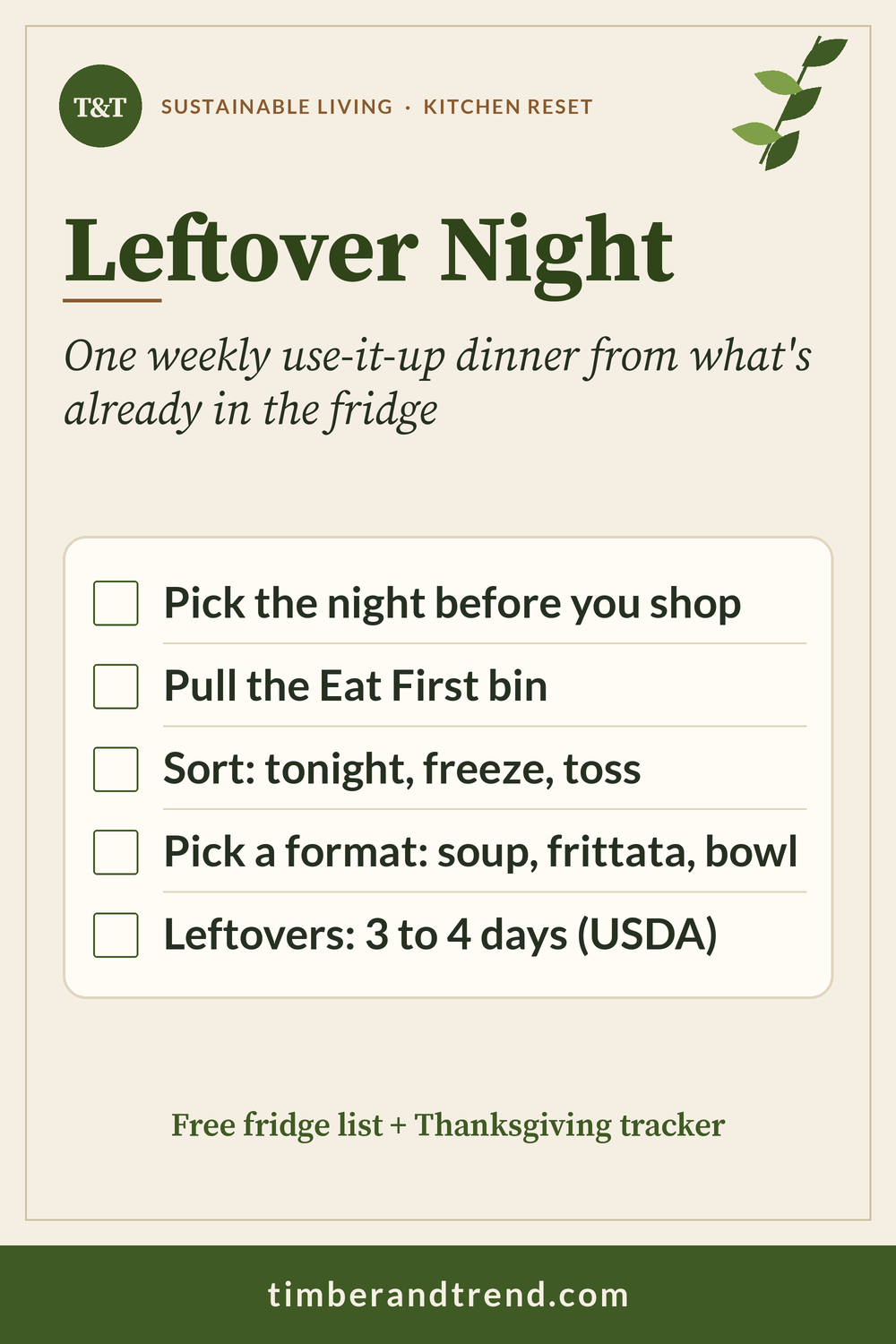
Quick answer: Pick one night a week, ideally the night before you shop. Pull every leftover and open ingredient that needs eating soon, sort it into eat tonight, freeze, or toss, and turn the “eat tonight” pile into one meal: a soup, a frittata, fried rice, a bowl, or a bake. USDA says cooked leftovers keep 3 to 4 days in the fridge, so anything you can’t eat by then goes in the freezer. Thanksgiving gets its own plan below.
Free printable · 2 pages · no email needed
Use-It-Up Fridge List + Thanksgiving Leftovers Tracker
A weekly fridge list with a cooked-on and eat-by column for every container, plus a Thanksgiving 2026 tracker that runs from Thursday dinner to the Monday after, with USDA fridge and freezer times.
Why a weekly leftover night works
The EPA puts it bluntly: one-third of all food in the United States goes uneaten, and the average family of four spends almost $3,000 a year on food that never gets eaten (EPA).
That’s not one big mistake. It’s a lot of half containers pushed to the back.
The EPA’s own planning tip is basically leftover night in one sentence: “Make a list each week of what needs to be used up and plan upcoming meals around it.” (EPA) A set night just makes it automatic. You stop deciding whether to deal with the fridge. Tuesday (or whenever) already decided for you.
And it saves a dinner. One night a week, you’re not cooking from scratch and you’re not ordering in.
The one rule: 3 to 4 days
Everything about leftover night hangs on this.
USDA’s Food Safety and Inspection Service says “Leftovers can be kept in the refrigerator for 3 to 4 days or frozen for 3 to 4 months” (USDA FSIS). FoodSafety.gov’s Cold Food Storage Chart lists the same 3 to 4 days in a fridge at 40°F or below for cooked meat or poultry, soups and stews, and pizza (FoodSafety.gov).
So the clock starts the day you cook, not the day you remember the container. That’s why the night matters. If you cook a big batch on Sunday, a midweek leftover night lands inside that window. Wait until next weekend and you’re past it.
Two more USDA basics before anything goes in the fridge:
- The 2-hour rule. FSIS says leftovers must be refrigerated within 2 hours of cooking, or 1 hour if it’s above 90°F. Perishable food left at room temperature longer than that should be thrown away (USDA FSIS).
- Shallow containers. FSIS says to divide big batches into shallow containers so food cools quickly. A big pot of soup takes a long time to cool. Smaller containers don’t (USDA FSIS).
One thing people mix up: the printed date on a package isn’t the leftover clock. FSIS says “Best if Used By” dates are about quality, not safety, and aren’t required by federal law except on infant formula (USDA FSIS). Once you cook it, the 3 to 4 day count is the one to watch.
How to run leftover night (20 minutes of thinking, then dinner)
1. Pull the Eat First bin
If you do the 15-minute fridge reset, you already have an Eat First bin on the top shelf. If not, start one tonight. Any bin, tray, or shelf works. Everything that needs eating soon lives there.
Pull it all out, plus anything else that’s been opened: the half bag of spinach, the last two tortillas, the rice from Monday.
2. Sort into three piles
- Eat tonight. Anything still inside its 3 to 4 day window.
- Freeze. Good food you won’t get to in time. The EPA’s advice is to freeze leftovers you know won’t be eaten in time, labeled with the contents and dates (EPA).
- Toss or compost. Anything past its window, anything that sat out too long, and anything with no date that you can’t place.
Be honest with the third pile. Leftover night is about eating food in time, not rescuing food that’s already past it.
3. Pick a format, not a recipe
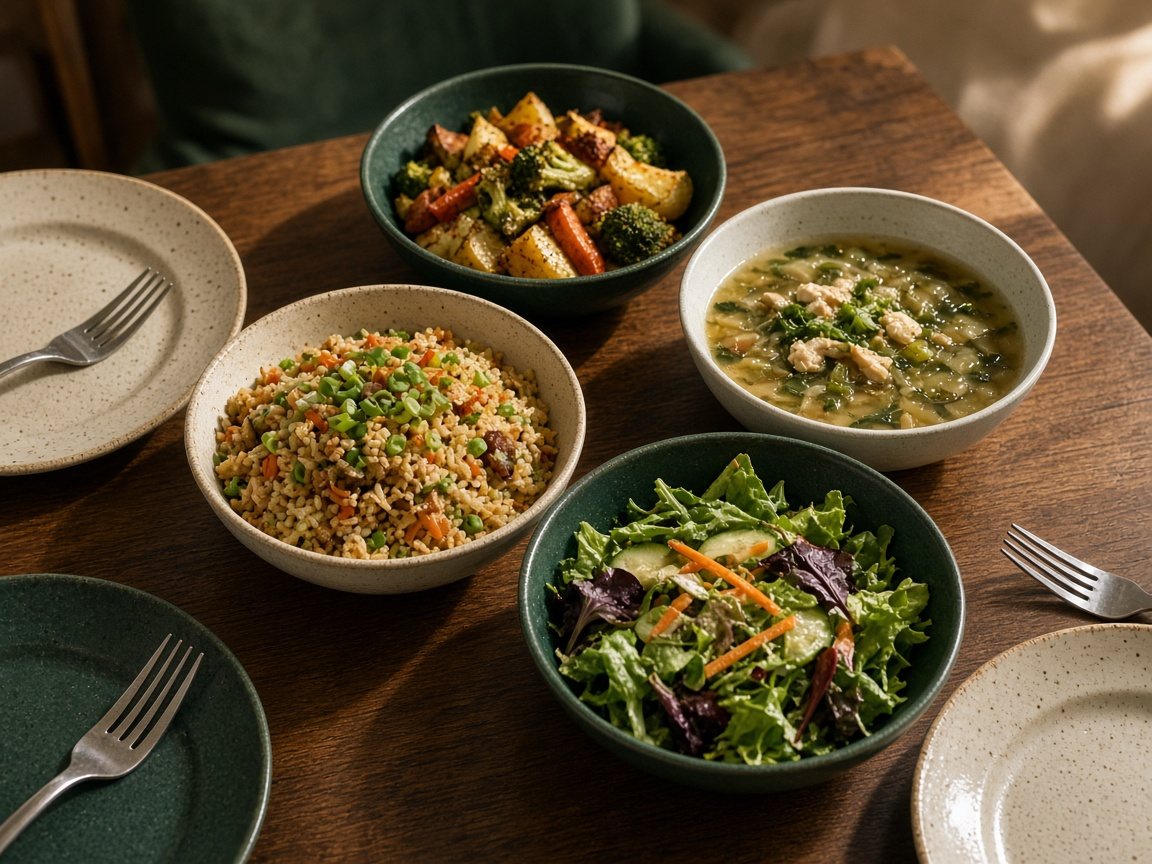
This is where leftover night gets easy. Don’t search for “what to make with leftover chicken and half a zucchini.” Pick a format that swallows odds and ends.
The EPA’s own list of ways to use leftovers and past-prime produce: soups, casseroles, stir fries, frittatas, sauces, baked goods, pancakes, or smoothies. Stale bread works for French toast or croutons (EPA).
| Format | What it eats up | How it goes |
|---|---|---|
| Fried rice or stir fry | Cooked rice, any cooked meat, loose veg | Hot pan, veg first, rice last, a splash of soy sauce |
| Frittata | Cooked veg, cheese ends, a bit of meat | Eggs over everything, oven finish |
| Soup | Broth, cooked veg, meat, grains, beans | Simmer it all together, season at the end |
| Grain bowl | Grains, roasted veg, any protein, sauces | Warm base, toppings, one sauce on top |
| Quesadilla or flatbread | Tortillas, cheese, cooked meat or beans | Fill, fold, crisp in a pan |
| Pasta bake | Cooked pasta, sauce, veg, cheese | Mix, top with cheese, bake until hot |
Pick one. Don’t make three dishes out of leftovers. That’s just a new mess.
4. Reheat it properly
FSIS says to reheat leftovers to 165°F, measured with a food thermometer, and to bring sauces, soups, and gravies to a rolling boil. In the microwave, cover the food and rotate it so it heats evenly, since microwaves have cold spots (USDA FSIS).
Short on time and the leftovers are frozen? FSIS says it’s safe to reheat frozen leftovers without thawing them first. It just takes longer (USDA FSIS).
5. Write two lines before you shop
Leftover night only cuts waste if it changes what you buy. Before you close the fridge, write down:
- What ran out (that’s your shopping list).
- What keeps turning into leftovers. If half the lasagna gets frozen every week, make a smaller lasagna.
The EPA suggests the same habit from the other side: look in your fridge, freezer, and pantry first so you don’t buy food you already have (EPA).
Make the containers do the work
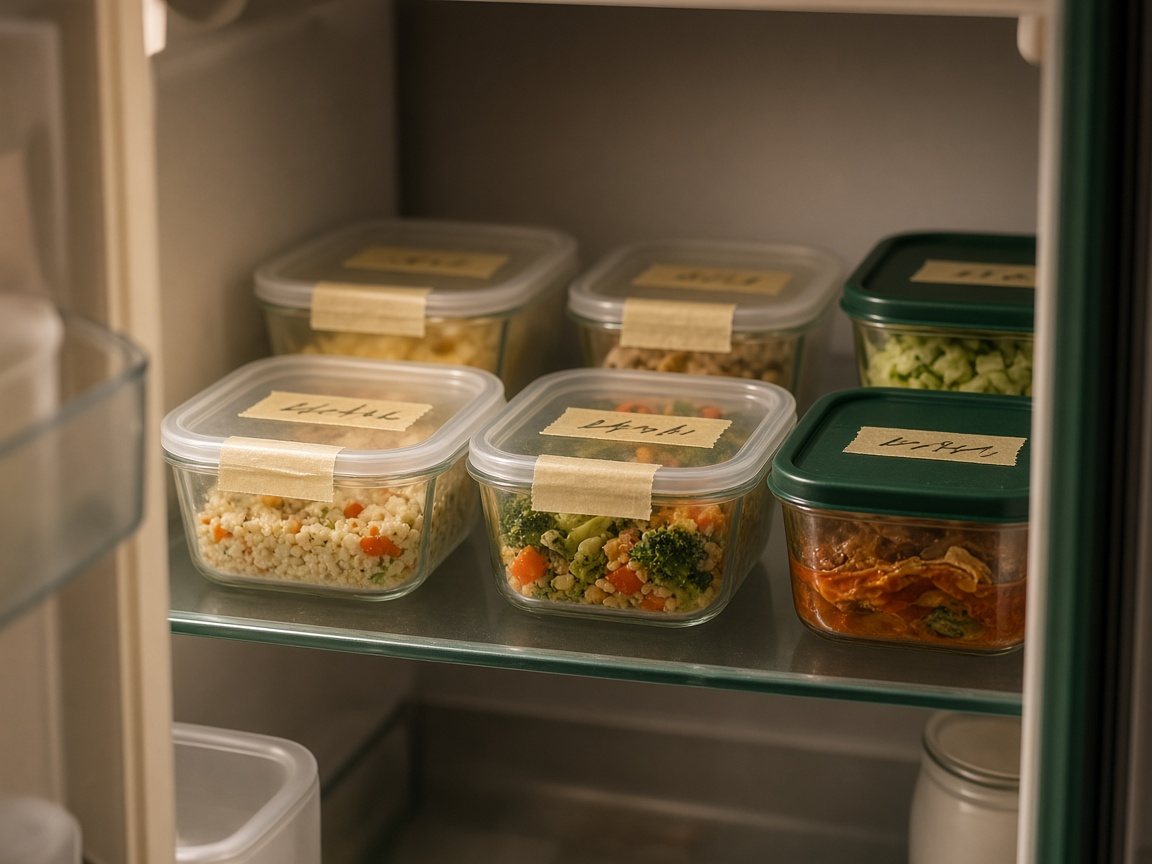
The fastest leftover night is one where you can see everything without opening a single lid.
- Date everything. The EPA’s advice is to refrigerate or freeze leftovers “in clear, labeled containers with dates.” (EPA) Masking tape and a marker are plenty.
- Top shelf, front. Ready-to-eat food goes up top, where you’ll see it. The fridge reset puts the Eat First bin right there.
- Cover it. FSIS says covering or sealing leftovers helps keep bacteria out, holds moisture, and stops them picking up odors from other food (USDA FSIS).
- Keep a freezer list. Anything you freeze from leftover night goes on the freezer inventory so it actually comes back out.
You don’t need new containers for any of this. Use what’s already in the cupboard. Matching lids are nice. Dates are what count.
If you would rather not write on tape every week, reusable dry-erase labels let you wipe the cooked-on date and reuse the label on the next container.
As an Amazon Associate, I may earn from qualifying purchases.
For leftovers you want to see at a glance, clear glass jars make it obvious what is inside and how much is left.
As an Amazon Associate, I may earn from qualifying purchases.
The Thanksgiving leftovers plan (Nov 26 to Nov 30, 2026)
Thanksgiving is the biggest leftover night of the year, and it comes with a hard stop.
FSIS says Thanksgiving leftovers are safe in the fridge “for up to four days or until the Monday after Thanksgiving,” or you can freeze them to enjoy later (USDA FSIS). This year Thanksgiving is Thursday, November 26, so that Monday is November 30.
Here’s how the long weekend plays out.
| Day | Leftover job |
|---|---|
| Thu, Nov 26 | Within 2 hours of cooking, carve the turkey, pack everything in covered shallow containers, date it, fridge it |
| Fri, Nov 27 | The easy plates: sandwiches and straight reheats |
| Sat, Nov 28 | Leftover night: one remix (soup, a bake, or fried rice) |
| Sun, Nov 29 | Freeze anything you won’t eat by Monday, labeled and dated |
| Mon, Nov 30 | Last day for the fridge leftovers, per FSIS. Clear the shelf |
Thursday: pack it right
FSIS says leftovers, including appetizers, side dishes, and the turkey, should be stored within two hours of cooking unless they’re being held above 140°F. Divide them into smaller portions, carve the turkey, and refrigerate or freeze everything in covered shallow containers so it cools faster (USDA FSIS).
FSIS’s turkey guidance gets specific: cut the turkey into smaller pieces, slice the breast meat, and legs and wings can stay whole (USDA FSIS). It also says reheating a whole turkey isn’t recommended.
Yes, it’s the last thing anyone wants to do after dinner. Hand someone the tape and a marker. That’s their job.
No tape that sticks in the freezer? A roll of freezer tape is made for writing dates on cold bags and containers.
As an Amazon Associate, I may earn from qualifying purchases.
Saturday: the remix night
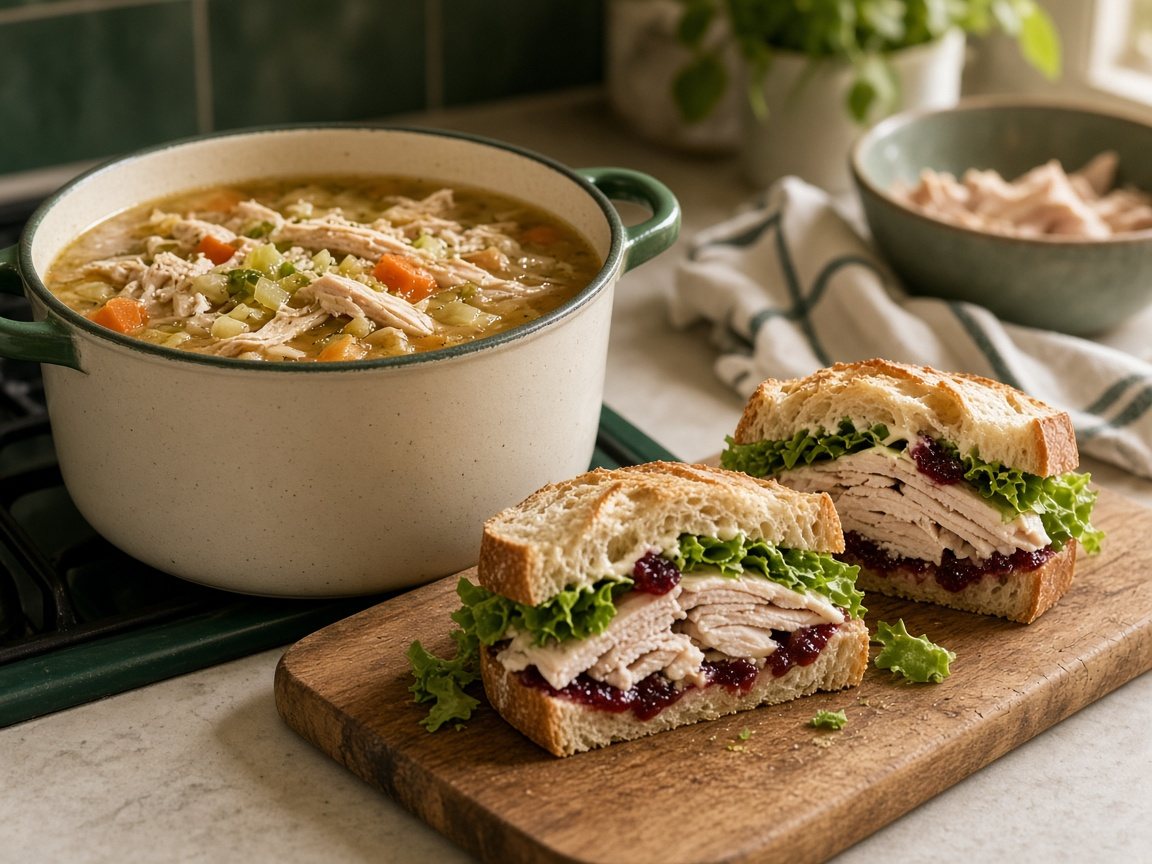
By Saturday, nobody wants another plate that looks exactly like Thursday. Same formats as any leftover night:
- Soup. Turkey, the leftover vegetables, and broth. FSIS says to bring soups and gravies to a rolling boil when you reheat them.
- A bake. Turkey, stuffing, and vegetables layered in a dish, heated through to 165°F.
- Fried rice or a stir fry. Turkey and any plain vegetables, cooked hot and fast.
Sunday: freeze what’s left
This is the step that saves the most food. Anything you can’t finish by Monday goes in the freezer on Sunday, not the back of the fridge.
FSIS’s freezer times for Thanksgiving leftovers, at 0°F or below (USDA FSIS):
| Leftover | Freezer time (best quality) |
|---|---|
| Turkey, plain, slices or pieces | 4 months |
| Turkey covered with broth or gravy | 6 months |
| Cooked poultry dishes, stuffing, and gravy | 4 to 6 months |
FSIS notes those freezer times “are for quality only. Frozen foods remain safe indefinitely.” Write the date on the bag anyway. A labeled bag of turkey and gravy is a January dinner. An unlabeled one is a mystery.
Monday: clear the shelf
Monday, November 30 is the last day for whatever’s still in the fridge, by the FSIS timeline. Eat it or toss it, then give that shelf a quick wipe. The natural cleaning recipes baking soda wipe is made for exactly this.
Want the whole holiday week mapped out, from the pantry reset to thawing the turkey? The Thanksgiving kitchen prep checklist handles everything before the meal. This plan picks up after it.
How leftover night fits your weekly reset
Leftover night isn’t another chore. It’s the payoff for the fridge reset.
The Weekly Home Reset Routine gives the fridge a slot in the week. The 15-minute fridge reset fills the Eat First bin. Leftover night empties it. Then you shop for only what’s missing.
The best night is usually the one right before your grocery day. The fridge is at its emptiest, and whatever you don’t use goes straight onto the freezer list instead of getting buried behind new groceries.
FAQ
How long are leftovers good in the fridge? USDA FSIS says 3 to 4 days in a fridge at 40°F or below. FoodSafety.gov’s chart gives the same window for cooked meat and poultry, soups and stews, and pizza.
Can you freeze Thanksgiving leftovers? Yes. FSIS says it’s safe to freeze leftover turkey and trimmings, even if you bought them frozen. Freeze them within the four-day window, by the Monday after Thanksgiving.
Do I have to thaw frozen leftovers before reheating? No. FSIS says you can reheat frozen leftovers without thawing, in a saucepan, oven, or microwave. It just takes longer. Either way, reheat to 165°F.
What’s the best night for leftover night? The night before you shop. You use up what’s there, then your list is built from what’s actually missing.
Related guides
- The 15-Minute Fridge Reset: where the Eat First bin comes from
- Freezer Inventory Printable: so frozen leftovers come back out
- Thanksgiving Kitchen Prep Checklist: the three resets before the big meal
- The Weekly Home Reset Routine: where leftover night fits in the week
- Natural Cleaning Recipes: the baking soda wipe for the empty shelf
- Low-Waste Holiday Gift Ideas: more ways to cut waste this season
- More low-waste ideas in Sustainable Living
Sources
- USDA Food Safety and Inspection Service. Leftovers and Food Safety (last updated July 31, 2020). Refrigerate within 2 hours (1 hour above 90°F); shallow containers for rapid cooling; cover or seal leftovers; 3 to 4 days in the refrigerator or 3 to 4 months frozen; reheat to 165°F, sauces, soups, and gravies to a rolling boil; cover and rotate in the microwave; safe to reheat frozen leftovers without thawing.
- USDA Food Safety and Inspection Service. Your Safe Thanksgiving Guide (last updated November 25, 2025). Store leftovers within two hours of cooking unless held above 140°F; carve the turkey; covered shallow containers; Thanksgiving leftovers safe in the refrigerator for up to four days or until the Monday after Thanksgiving; best freezer quality for two to six months.
- USDA Food Safety and Inspection Service. Turkey Basics: Handling Cooked Dinners (last updated September 25, 2024). Cut turkey into smaller pieces, slice breast meat, legs and wings may stay whole; reheating a whole turkey not recommended; safe to freeze leftover turkey and trimmings; freezer times of 4 months (plain turkey), 6 months (in broth or gravy), 4 to 6 months (cooked poultry dishes, stuffing, gravy), for quality only.
- USDA Food Safety and Inspection Service. Food Product Dating. Dates are for quality, not safety, and not required by federal law except on infant formula.
- FoodSafety.gov. Cold Food Storage Chart (last reviewed September 19, 2023). Refrigerator at 40°F or below: cooked meat or poultry, soups and stews, and pizza leftovers 3 to 4 days.
- U.S. Environmental Protection Agency. Preventing Wasted Food at Home (last updated June 22, 2026). One-third of U.S. food goes uneaten; a family of four spends almost $3,000 a year on uneaten food; make a list each week of what needs to be used up; check the fridge, freezer, and pantry first; freeze leftovers that won’t be eaten in time; use leftovers in soups, casseroles, stir fries, frittatas, and more; clear, labeled, dated containers.
- Pinterest Newsroom. Pinterest Spring Trend Report 2026 (March 17, 2026). “Leftover spaghetti recipes” +570%, “leftover rotisserie chicken recipes easy” +315%.
Save this for later
Pin it to your Sustainable Living board so leftover night is there the next time the fridge fills up.
Printable bundle · $5 launch price
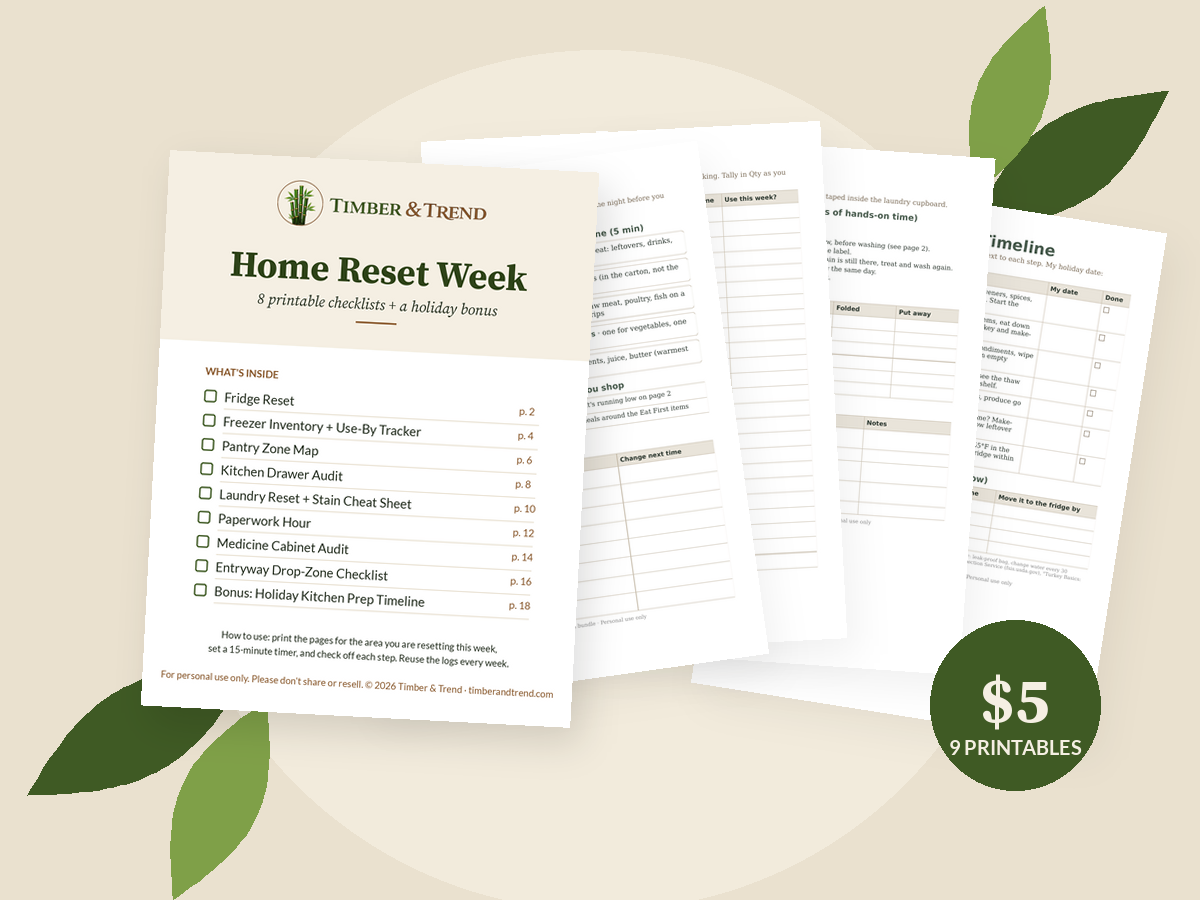
Get every checklist in one place
The Home Reset Week bundle has 8 printable resets (fridge, freezer, pantry, drawers, laundry, paperwork, medicine cabinet, entryway) plus a holiday kitchen prep timeline.