
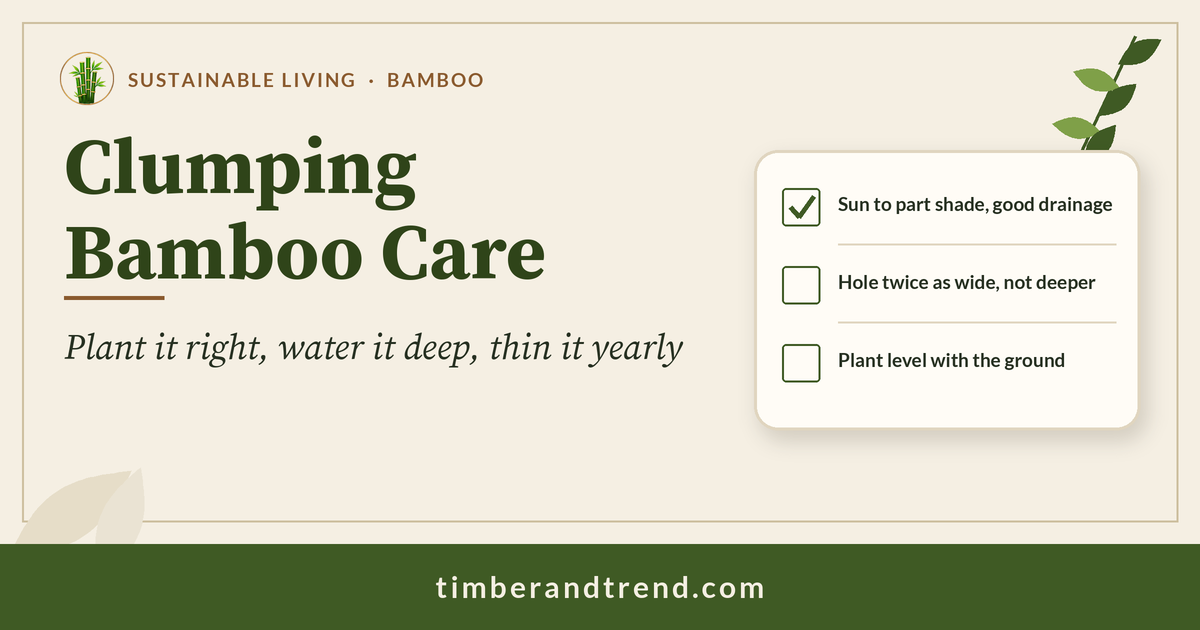
If you want bamboo but you don’t want a war with your neighbor’s lawn, start with a clumper.
Clumping bamboo grows in a tight, slowly widening clump. Running bamboo sends rhizomes sideways and pops up wherever it likes. Same family, very different neighbor.
Here’s how to plant a clumper so it settles in fast, and how to keep it looking good once it does.
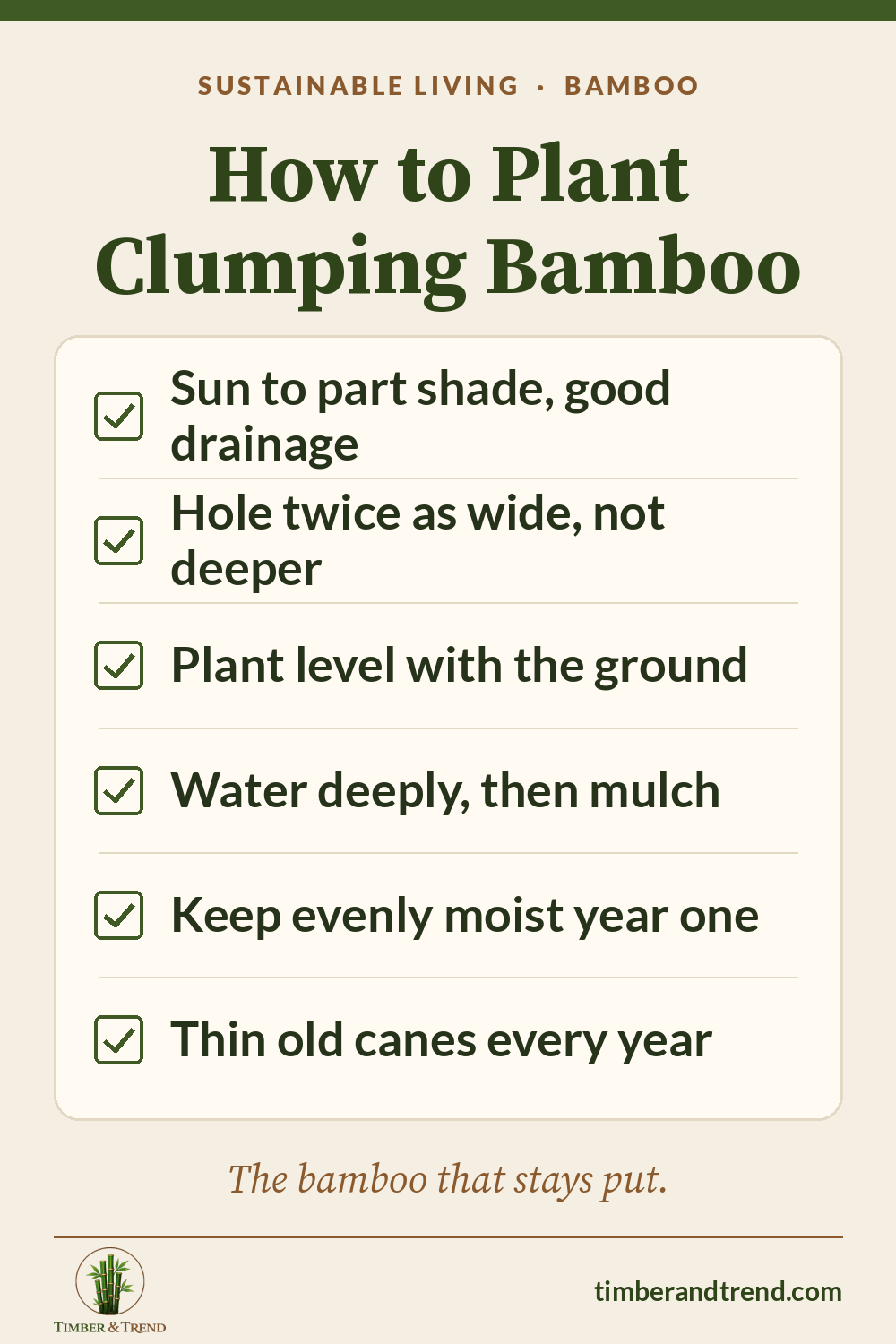
Quick answer: Pick a spot with sun to part shade and soil that drains. Dig a hole about twice as wide as the pot and no deeper than the root ball. Plant it level with the ground, water deeply, mulch, and keep the soil evenly moist the first season. Feed in spring and early summer. Each year, cut a few of the oldest canes out at the base.
Disclosure: As an Amazon Associate, I may earn from qualifying purchases. Some links are affiliate links and don’t cost you anything extra. Product photos and scene images are for display and inspiration only and may not show the exact item linked.
Clumping vs. running: know which one you’ve got
Clumping bamboos (Bambusa, Fargesia, Dendrocalamus and friends) have short, thick rhizomes that turn up into new canes close to the parent. The clump widens a little each year. It doesn’t march across the yard.
Running bamboos (Phyllostachys, Pleioblastus, Sasa and others) have long rhizomes that travel. They need a barrier or regular rhizome pruning. If that’s what you have, read how to contain running bamboo.
Check the botanical name on the tag. “Bamboo” alone tells you nothing.
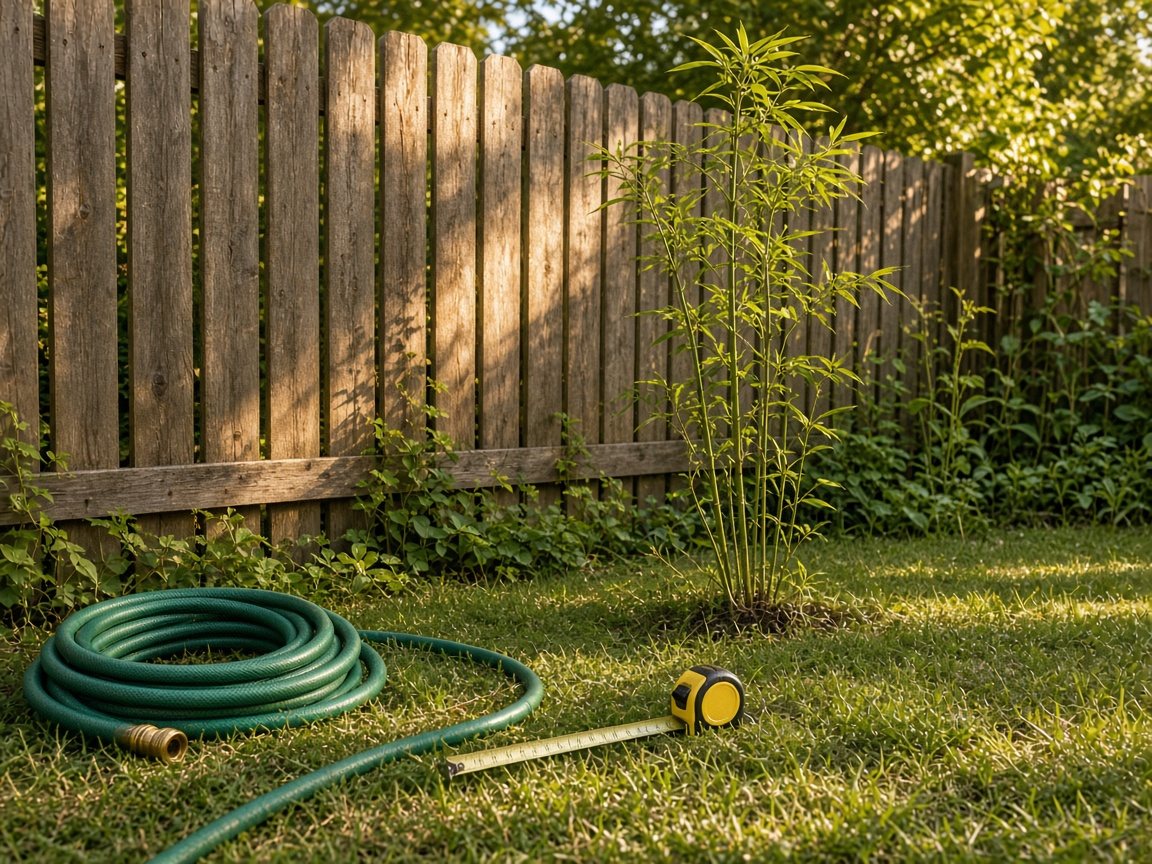
Choosing the right spot
Sun and shade
Most tropical clumpers (Bambusa) want full sun to part shade. The cold-hardy clumpers (Fargesia) are the opposite. They sulk in hot afternoon sun and do best with some shade, especially in warm summers.
Soil
Bamboo wants soil that holds moisture but never sits wet. Skip low spots that flood and ground that’s packed hard. More on that in the bamboo soil guide.
Space
“Clumping” doesn’t mean small. Depending on the species, a mature clump can be anywhere from about 10 feet tall to well over 40, and several feet across. Look up the mature height and spread for your exact variety and plant for that, not for the pot it came in.
Give it a few feet of clearance from fences, foundations and paths so you can get in to prune.
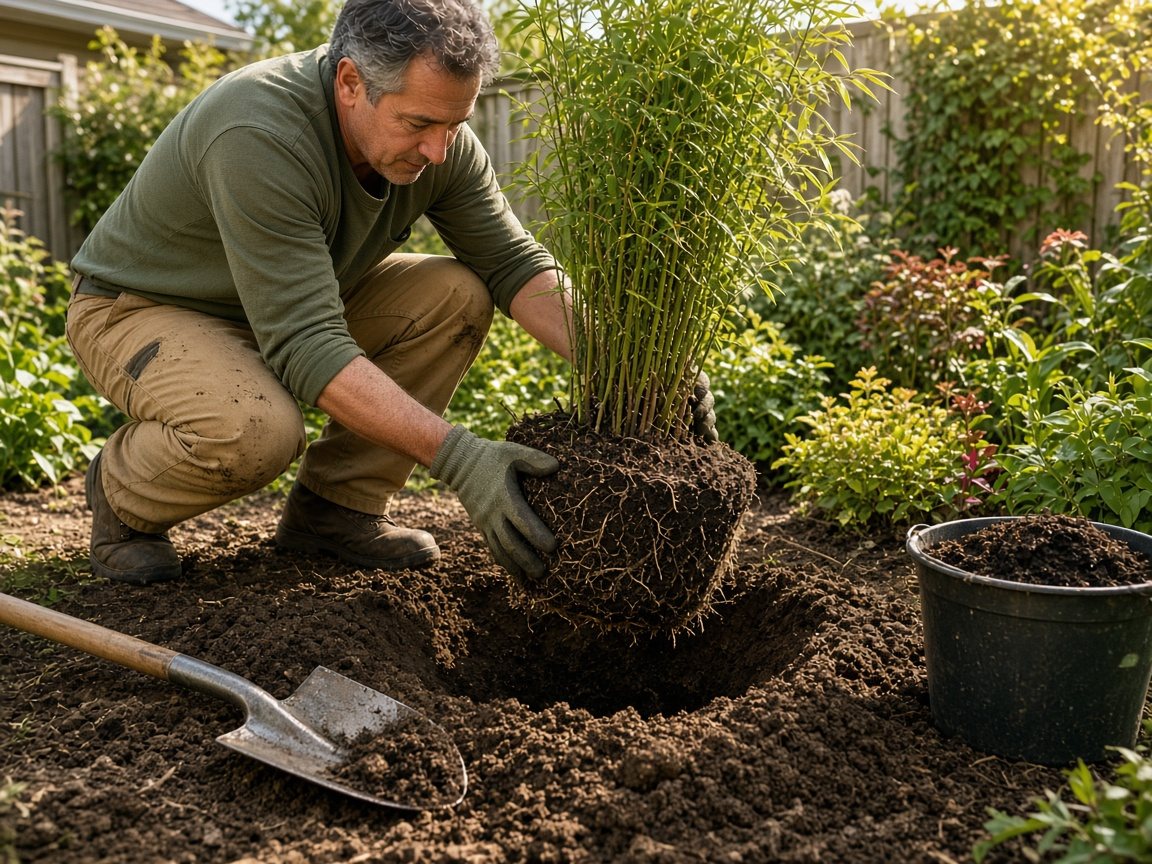
How to plant clumping bamboo
- Water the pot a few hours before you plant.
- Dig a hole about twice as wide as the root ball and about as deep. Not deeper. You want the plant sitting at the same level it was in the pot.
- Loosen the soil around the sides of the hole and mix in some compost.
- Ease the plant out. If roots are circling hard, tease a few loose. Don’t hack the rhizomes.
- Set it level with the surrounding soil, backfill, and firm it gently with your hands to close air pockets.
- Water deeply until the whole root zone is soaked.
- Mulch 2 to 3 inches deep, keeping it a little off the canes.
Spring is the easy season to plant in most places. In mild climates, early fall works too, as long as you can keep up with watering.
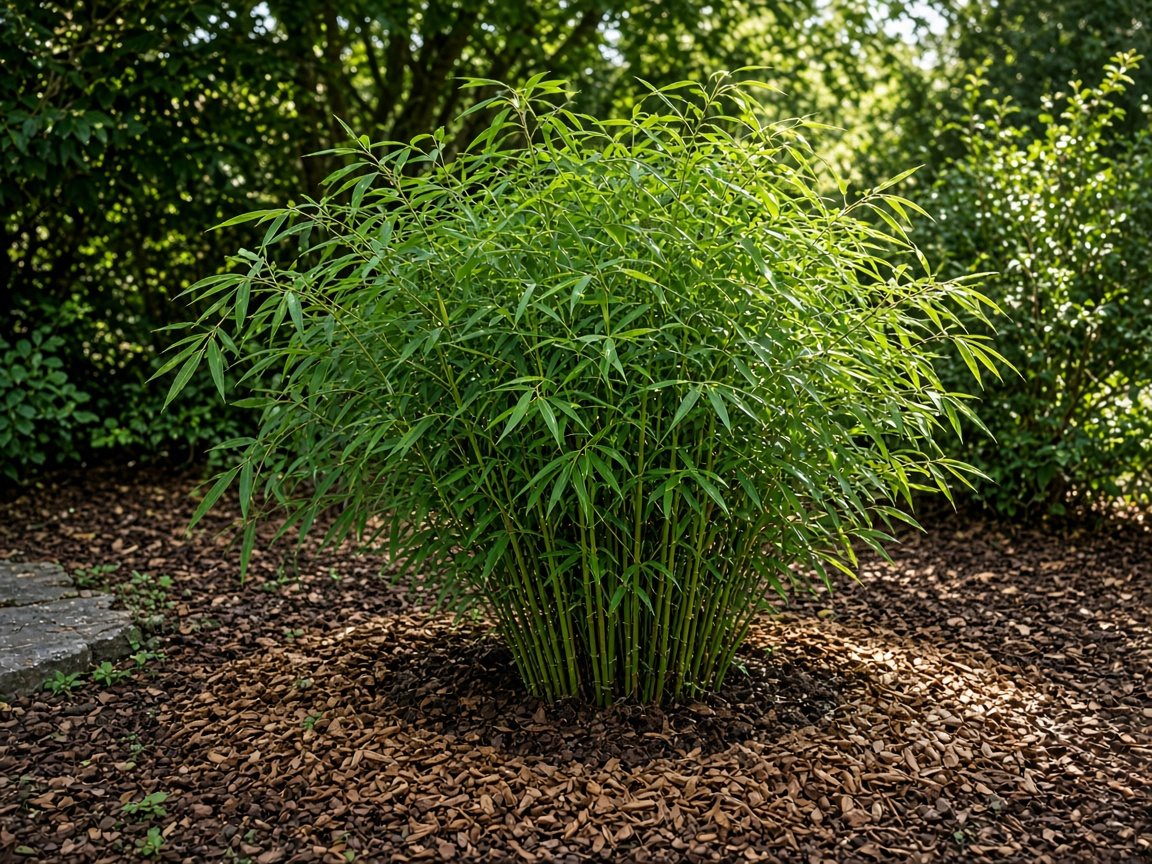
Caring for clumping bamboo
Water
The first year is the one that matters. Keep the soil evenly moist, not soggy. Water deeply and let the top inch or two start to dry before the next round. The 6-month watering schedule for new bamboo walks through it week by week.
Not sure whether the top couple of inches have dried out? A simple soil moisture meter takes the guesswork out of when to water.
As an Amazon Associate, I may earn from qualifying purchases.
Once it’s established, a clumper still appreciates a deep soak in dry spells.
A soaker hose laid around the clump delivers that slow, deep soak at the roots without flooding the bed.
As an Amazon Associate, I may earn from qualifying purchases.
Feeding
Bamboo is a grass, and like your lawn it likes nitrogen. A balanced or nitrogen-leaning slow-release fertilizer in spring and early summer is plenty. Follow the label. Compost spread on top every spring does a lot of quiet work too.
Don’t feed late in the season in cold areas. Soft new growth going into frost is no help.
Leaf drop is normal
Bamboo is evergreen, but it swaps out old leaves, mostly in spring. A carpet of yellow leaves under a clump that’s also pushing new growth isn’t a problem. Leave them. They’re free mulch.
Pruning
This is where clumpers go from “nice” to “wow.”
- Thin the oldest canes. Every year or so, cut a few of the oldest, dullest canes right at ground level. It opens the clump and shows off the good ones.
- Take out anything dead or broken at the base.
- Topping: if you cut a cane partway up, that cane will never grow taller. It’ll bush out with more branches from the nodes below. Cut just above a node so you don’t leave a dead stub.
- Lift the skirt. Removing low branches on the outer canes gives that clean, tropical look and makes the clump easier to walk past.
Use clean, sharp loppers for thin canes and a fine-tooth pruning saw for thick ones.
Common mistakes
- Planting too deep. It slows everything down.
- Assuming “bamboo” means clumping. Check the species.
- Shallow, frequent sprinkles. Water deeply, less often.
- Buying for the pot size. Buy for the mature size.
The short version
Right plant, right spot, good drainage, deep water the first year, a spring feed, and a yearly thinning. That’s the whole job. Clumping bamboo really is one of the lower-drama ways to get a living screen.
More bamboo and sustainable living
Save this for later
Pin it to your garden or Sustainable Living board so it’s there when you need it.
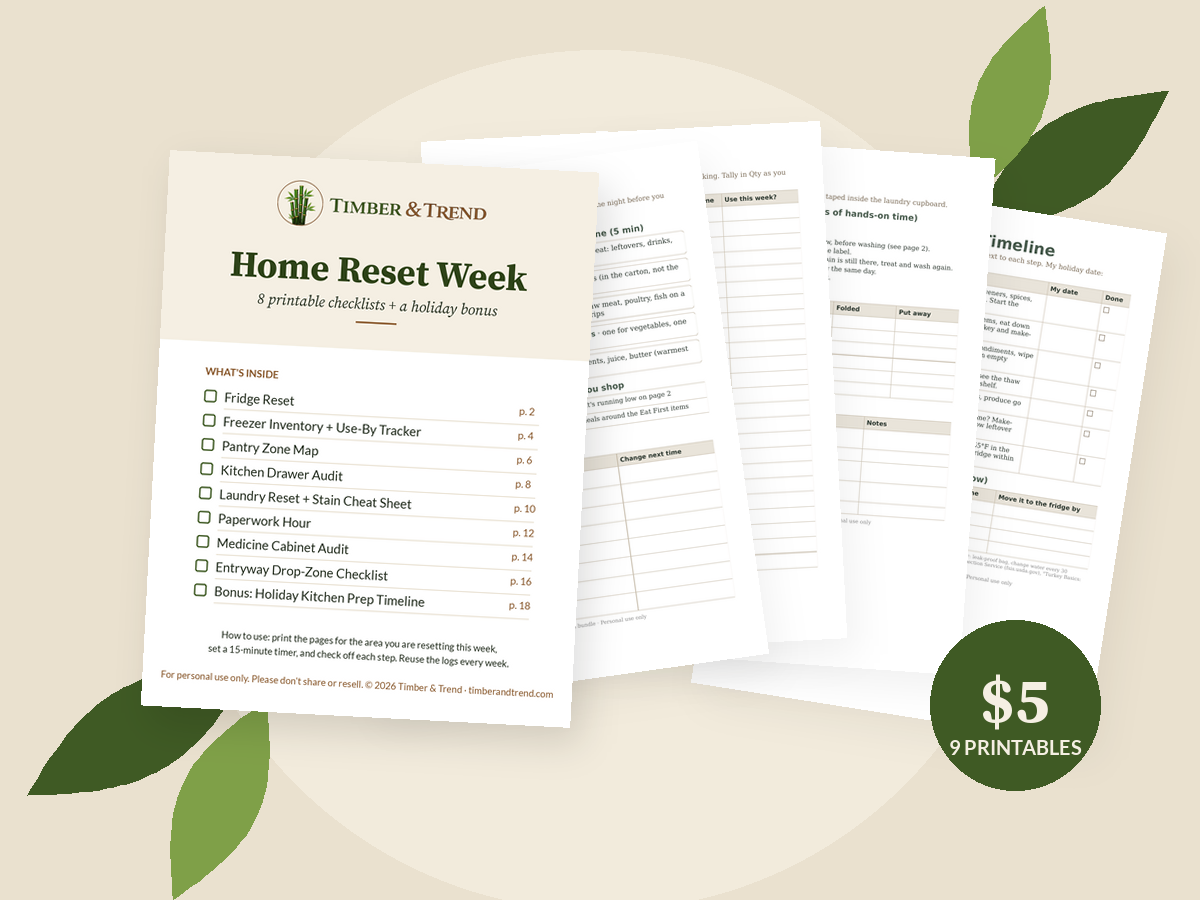
Printable bundle · $5 launch price
Get every checklist in one place
The Home Reset Week bundle has 8 printable resets (fridge, freezer, pantry, drawers, laundry, paperwork, medicine cabinet, entryway) plus a holiday kitchen prep timeline.