
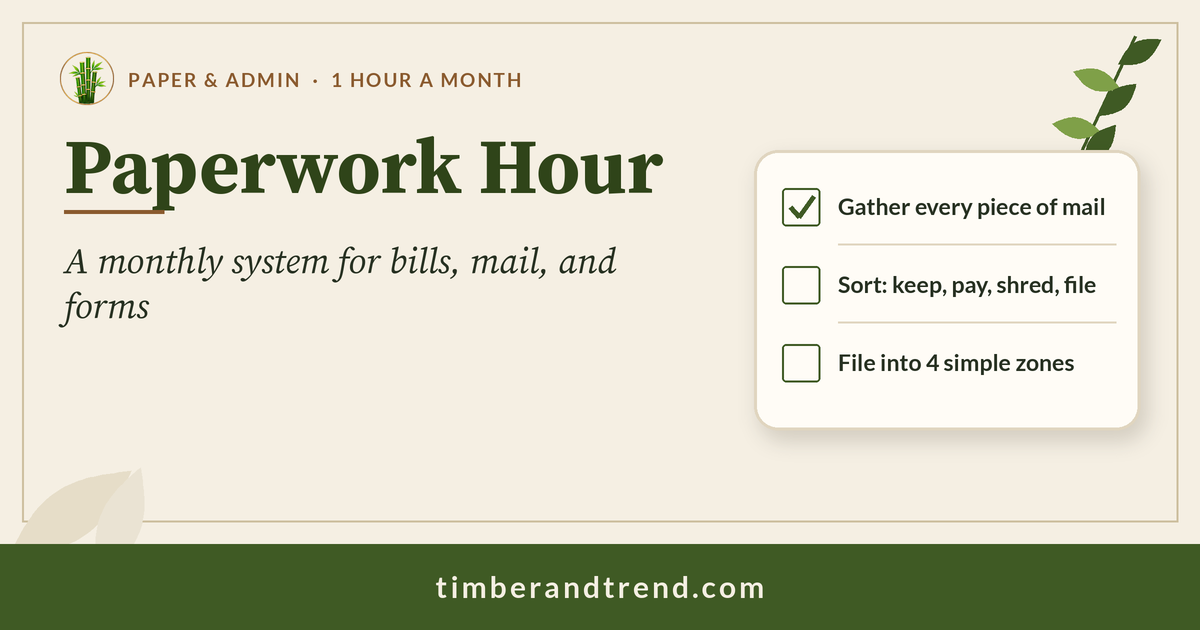
Paper does not organize itself. Mail lands on the counter, bills hide under catalogs, and forms you meant to fill out migrate into a bag by the door. A once-a-year filing weekend feels productive for about a week. Then the pile returns.
A paperwork hour is the opposite approach: one sitting a month, same day if you can, with a clear end. You open everything, sort it, pay what is due, file what you keep, and shred what you do not. When the hour is over, the inbox tray is empty.
Free printable: The Reset Week Starter gives you a simple weekly calendar so paperwork gets a real slot, not a vague intention. Download it free
Why one hour a month beats a weekend purge
A big purge assumes you have a free Saturday and the energy to decide every piece of paper at once. Most people do not. A monthly hour works better because:
- It is short enough that you will actually do it.
- Bills get paid before they become late fees.
- Keep-vs-shred decisions stay small instead of becoming a multi-hour identity crisis over old insurance statements.
- The system stays empty between sessions, so paper never builds into a crisis pile.
Think of it like the laundry reset or the fridge reset: the goal is not a magazine-ready office. The goal is a repeatable habit that keeps the house from drowning in paper.
What you need before you start
You do not need a custom built-in desk. You need:
- One inbox tray, bag, or bin where all loose mail lands during the month.
- A simple file box or drawer with four zones (Active, Tax year, Permanent, Pending — more below).
- A shredder, or a plan for a community shred day.
- A timer set for 60 minutes.
- Optional: a label maker or masking tape and a marker; a basic file box with hanging folders if you are starting from nothing.
Skip buying a full office suite until you have run the hour twice. Most of what you need is already in the house.
The six steps of Paperwork Hour
1. Gather (5 minutes)
Pull every piece of mail, bill, school form, and loose paper into one spot. Check the usual hiding places: kitchen counter, bag by the door, car console, nightstand, and that chair that became a second desk. Dump it all into the inbox tray. Do not sort yet.
2. Open and sort (15 minutes)
Open every envelope. For each item, put it in one of four piles:
- Keep — you need this document later.
- Pay — a bill or payment due this month.
- Shred — it has personal info and you do not need to keep it.
- File — it belongs in a file-box zone right away (often the same as Keep, once you know the zone).
Junk mail with no account numbers can go straight into recycling. Anything with an account number, Social Security number, or signature goes to shred, not the recycling bin.
3. Pay what is due (10–15 minutes)
Work the Pay pile. Pay online or write checks, mark the bill paid with the date, and set the statement aside for filing if you still keep paper copies. If you already have reliable online statements, you may not need the paper after payment — but keep disputed bills until the dispute is closed.
4. File the keepers (10 minutes)
Use four simple zones inside one file box:
- Active (this year): current bills, open claims, this year’s receipts and statements you still need.
- Tax year: returns and supporting docs for the years you are still keeping.
- Permanent (IDs / deeds): birth certificates, Social Security cards, passports, deeds, titles, marriage or divorce decrees — keep these locked up.
- Pending (disputes): anything waiting on a reply, claim, or resolution.
You do not need twenty labeled folders on day one. Four zones and a few hanging folders are enough. Refine labels after you have lived with the system for a month.
5. Shred (10 minutes)
Run the shred pile. If you do not own a shredder, bag the shred pile and take it to a community shred day, bank event, or library event when one is available. Do not put unshredded account statements in household trash.
6. Empty the inbox (2 minutes)
When the hour ends, the inbox tray should be empty. That empty tray is the win. Anything unfinished goes into Pending with a sticky note saying what is left — do not let “almost done” turn back into a counter pile.
Keep vs shred (a short household guide)
Rules vary by tax situation and state, so treat this as general household guidance, not tax or legal advice. When unsure, keep the paper or ask a tax professional.
Keep locked up / permanent: birth certificates, Social Security cards, passports, marriage and divorce decrees, deeds, auto titles, current insurance policies.
Keep about 1 year (FTC consumer advice, June 2025): bank statements, pay stubs, undisputed medical bills, credit-card and utility bills, deposited checks — and shred the paper if you have reliable electronic access.
Keep at least 3 years (IRS general guidance + FTC): tax returns and tax-related documents (W-2s, 1099s, receipts that support deductions). The IRS may need longer in special cases (for example, certain loss claims, or indefinitely if no return was filed).
Keep until the property is sold or the issue is resolved: home improvement receipts (until sale plus the capital-gains period), disputed medical bills, and warranties while still active.
Shred sooner: ATM receipts, credit and insurance offers, expired IDs and cards, old prescriptions, cleared non-tax checks after about 14 days, expired warranties.
Always shred anything with account numbers, SSNs, or signatures before discarding.
Common paperwork mistakes
- Sorting before gathering. If half the mail is still in the car, your file system is incomplete before you start.
- Buying organizers first. Run two monthly hours with a cardboard file box. Buy only what you still need after that.
- Keeping everything “just in case.” That is how filing cabinets become landfills. Use the keep windows above, then shred.
- Skipping Pending. Disputed bills and open claims need their own zone so they do not get lost in Active or tax files.
- Never emptying the inbox. The habit only works if the tray starts clear each month.
Make it stick
Pick a recurring slot — first Sunday evening, payday evening, or the night before you pay rent. Attach it to something you already do. Set a 60-minute timer and stop when it rings. Unfinished items go to Pending with a note; they do not get to recolonize the kitchen.
If you are also resetting the kitchen or laundry that week, the Weekly Home Reset Routine shows how paperwork fits into a light weekly rhythm without turning your weekend into a chore marathon.
Get the free printable
Start with the free Reset Week Starter: a 7-day reset calendar with a weekly paperwork slot, plus a freezer inventory sheet. Download it free
Save this for later
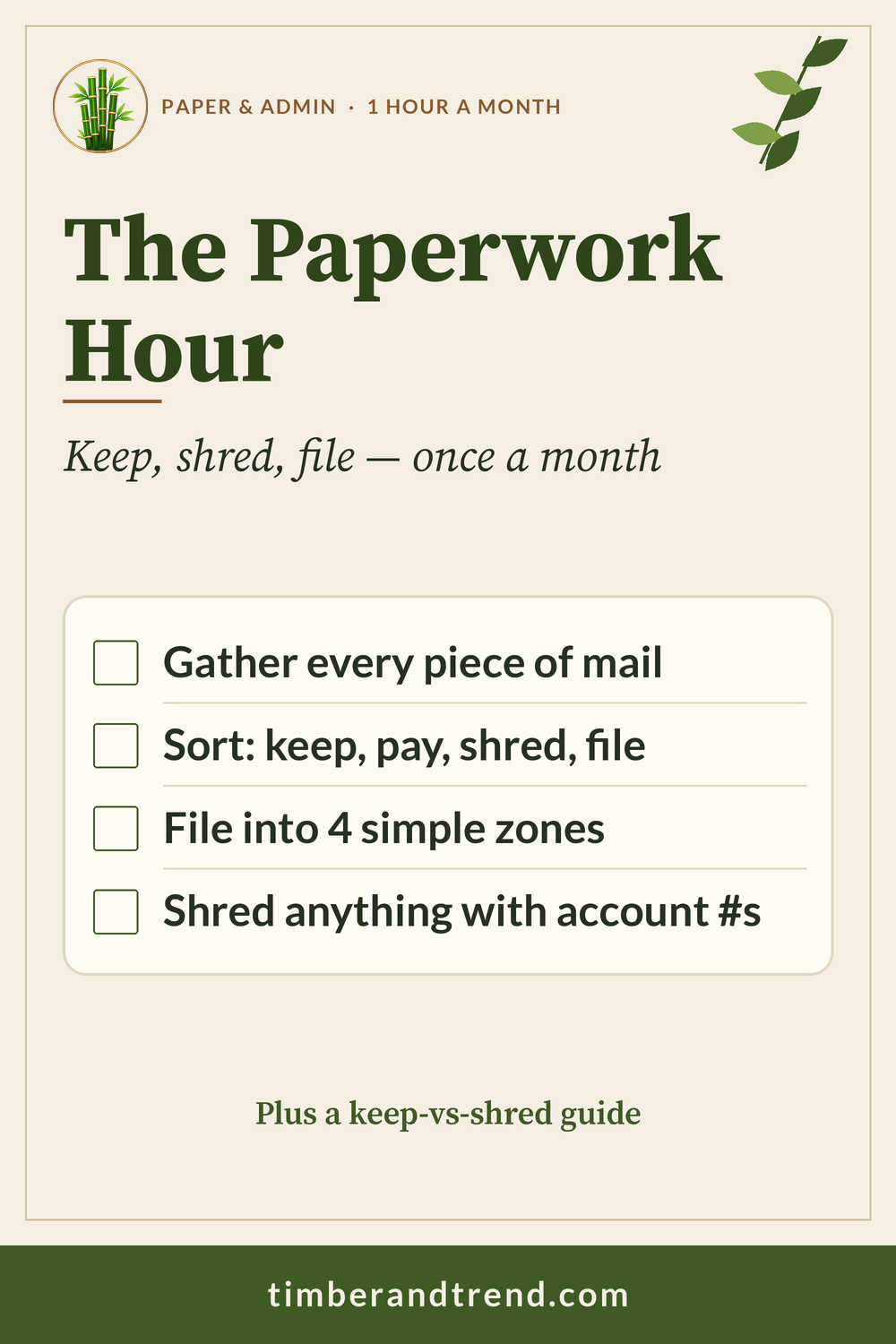
Pin it to your home or cleaning board so the checklist is there on reset day.
Printable bundle · $5 launch price
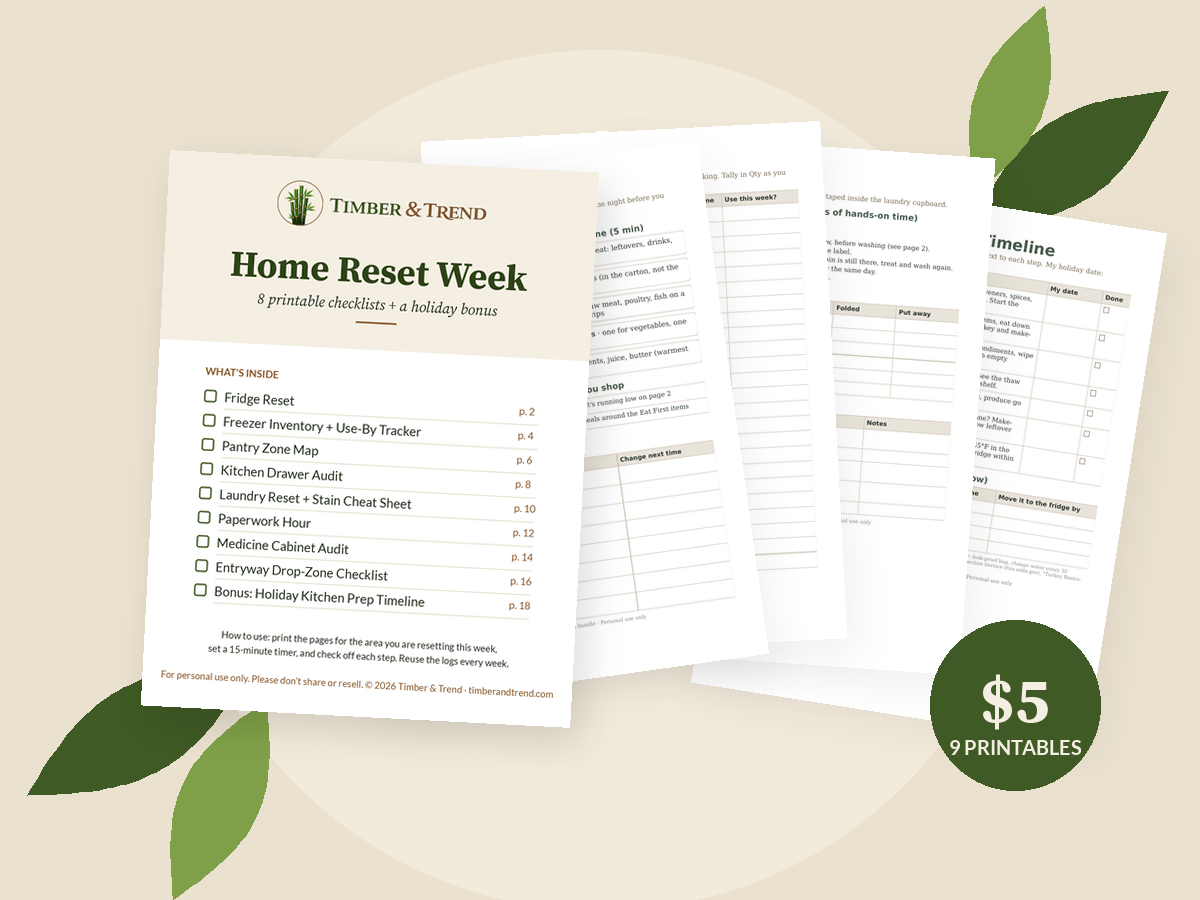
Get every checklist in one place
The Home Reset Week bundle has 8 printable resets (fridge, freezer, pantry, drawers, laundry, paperwork, medicine cabinet, entryway) plus a holiday kitchen prep timeline.