
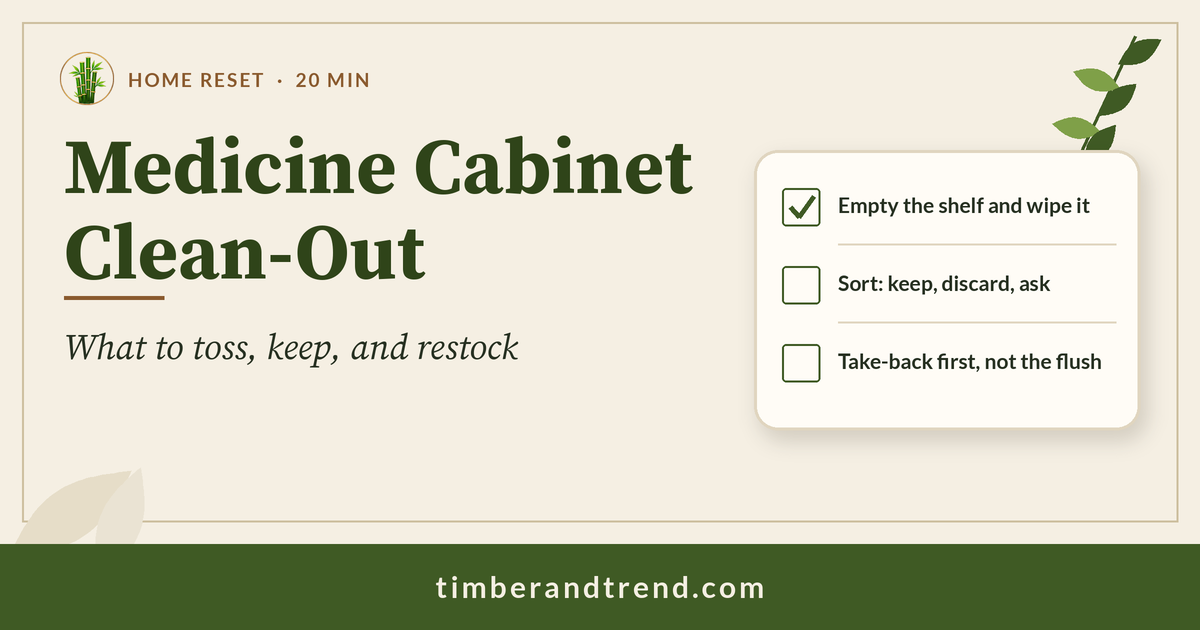
A medicine cabinet doesn’t stay sorted. Bottles migrate, half-empty tubes multiply, and the one thing you need at 2 a.m. is always the bottle that expired two winters ago.
A medicine cabinet clean-out is a short reset: pull everything out, decide keep or discard, write down what you kept, and restock only the basics. It takes about 20 minutes. The disposal part follows FDA and DEA guidance, so you’re not guessing about what goes in the trash.
Free printable: Grab the Reset Week Starter on the Free Printable page so this clean-out gets a real slot in your week, not a vague “I should.”
Why cabinets go sideways
It’s usually three quiet habits:
- You buy a backup before you check. Two bottles of the same allergy pills end up hiding behind the sunscreen.
- Expiry dates are tiny. You only notice them when someone’s already sick.
- Disposal feels unclear. So expired pills sit there “until you figure it out,” which never happens.
It’s the same pattern as the fridge and the junk drawer. Out of sight turns into out of date.
What you need
Keep the kit boring:
- A trash bag and a small box or tray for the keepers.
- A notepad or an expiry log with columns for item, form, expiry date, keep or discard, and notes.
- Optional: a couple of small open bins or a turntable if your shelf is deep. Only if you already know you’ll use them.
- A disposal plan. Take-back is best; more on that below.
Don’t buy a new cabinet. Empty the one you have first.
The five steps
1. Empty the shelf (3 minutes)
Pull every bottle, tube, and first-aid item onto a towel on the counter. Wipe the shelf. You can’t organize what you can’t see.
Check the spillover spots too: nightstand drawer, the vitamin shelf in the kitchen, the diaper bag, the gym bag, the car console. Bring it all into one pile for this pass.
2. Sort into three piles (7 minutes)
For each item, ask one question: is this still good, and is it still ours?
- Keep: in date, label readable, and someone in the house actually uses it.
- Discard: expired, label worn off, tablets crumbling, mystery liquids, anything that’s been recalled or looks or smells off.
- Ask: a prescription you’re unsure about, or something a clinician told you to finish. Call your pharmacist. This guide isn’t medical advice, and a pharmacist answers these questions all day.
Group the keepers while you sort: daily meds, as-needed (pain, allergy, stomach), and first aid.
3. Write down what you keep (5 minutes)
Log it once: item, form (tablet, liquid, cream), expiry, and where it lives. That list is how you stop buying duplicates next month.
Star anything that expires in the next 90 days. That’s your restock reminder, not an emergency.
4. Get rid of the discard pile properly (5 minutes)
This is the part people put off, so here’s the plain version of the official guidance:
- Take-back is the first choice. Many pharmacies and police stations have year-round drop boxes run by DEA-authorized collectors. The next National Prescription Drug Take Back Day is Saturday, October 24, 2026, 10 a.m. to 2 p.m. local time. Find a site through the DEA Diversion Control take-back page, or see the FDA’s take-back locations guide.
- Flush only if the medicine is on the FDA’s flush list. Most medicines aren’t. If it’s not on the FDA flush list, don’t flush it.
- No take-back option? Use the household trash method. The FDA’s steps: mix the medicine (don’t crush tablets or capsules) with something unappealing like used coffee grounds, dirt, or cat litter; seal it in a bag or container; throw it in the trash; and scratch out your personal info on the empty bottle. (FDA: Drug Disposal, Dispose “Non-Flush List” Medicine in Trash)
Sharps (needles, lancets) aren’t accepted at Take Back Day sites. Follow the label and your local sharps program for those.
5. Restock only what’s missing (optional, 5 minutes)
Restock from the list, not from memory. A sensible starter set for a lot of households:
- The pain or fever reducer you already use, in the right form and dose for everyone in the house.
- The antihistamine you already use.
- A digital thermometer that actually turns on.
- Bandages in a few sizes, antiseptic wipes, and the ointment you trust.
- Whatever your household actually reaches for when someone’s sick: electrolyte packets, throat lozenges, saline spray.
This isn’t a pharmacy haul. Buy what the log says you’re out of.
A zone map that sticks
Once the shelf is clear, give every keeper a home:
- Eye level: daily prescriptions and the things you use most.
- Top shelf: backups and rarely used over-the-counter meds (still in date).
- Locked or latched, up high: anything that’s dangerous for kids or pets. Curious hands and noses find open shelves fast.
Turn labels to face out. It sounds small, but it’s the difference between finding the right bottle at night and reading six labels by phone light.
Is the bathroom even the right spot?
Often, no. The FDA notes that a damp bathroom cabinet can make medicine less effective before its expiration date, and suggests a cool, dry place instead: a dresser drawer, a storage box, a closet shelf, or a kitchen cabinet away from the stove and sink. (FDA: Don’t Be Tempted to Use Expired Medicines) Keep the bandages in the bathroom and move the pills somewhere drier if you can. Wherever they go, keep them out of kids’ sight and reach.
Mistakes that undo the reset
- Keeping expired meds “for emergencies.” Expired goes in the discard pile, not the backup shelf.
- Sharing leftover prescriptions. Don’t.
- Buying cute containers before the log is done. Organization follows the list, not the other way round.
- Doing it once and never again. That’s how you end up back at mystery bottles.
How it fits the week
On the Weekly Home Reset Routine, the medicine cabinet shares Friday with the pantry on alternate weeks. A full empty-and-log once a quarter is plenty for most homes. A two-minute look at the expiry log each month catches the starred items before they turn into a late-night drugstore run.
If you keep a paper log, it fits nicely into your monthly Paperwork Hour: check the stars, add a line to the shopping list, done. And if you’re clearing out the kitchen this month too, the pantry reset uses the same pull, sort, log rhythm.
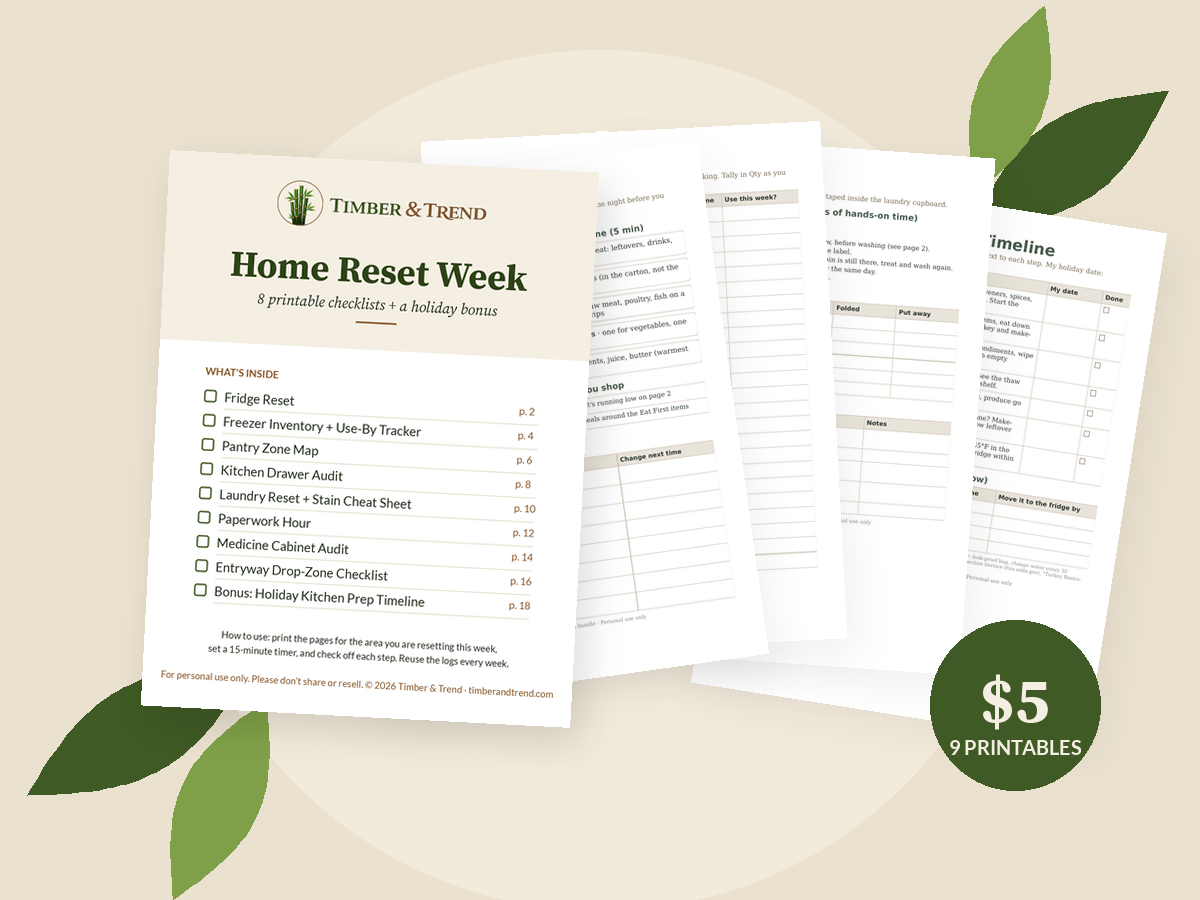
The Home Reset Week bundle has a printable Medicine Cabinet Audit with the expiry log already laid out.
Quick recap
- Empty the cabinet and wipe the shelf.
- Sort into keep, discard, and ask (call the pharmacist for prescription questions).
- Log the keepers and star anything expiring within 90 days.
- Take-back first, flush only if it’s on the FDA list, otherwise mix, seal, trash, and scratch out the label.
- Restock only what the log shows you need.
Twenty minutes, one clear shelf, and no mystery bottles at 2 a.m.
Save this for later
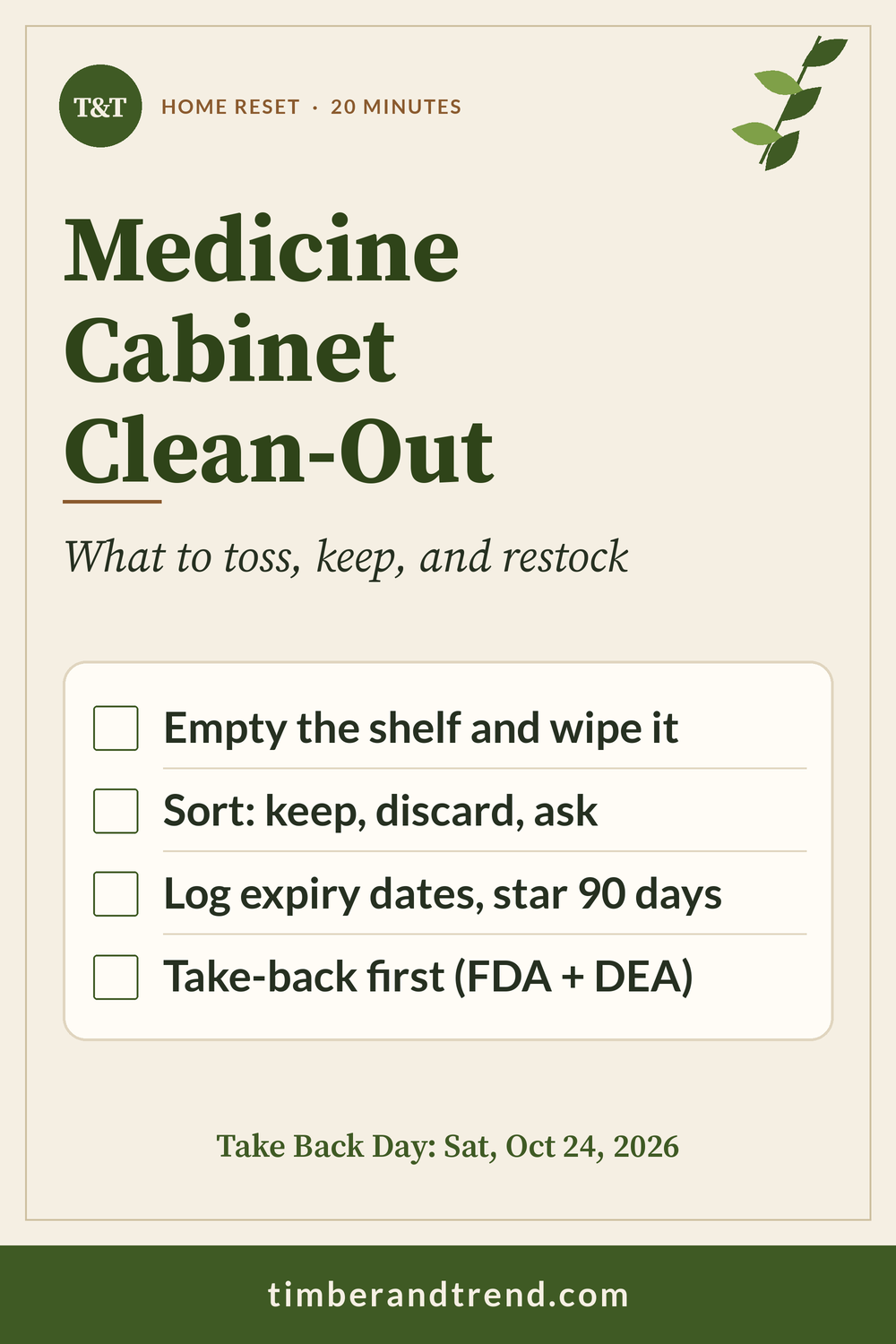
Pin it to your home or cleaning board so the checklist is there on reset day.
Printable bundle · $5 launch price
Get every checklist in one place
The Home Reset Week bundle has 8 printable resets (fridge, freezer, pantry, drawers, laundry, paperwork, medicine cabinet, entryway) plus a holiday kitchen prep timeline.