
Affiliate disclosure: This post contains affiliate links. If you buy through one, I may earn a commission at no extra cost to you. As an Amazon Associate I earn from qualifying purchases.
The gift made it. Then the paper didn’t.
You know the pile: shiny sheets, plastic bows, a ribbon that snapped in half, and a bag of tissue that somehow fills the whole kitchen. Nobody meant to make a second present for the trash can. But Michigan’s environment department says Americans create 25% more trash between Thanksgiving and New Year’s Day than at any other time of year, and wrapping is the part of that pile you can actually control.
Zero waste gift wrapping isn’t a purity contest. It’s three habits: use what you already have first, wrap so the wrap can live another year, and skip the finishes that can’t be recycled anyway. If you picked gifts that get used up or used for years in the low-waste holiday gifting guide, this is the matching step for the outside of the box.
Free printable · 2 pages · no email needed
The Zero-Waste Wrap Card
The furoshiki carry wrap and bottle wrap in four drawn steps each, the cloth-size rule, the 5-question wrap checklist, and a sheet of eight cut-out kraft gift tags. Print it, stick it inside the wrap bin, done.
Start with a stash, not a store
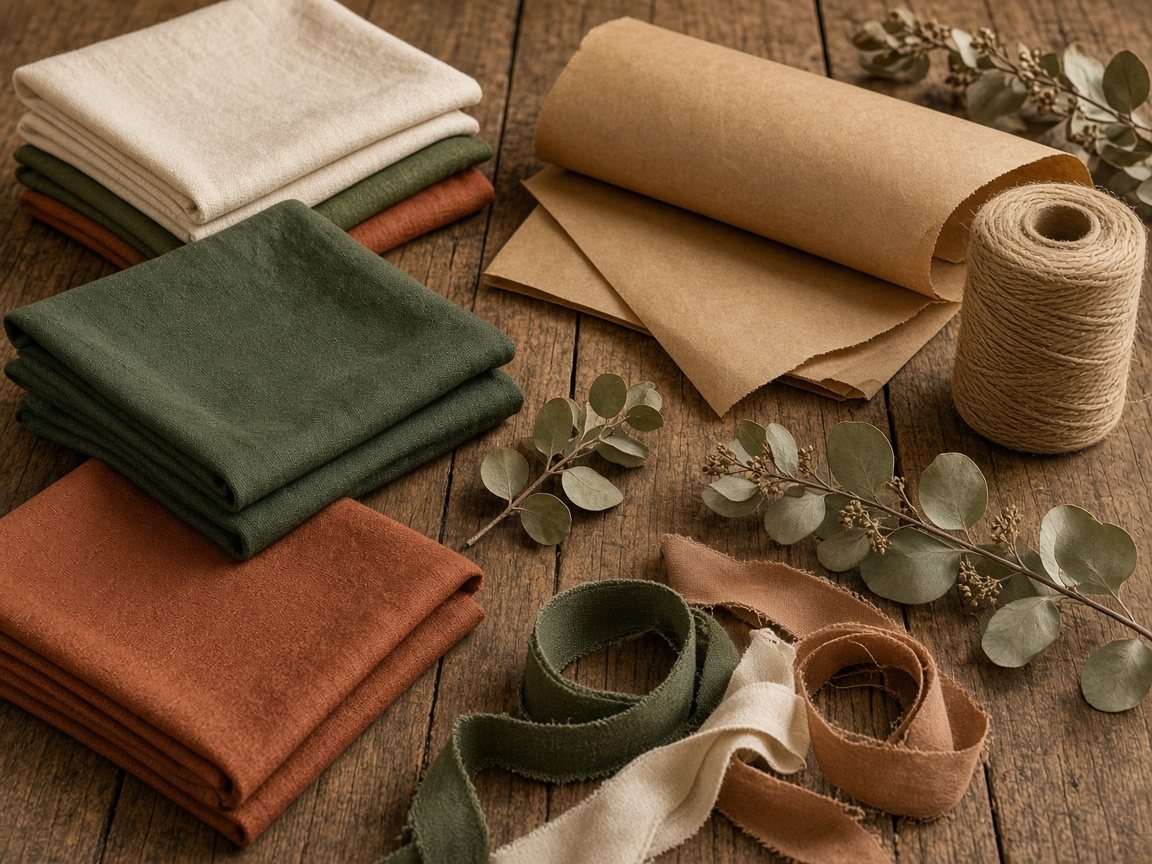
Before you buy a single roll, open one drawer or tote and see what’s already in the house:
- Leftover kraft or packing paper from online orders
- Gift bags and tissue from last year (yes, flatten and keep them)
- Tea towels, scarves, bandanas, clean cotton napkins
- Twine, leftover yarn, or a ribbon you can reuse
- Shipping boxes that still look decent
Keep it all in one spot. A bin on a high shelf works. If your pantry reset already has a pile for household stuff, park the wrap kit next to it so you’re not hunting under the bed on December 22nd.
Once a year, during a Paperwork Hour or a quiet slot in your weekly home reset, pull the stash out, toss the ripped foil paper, and restack the bags. Ten minutes. That’s the system.
Fabric wrap (furoshiki, without the intimidation)
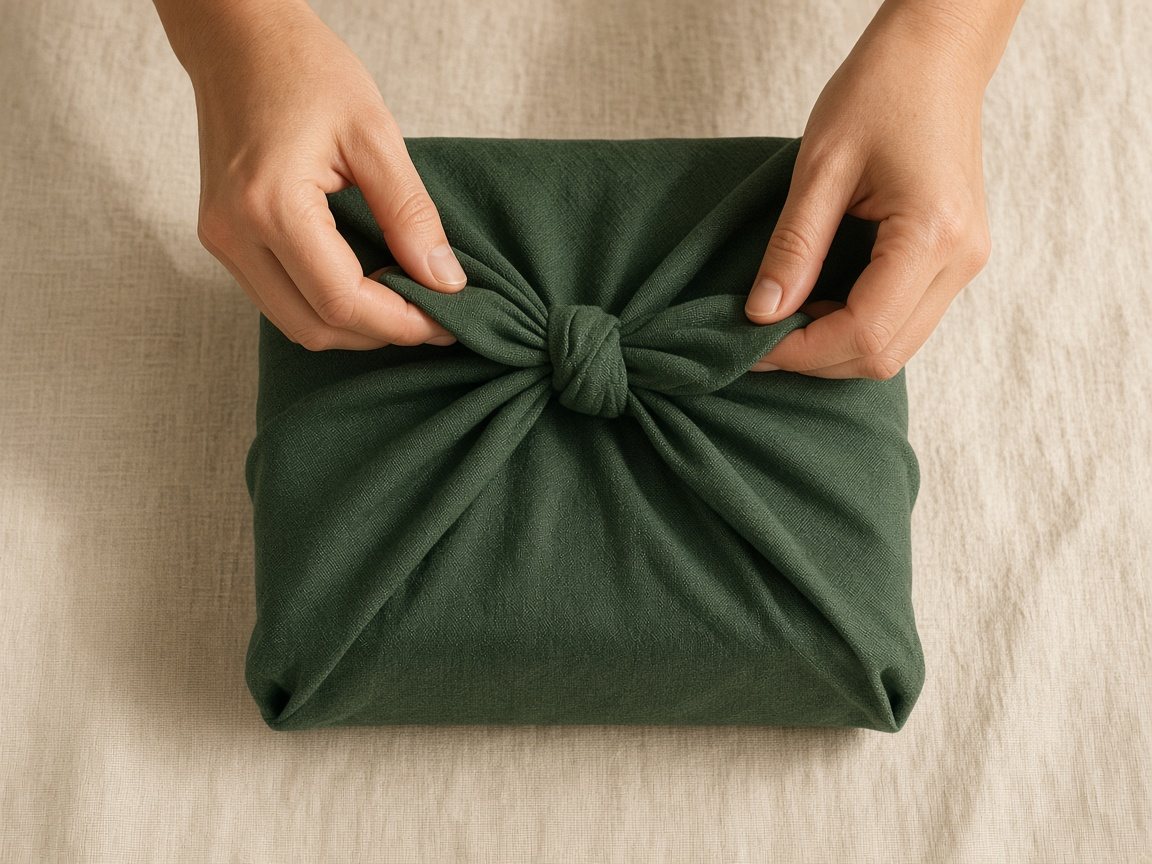
Furoshiki is a Japanese wrapping cloth: one nearly square piece of fabric that ties around a gift instead of paper. Japan’s Ministry of the Environment featured it in its COOL CHOICE climate campaign as packaging you can use again and again, handy for gifts, lunch boxes, and carrying things, and a way to cut the waste that comes from wrapping paper and boxes. (Japan MOE COOL CHOICE: furoshiki how-to, in Japanese)
You don’t need a specialty cloth with a museum print. A hemmed cotton napkin, a tea towel, or a soft scarf works fine.
If you’d still like one dedicated cloth, go big. A 39-inch cotton furoshiki covers a book or a bottle, and it goes back in the drawer for next year.
Size rule of thumb: that same how-to says a box wraps best when its diagonal is about a third of the cloth’s diagonal. In plain terms, measure the box corner to corner across the top, and the cloth’s corner-to-corner should be about three times that. For a squarish box, that’s a cloth about three times as wide as the box, so a 20-inch napkin fits a box about 6½ inches square.
Every knot below is a square knot. Cross the two corners and wrap once, cross them again, pull the tips through, and pull tight. It lies flat and holds.
The basic carry wrap (box or book)
- Lay the cloth flat like a diamond, one corner pointing at you. Set the gift in the center.
- Bring the near and far corners up over the gift and tie them in a square knot on top.
- Bring the left and right corners in and tie a second knot, or tuck them under the first if you want a flatter top.
- Done. The knot is the bow. No tape.
That’s enough for a book, a boxed candle, or a small stack of printables.
The bottle (or jar) wrap
- Stand the bottle in the center of the cloth.
- Bring two opposite corners up and tie a square knot just above the cap.
- Wrap the other two corners around the bottle in opposite directions so they cross at the back.
- Bring them around to the front and tie another square knot. Tuck in the ends.
Wine, olive oil, a tall jar of homemade spice blend: same move. The top knot doubles as a handle. If you’re giving food, still label the ingredients (there’s an allergen note in the gifting post). A pretty wrap doesn’t replace a clear label.
Make the cloth part of the gift
A tea towel around kitchen tools. A scarf around a book. A bandana around a small repair kit. Now the wrap has a second job after the knot comes undone, which is the whole point.
Wash and fold your own cloths after the holidays and put them back in the stash. Next year starts easier.
Kraft paper when you still want paper
Plain kraft or packing paper is the safe paper choice. Michigan’s recycling guidance says plain brown craft paper is always recyclable and makes a great blank canvas, and simple, plain tissue paper typically goes in curbside programs with other mixed paper. Its “almost always not accepted” list: glitter wrap, metallic wrap, ribbons and bows (plastic or fabric), and wrap covered in excessive tape. Rules vary, so check your local program. (Michigan EGLE: Recycling holiday giftwrap)
The EPA says paper gift wrap often isn’t recyclable when it has a shiny or laminated coating. If you buy wrap, it suggests a type that can be recycled or is made from recycled content. It also encourages reusing gift bags, boxes, and tissue paper, and calls newspaper an excellent alternative to gift wrap. (EPA: How Do I Recycle Common Recyclables)
Buying a roll anyway? Plain, uncoated recycled kraft paper is my pick. No glitter, no foil, and it takes a stamp or a doodle.
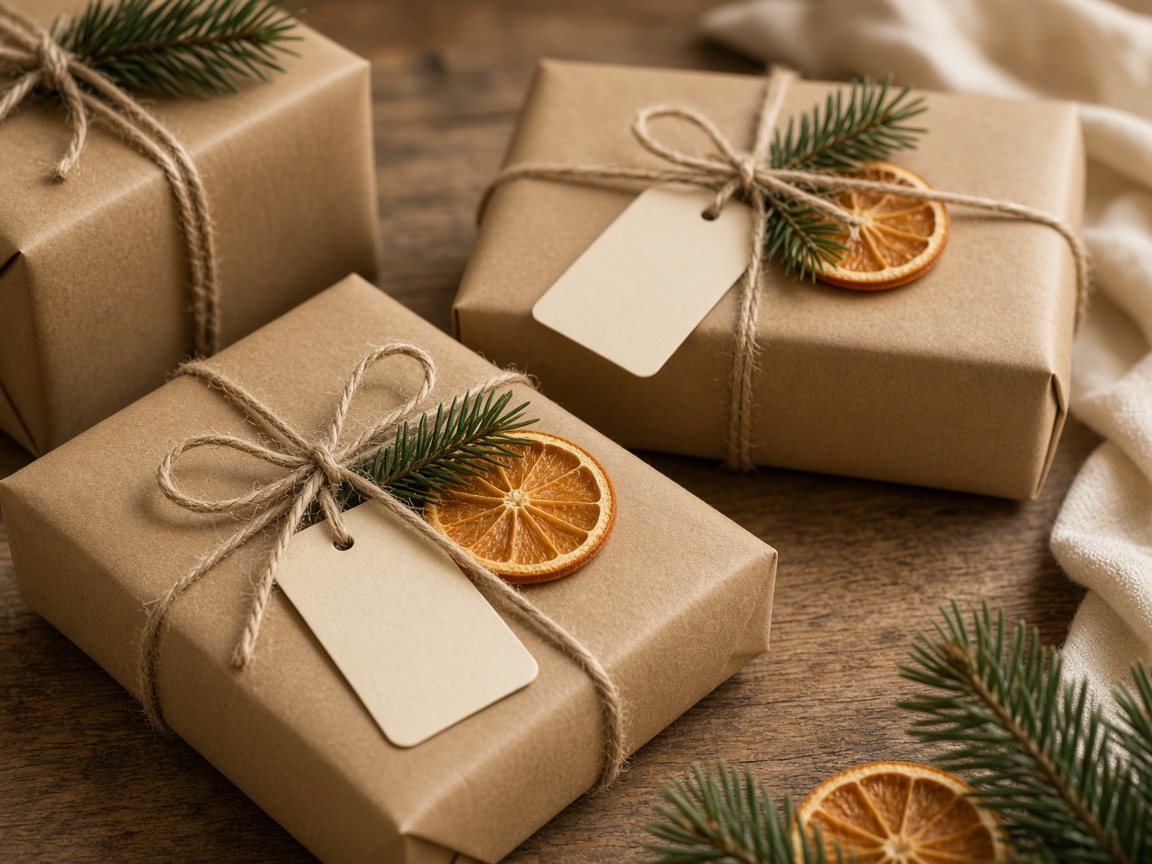
A simple kraft wrap that looks finished:
- Cut the paper so it wraps the gift once with a small overlap. Extra length is just future waste.
- Fold clean edges. Use three short pieces of tape, not a taped-shut seam, or skip tape and let the twine hold the folds.
- Tie with twine, leftover yarn, or a ribbon you’re reusing.
- Add one natural detail: a sprig of rosemary, a dried orange slice, a cinnamon stick, or a kraft tag with the name written in marker.
Newspaper comics, old maps, and kids’ drawings work the same way. If it’s plain paper with no shine, glitter, or foil, you’re already ahead of the foil roll.
What to skip (and why)
You can still make a pretty pile without the finishes that fight the recycling system:
- Glitter and metallic paper. Pretty in the photo. Glitter can contaminate recycling, and most curbside programs won’t take metallic wrap (EGLE).
- Plastic ribbon curls and pre-made bows. They can’t be recycled. Reuse the ones you already own, or skip them. Twine reads as finished.
- New tissue when last year’s is still sitting in a bag. Flatten it. Use it. Buy more only when the stash is empty.
- Wrapping something that doesn’t need it. A plant in a pot, a jar of cookies with a cloth over the lid, tickets in an envelope. Done.
The EPA’s holiday tips land in the same place: wrap gifts in recycled or reused paper, save or recycle the used paper, and give gifts that don’t need much packaging, like concert tickets. (EPA: What You Can Do, Tips for the Holidays)
Tags, notes, and the “open me” problem
A reusable wrap needs a name on it so nobody opens the wrong gift. Options that don’t add trash:
- A small kraft tag on twine (there’s a sheet of eight on the free Wrap Card)
- A strip of washi tape with the name written on it
- A luggage-style tag you already own
- For fabric wraps, a safety pin through a paper tag (take it off before they keep the cloth)
Writing tags by hand is a small analog pleasure. There’s more of that in Analog Life.
If several gifts share one bag for travel, put a paper list inside the bag. One bag, one list, fewer panicked re-wraps in the driveway.
A 20-minute wrapping night
Treat it like any other reset: timer on, one clear end.
- Pull the stash and the gift list (5 min).
- Match each gift to fabric, kraft, or a reused bag (5 min).
- Wrap and tag (8 min).
- Put leftover paper and cloths back in the bin so next time isn’t a scavenger hunt (2 min).
Stop when the timer goes. Unfinished gifts wait for tomorrow. Wrapping marathons are how you end up buying glitter paper at 9 p.m. because you’re tired and the stash felt “not festive enough.”
The zero-waste wrap checklist
Before you head to the store for more paper, run these:
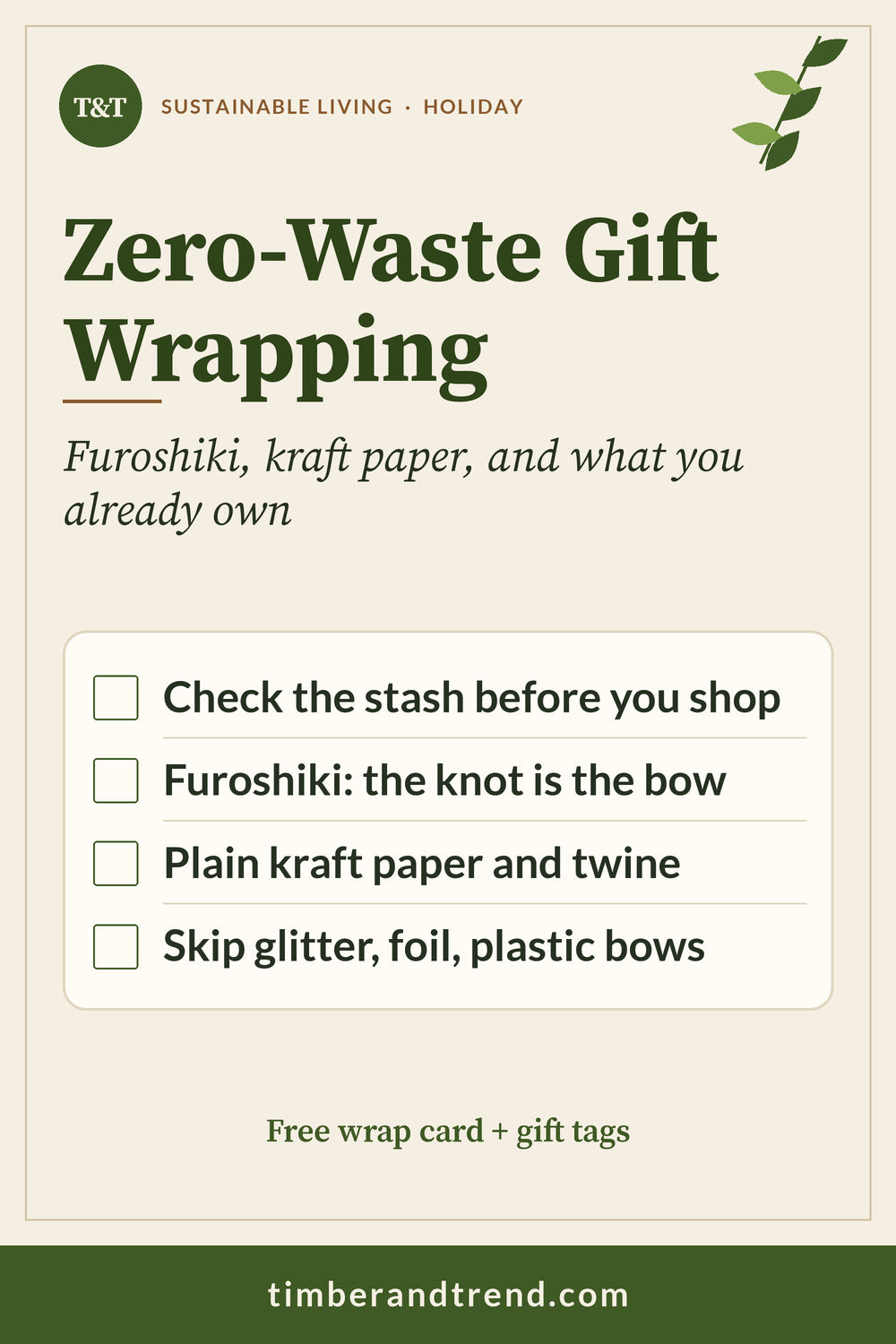
- Did I check the stash first?
- Can this gift wear a cloth, a reused bag, or kraft paper instead of shiny paper?
- Is the wrap reusable or plain recyclable paper (not headed for the trash)?
- Did I skip glitter, foil, and a mountain of tape?
- Is there a tag so the wrap stays intact until the right person opens it?
Four yeses and you’re fine. Fewer than that? Dig deeper in the closet before you spend.
Pair this with gifts that earn their keep from the low-waste gifting guide, and clear fridge and pantry space before edible gifts arrive with the Holiday Kitchen Prep timeline. Wrapping is the last five minutes. The stash and the list are what make those minutes calm.
Save this for later
Pin it to your holiday board so the wrap steps are there on wrapping night.
Printable bundle · $5 launch price
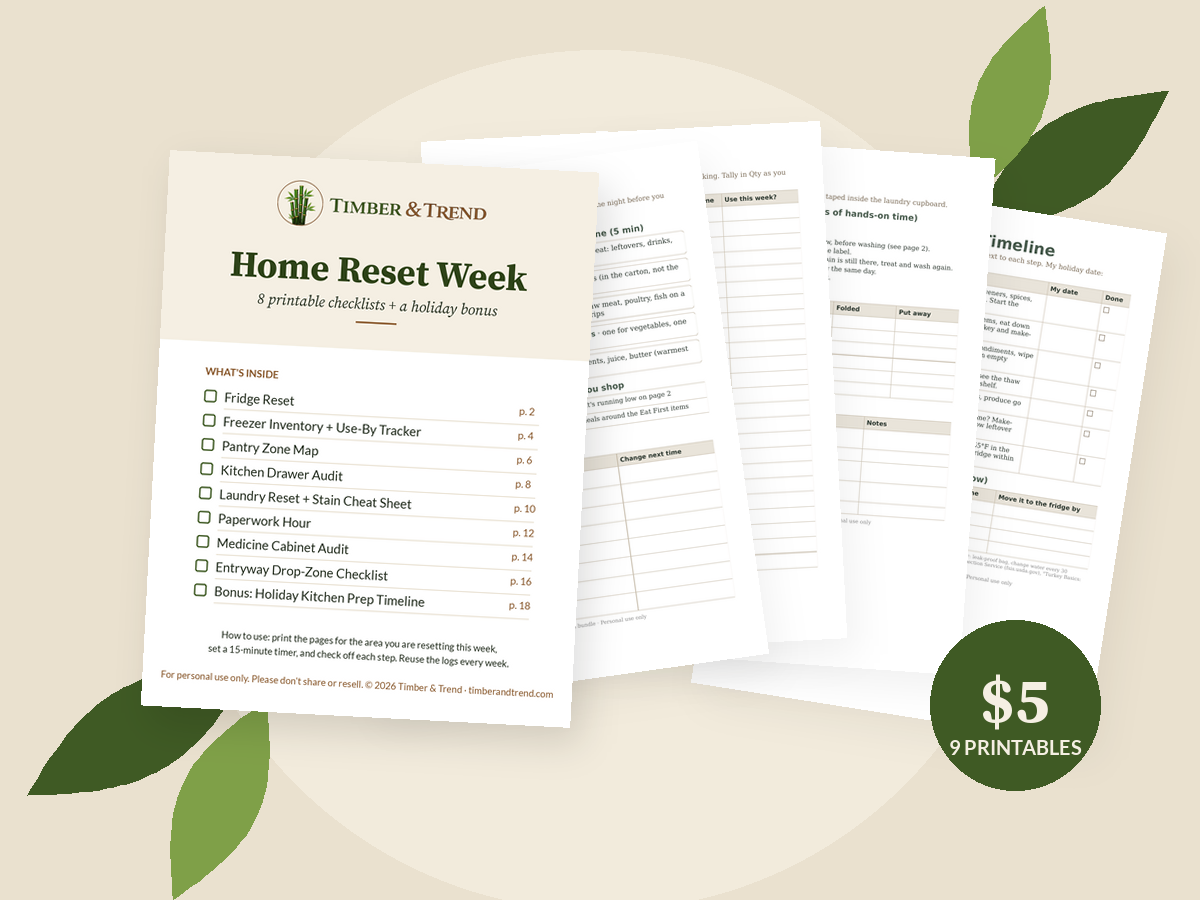
Get every checklist in one place
The Home Reset Week bundle has 8 printable resets (fridge, freezer, pantry, drawers, laundry, paperwork, medicine cabinet, entryway) plus a holiday kitchen prep timeline.