
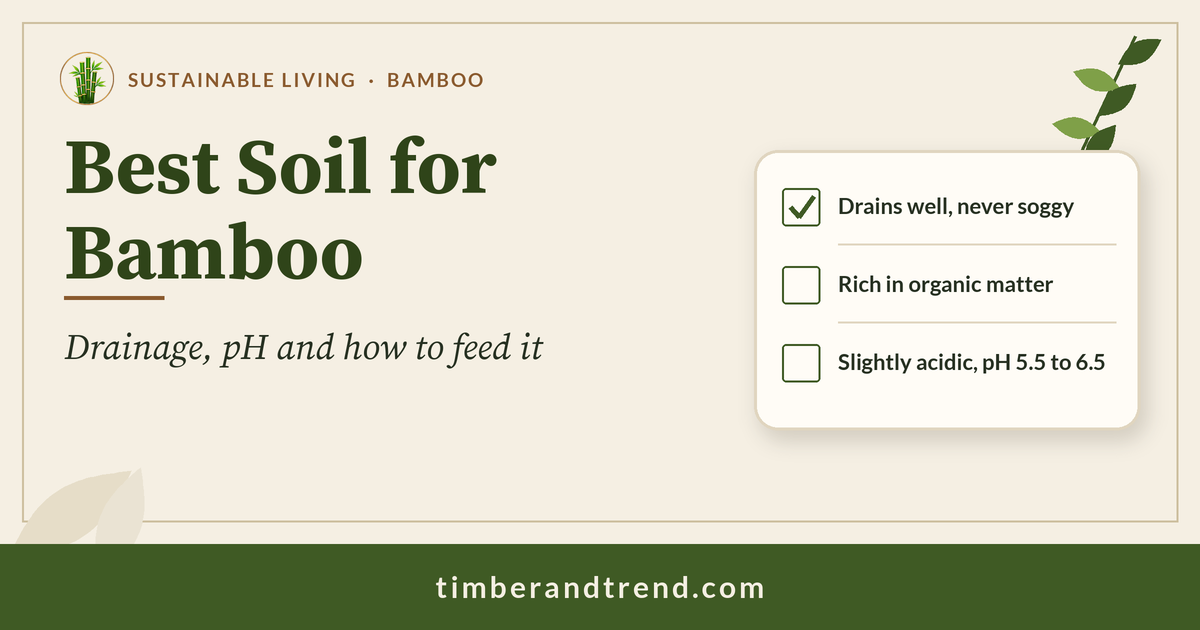
Bamboo isn’t fussy about much. Soil is the exception.
Give it the wrong ground and it’ll limp along for years. Give it the right ground and you’ll wonder why you waited.
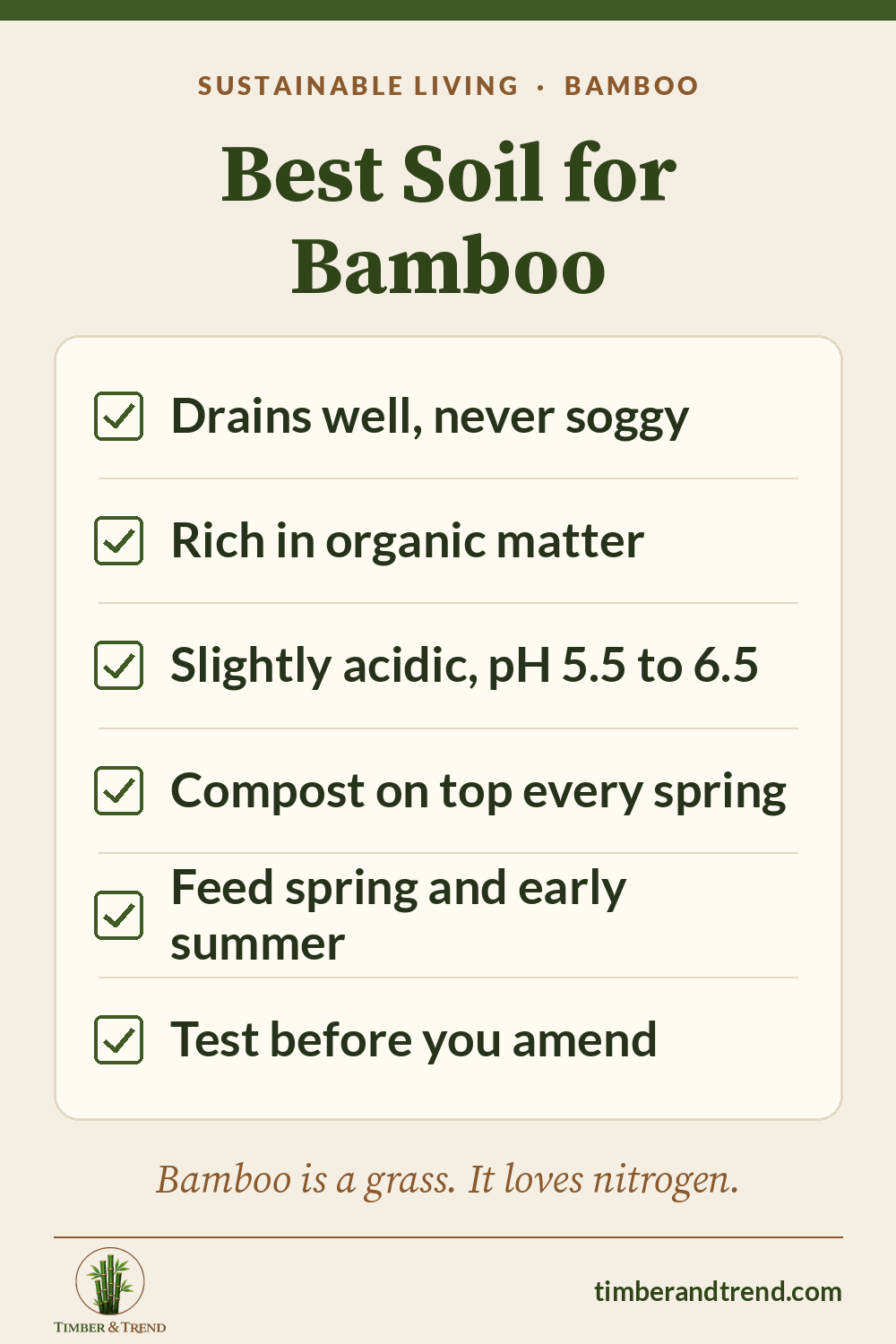
Quick answer: Bamboo grows best in loose, well-drained soil that’s rich in organic matter and slightly acidic, around pH 5.5 to 6.5 (most bamboo tolerates close to neutral too). Fix heavy clay with compost or by planting on a raised mound, not by mixing in sand. Feed with compost and a nitrogen-leaning fertilizer in spring and early summer.
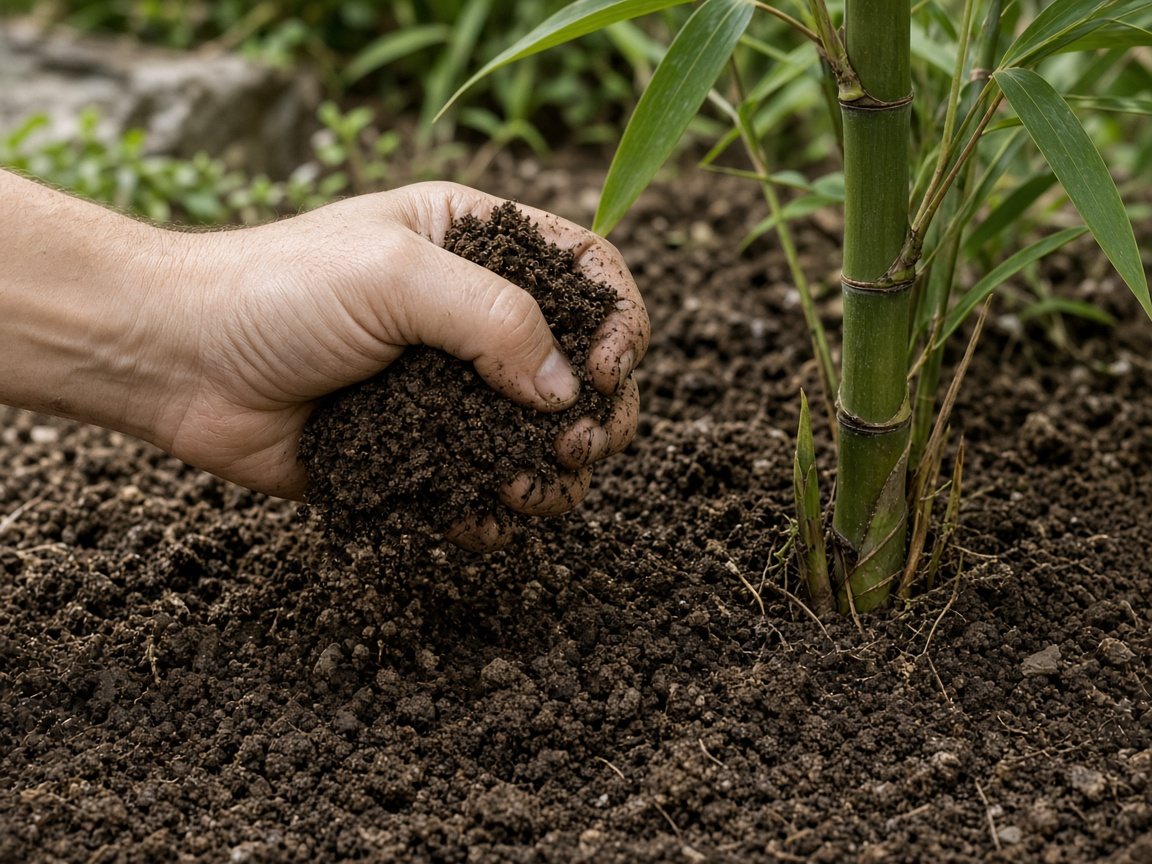
Drainage comes first
Bamboo likes water. It hates sitting in it.
Roots and rhizomes in waterlogged soil run short on oxygen and can rot. So before anything else, check how your soil drains.
The easy test: dig a hole about a foot deep, fill it with water, let it drain, then fill it again. If the second fill is still standing the next day, you’ve got a drainage problem.
If you have heavy clay
- Add organic matter. Work compost into a wide area, not just the planting hole. A rich hole in a sea of clay acts like a bathtub.
- Plant high. A low mound or raised bed lifts the root zone out of the wet.
- Don’t add sand. This one’s everywhere online, and it’s wrong. A little sand in clay can make it denser, not looser. Compost is the fix.
If you have sandy soil
Sand drains great and dries fast. Add compost to help it hold moisture, and mulch well. You’ll still water more often.
Soil pH
Most bamboo prefers slightly acidic soil, roughly pH 5.5 to 6.5, and plenty of species cope fine up toward neutral. Very alkaline soil is where you tend to see pale, yellowish leaves.
Don’t guess. A soil test from your local cooperative extension office tells you the pH and what nutrients you’re short on, and it usually costs less than a bag of fertilizer. Adjust only if the test says so, using the amounts it recommends.
Organic matter: the quiet hero
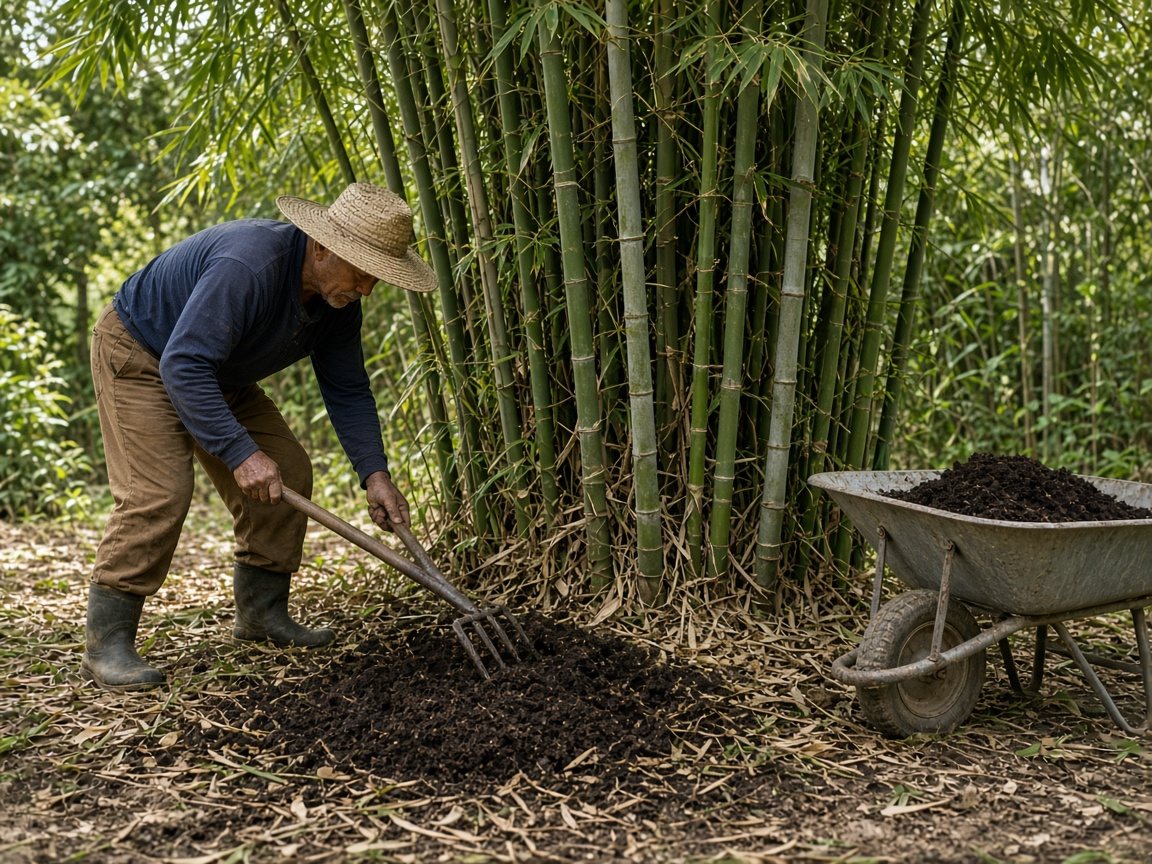
Compost, aged manure or leaf mold does three jobs at once. It loosens clay, helps sand hold water, and feeds the soil slowly.
Spread a couple of inches on top every spring and let worms do the mixing. Then mulch. Bamboo drops its own leaves, and those are worth leaving where they fall.
What bamboo eats
Here’s the simple version of N-P-K, the three numbers on a fertilizer bag:
- Nitrogen (N): leaves and new canes. Bamboo is a grass, so this is the big one.
- Phosphorus (P): roots and energy.
- Potassium (K): overall toughness, water use, cold and stress tolerance.
How to feed it
- Feed in spring and early summer, when shoots and leaves are growing.
- A balanced or nitrogen-leaning slow-release fertilizer works. So does a lawn-type fertilizer without weed killer.
- Follow the label. More is not better. Too much can burn roots and leaves, and runoff ends up in waterways.
- Skip late feeding in cold climates. You don’t want soft new growth heading into frost.
If your soil test shows you’re already high in phosphorus (lots of garden soils are), pick a fertilizer with little or none.
Soil for potted bamboo
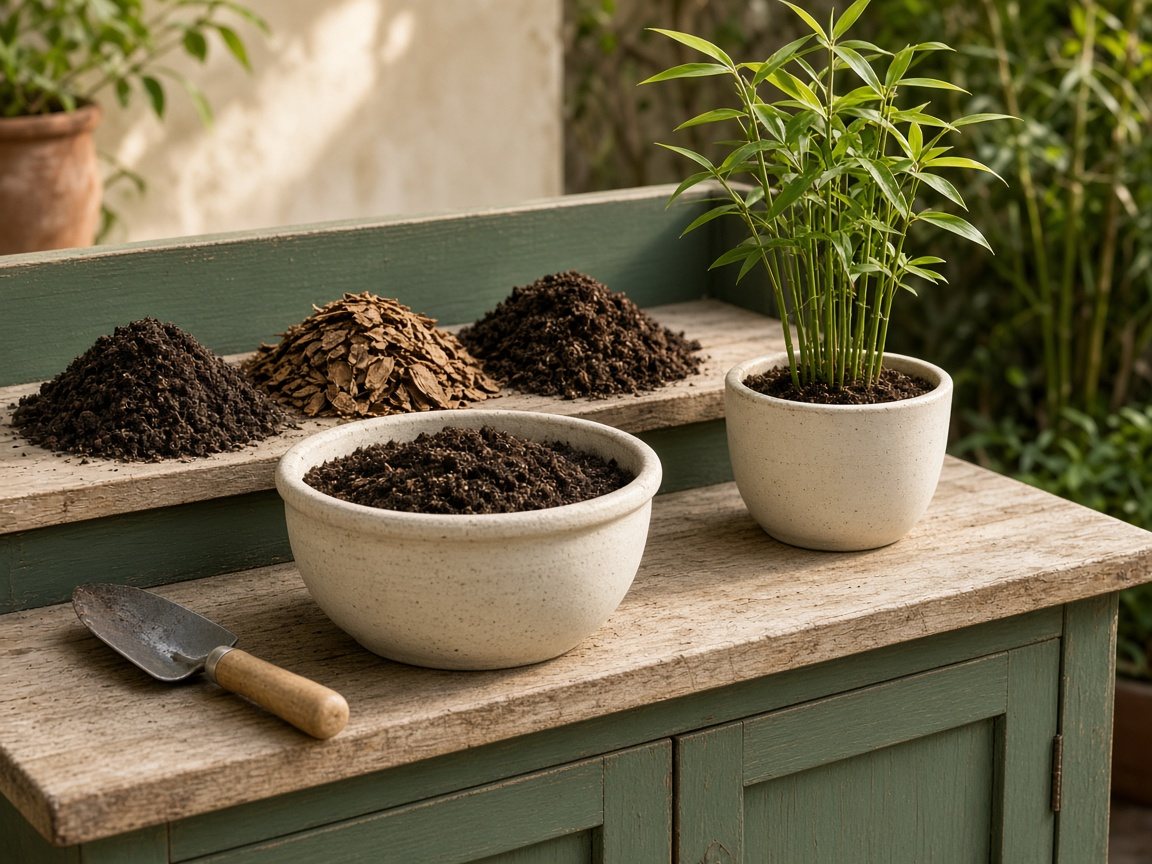
Use a good-quality potting mix, not garden soil. Garden soil packs down in a pot and drains badly. A mix with some bark in it holds its structure longer. Plan to refresh or repot every few years.
Putting it together
Loose, rich, well-drained, slightly acidic. Compost on top every spring. Feed lightly when it’s growing. That’s it.
New to bamboo? Start with how to plant clumping bamboo, and if you’ve got a runner, contain it first.
More bamboo and sustainable living
- Running Bamboo: What It Is and How to Contain It (Root Barrier Guide)
- How to Plant and Care for Clumping Bamboo (Without the Spread)
- Everything in Sustainable Living
Save this for later
Pin it to your garden or Sustainable Living board so it’s there when you need it.
Printable bundle · $5 launch price
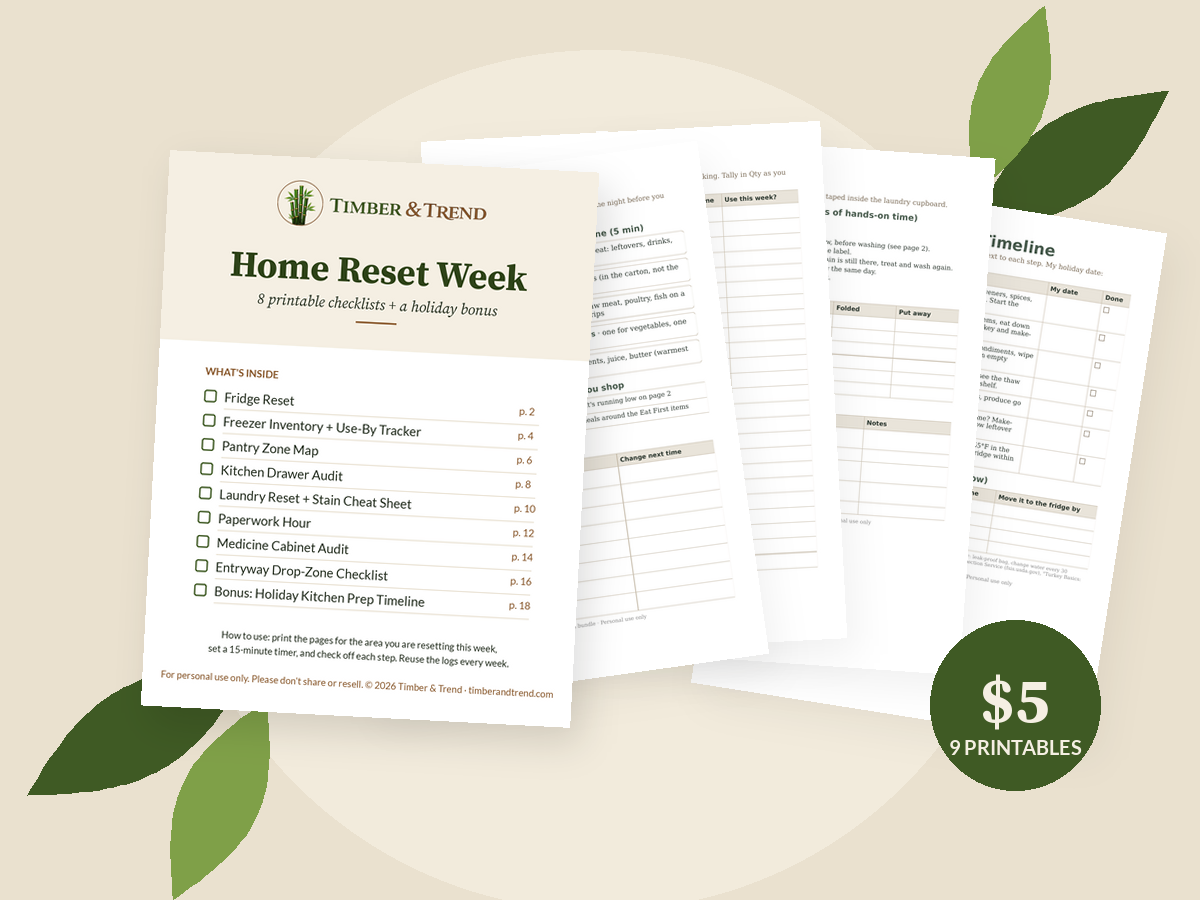
Get every checklist in one place
The Home Reset Week bundle has 8 printable resets (fridge, freezer, pantry, drawers, laundry, paperwork, medicine cabinet, entryway) plus a holiday kitchen prep timeline.