
The kitchen is where most of a home’s trash starts. Packaging comes in with every grocery run, paper towels go out by the roll, and the back of the fridge quietly turns into compost. Then the holidays land on top of all of it. The EPA has said Americans throw away 25 percent more trash between Thanksgiving and New Year’s than during the rest of the year (EPA).
You don’t fix that with a cart full of matching bamboo everything. You fix it with one rule: swap it when it runs out. When the paper towels are gone, reach for a cloth. When the spray cleaner is empty, refill a glass bottle. One shelf at a time, the kitchen gets lighter, and nothing that still works ends up in the trash just because it’s plastic.
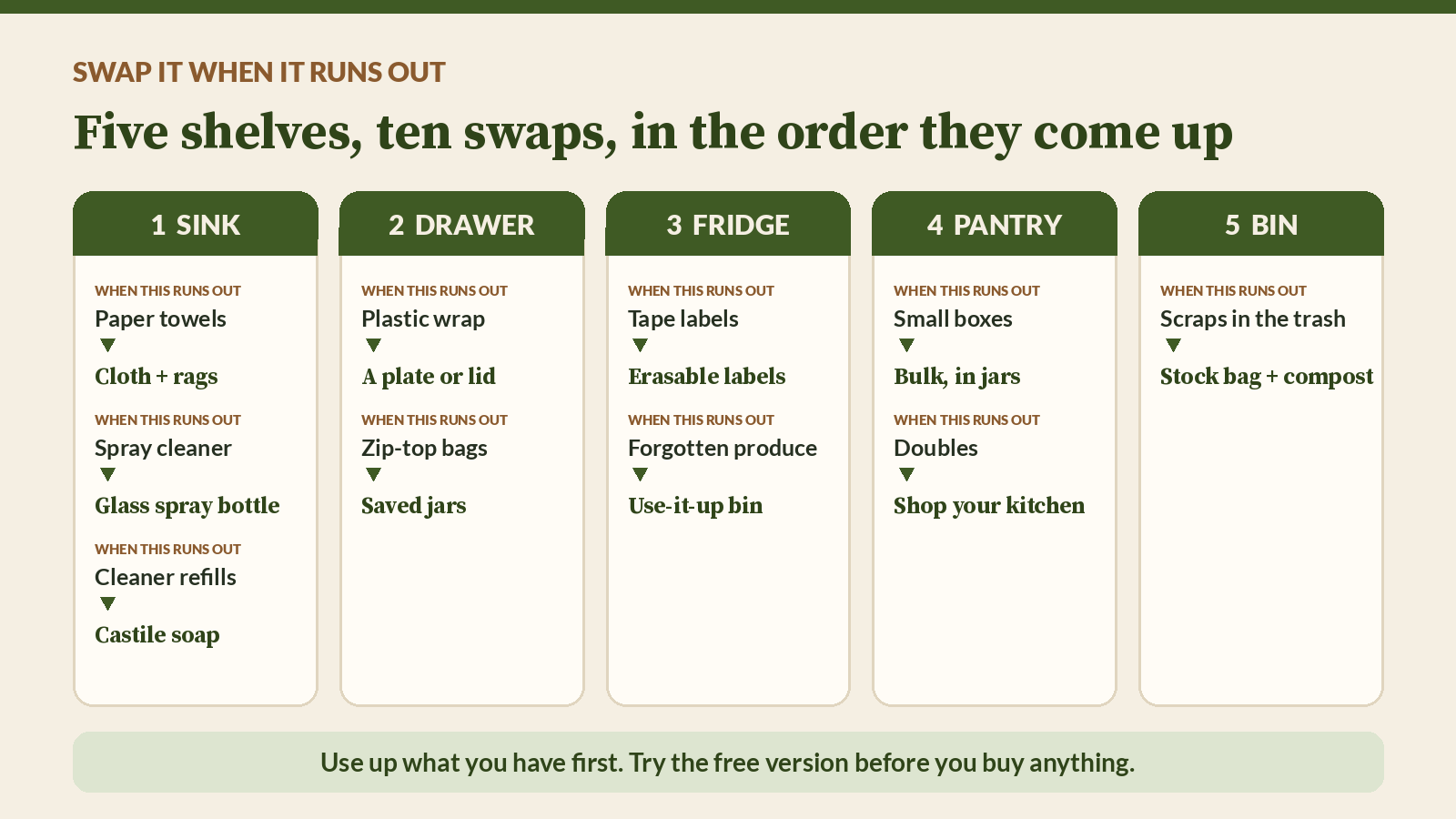
Here are ten swaps in the order they usually come up, grouped by shelf, plus a holiday version for the next two months of cooking.
Free printable · 2 pages · no email needed
Swap When It Runs Out Tracker + Low-Waste Holiday Kitchen
Page one lists all ten swaps by shelf, with a box for the date each one ran out and whether you are keeping the swap. Page two is a low-waste holiday kitchen checklist for before, during and after the big meal, plus a leftovers-going-home list and a jar count.
Affiliate disclosure: This post contains affiliate links. As an Amazon Associate, I earn from qualifying purchases, so if you buy through one of these links I may earn a commission at no extra cost to you. The scene and stock images in this post are for display and inspiration only and may not show the exact items linked.
Why start with the kitchen
Containers and packaging are the single biggest product category in US municipal waste. The EPA estimated 82.2 million tons of it in 2018, or 28.1 percent of everything generated (EPA). Food made up another 21.6 percent (EPA). Most of both pass through a kitchen.
Recycling helps less than it feels like it should, especially with plastic. The EPA put the overall plastics recycling rate at 8.7 percent in 2018 (EPA). So the swaps below lean on reuse first and recycling second.
There’s money in it too. The EPA says the average family of four spends almost $3,000 a year on food that doesn’t get eaten (EPA). Two of the ten swaps are really about eating what you already bought.
The rule: swap it when it runs out
This is the part that keeps a low-waste kitchen cheap and calm.
- Use up what you have. The plastic containers already in your cabinet are fine. Keep using them until they crack, warp or stop sealing.
- Swap at the moment of rebuying. When something runs out, that’s your cue to try the reusable version instead of buying the same thing again.
- Try the free version first. A saved pasta sauce jar, a plate over a bowl, an old towel cut into rags. Buy something only when the free version doesn’t work for you.
- One shelf at a time. Work through the kitchen in the order below so you’re never “redoing the kitchen.” You’re just restocking a little differently.
The printable tracker keeps a running list, so you don’t have to remember which swaps you’ve tried.
Shelf 1: The sink
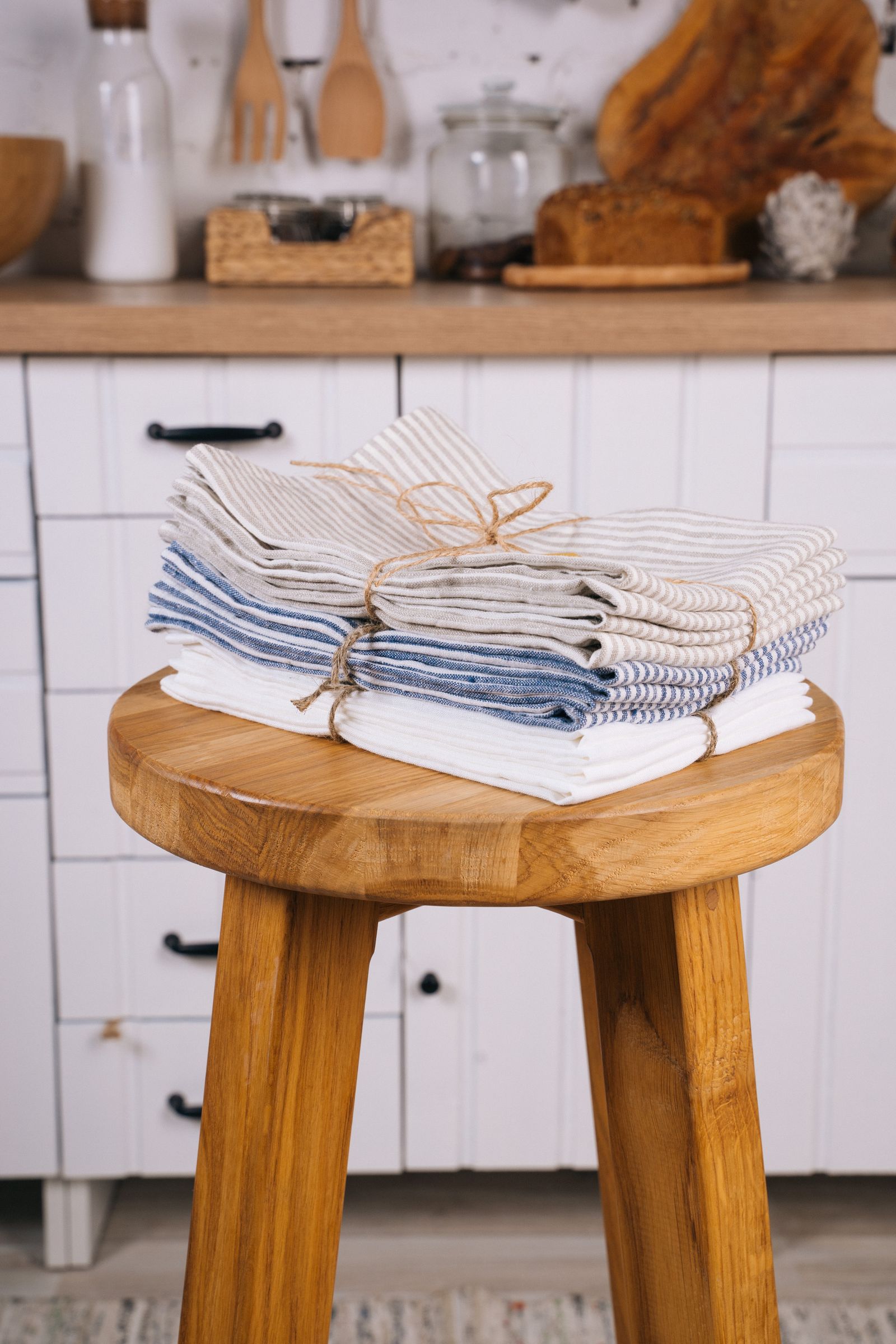
1. Paper towels → a stack of cloth towels and rags
When it runs out: the last roll of paper towels.
Keep a short stack of dish towels by the sink for hands and dishes, and a separate basket of rags for spills and grime. Old bath towels, worn flannel shirts and cotton tees make good rags once they’re past wearing. If something from the mending basket is too far gone to fix, this is where it goes.
The trick that makes it stick: a small bin or bag under the sink for used cloths, washed with the towels on laundry day. If you’d like to keep one roll of paper towels for raw meat and truly gross jobs, that’s still a big drop from a roll a week.
2. Bottled spray cleaner → a refillable glass spray bottle
When it runs out: the next empty spray bottle of all-purpose cleaner.
Every empty spray cleaner is a bottle and a trigger headed for the bin. Mixing your own in a bottle you keep means you stop buying the bottle over and over. The recipes and the “never mix” list are in the natural cleaning recipes guide. Two bottles cover most kitchens: one castile spray for counters and one vinegar spray for glass and hard water spots. Label them so nobody grabs the wrong one.
A two-pack of amber glass spray bottles works well for exactly that split, and the set below comes with reusable chalk labels.
As an Amazon Associate, I earn from qualifying purchases.
3. Dish soap and cleaner refills → one bottle of castile concentrate
When it runs out: the next refill of all-purpose cleaner, or soap for your spray bottle.
Liquid castile soap is a concentrate, so one bottle makes a lot of spray. Dr. Bronner’s dilution chart puts the all-purpose spray at 1/4 cup of soap in a quart of water (Dr. Bronner’s). Two rules from the cleaning guide still apply. Don’t mix castile and vinegar in the same bottle. Vinegar is an acid, and it breaks the soap down into a curdled, oily mess that doesn’t clean (Lisa Bronner). Use them one after the other, never together. And neither one is a disinfectant.
The unscented version is the easy pick for a kitchen, since there’s no scent fighting with dinner.
As an Amazon Associate, I earn from qualifying purchases.
Shelf 2: The drawer
4. Plastic wrap → a plate, a lid, or a container
When it runs out: the roll of plastic wrap.
Most of what plastic wrap does, a plate does too. Set a plate on top of a bowl of leftovers, put half an onion cut side down on a small saucer, or move food into a container with a lid. For rising dough, a damp towel over the bowl works.
If you do keep wrap around, the EPA notes that plastic bags, wraps and films can’t go in your household recycling bin. Many grocery and retail stores collect them instead (EPA).
5. Zip-top bags → jars and containers you already own
When it runs out: the box of sandwich or storage bags.
Start a jar shelf. Every clean pasta sauce, salsa or pickle jar that comes through the kitchen gets its label soaked off and goes on it. Jars hold snacks, soup, sauces, dry goods, and leftovers going home with guests.
Bags you already have can be washed and reused for dry things like crackers. When they finally wear out, the EPA’s tip is to cut off the zipper before taking them to a store drop-off (EPA).
Shelf 3: The fridge
6. Sticky notes and masking tape → reusable labels for leftovers
When it runs out: your roll of masking tape, or your patience for peeling gummy stickers off containers.
Date labels are what get leftovers eaten. USDA’s guidance is to eat refrigerated leftovers within 3 to 4 days, or freeze them (USDA FSIS), and a date on the lid takes the guessing out of it. Erasable labels stay on the container and wipe clean for the next batch, so you’re not peeling and tossing a label every time.
The Leftover Night guide has a weekly use-it-up dinner and a Thanksgiving leftovers tracker that pairs well with these.
As an Amazon Associate, I earn from qualifying purchases.
7. Forgotten produce → a use-it-up bin
When it runs out: never, so start this one now. It’s free.
Put a small bin or one shelf at eye level in the fridge for food that needs to go first: half an onion, the last of the herbs, the open yogurt. The EPA suggests making a list each week of what needs to be used up and planning meals around it (EPA). The fridge organization checklist walks through setting up the whole fridge this way, and the freezer inventory printable does the same for the freezer.
Shelf 4: The pantry
8. Small boxes and bags → bigger sizes, decanted into jars
When it runs out: the next box of pasta, rice, oats or flour.
Buying staples you go through fast in larger sizes, or from bulk bins if your store has them, usually means less packaging per cup. Decanting into clear, airtight jars keeps them dry and lets you see at a glance when you’re low. Write the use-by date from the bag on the jar label before the bag goes in the recycling.
Start with the three or four staples you buy most. There’s no need to decant spices you use once a year. The pantry organization on a budget post covers the shelf setup.
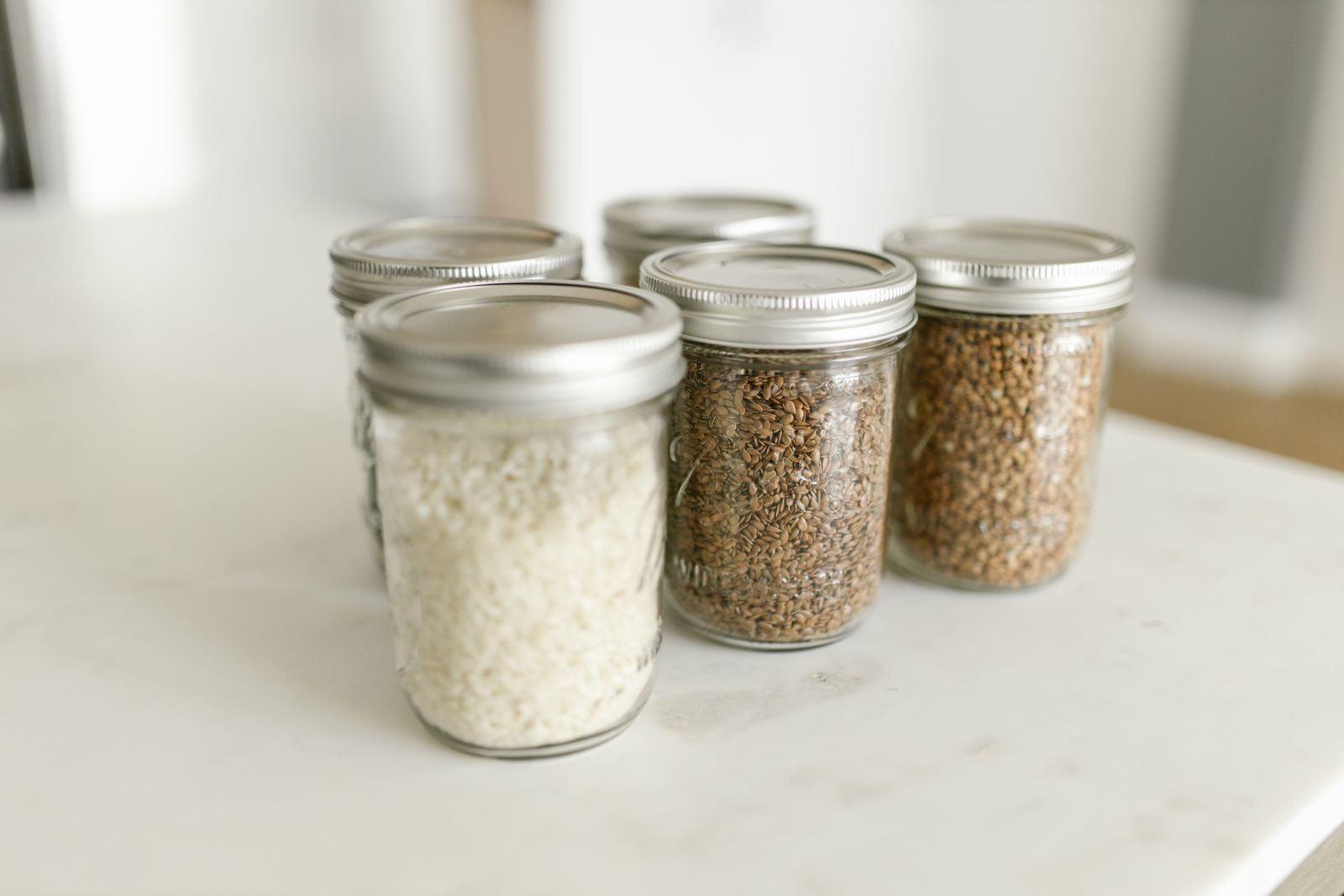
If the saved-jar shelf isn’t enough for the big staples, a set of wide-mouth glass jars with bamboo lids in a few sizes covers pasta, oats, rice and flour. The set below includes five jars in three sizes plus labels and an erasable marker.
As an Amazon Associate, I earn from qualifying purchases.
9. Doubles in the cabinet → shop your kitchen first
When it runs out: the next time you write a grocery list.
The EPA’s first tip for wasting less food is to look in the fridge, freezer and pantry before you shop so you don’t buy what you already have (EPA). A paper list on the fridge makes this a two-minute habit. Add to it when something runs out, and check the shelves against it before you leave. (Three cans of pumpkin in November is a very common pantry.)
Shelf 5: The bin
10. Scraps in the trash → a stock bag and compost
When it runs out: the next time you take out a heavy, smelly trash bag.
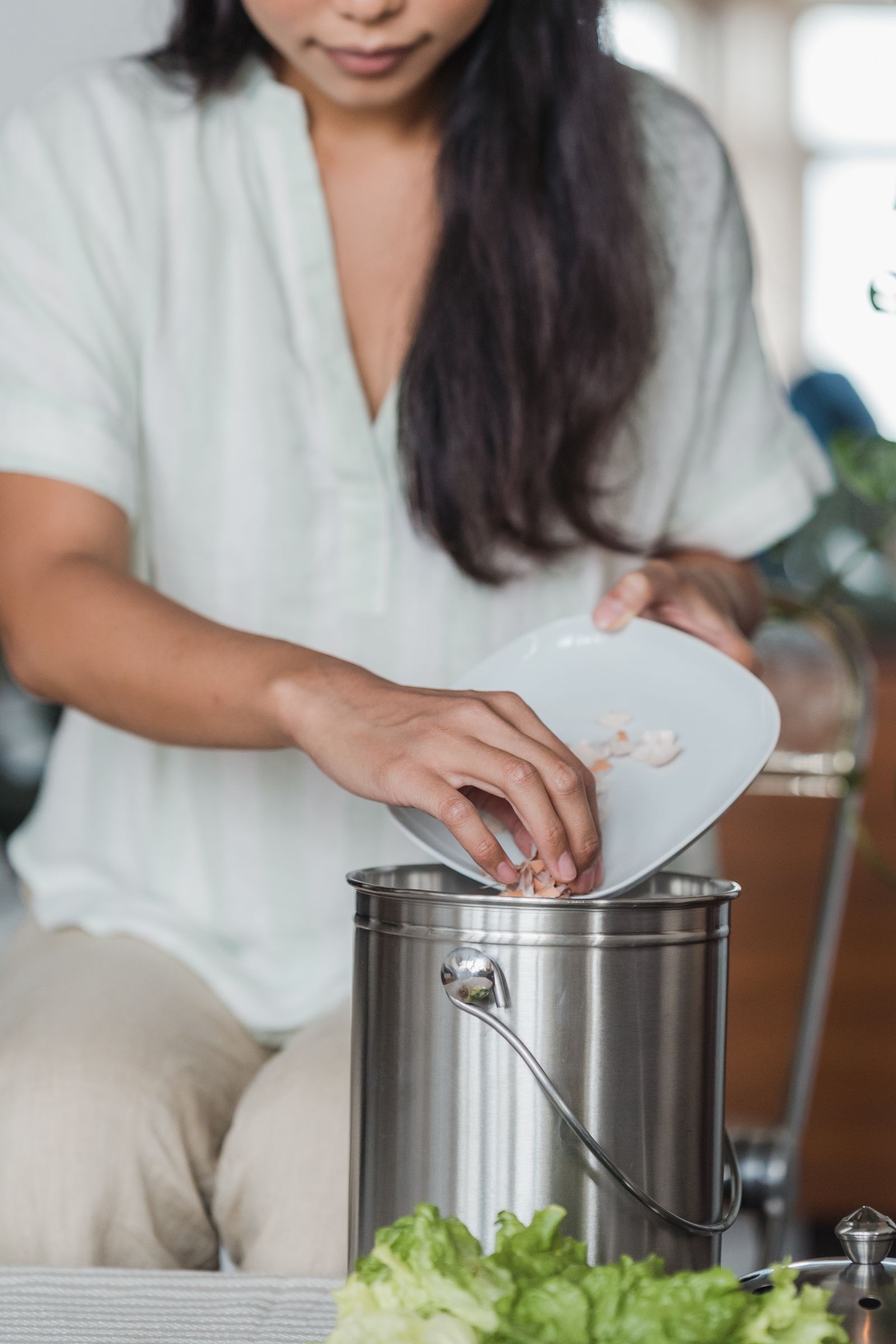
Keep a bag or container in the freezer for clean vegetable scraps like onion ends, carrot peels and celery tops. When it’s full, simmer it into stock. What’s left after that can go to compost.
If you compost at home, the EPA’s basic recipe is a mix of greens like fruit and vegetable scraps and coffee grounds, browns like dry leaves and shredded cardboard, plus water and air. Their list also says to keep meat, fish, dairy and fats out of a backyard pile (EPA). No yard? Many towns and farmers markets run food scrap drop-offs, so it’s worth checking your local program.
The holiday version: November and December
The same swaps, pointed at the busiest cooking weeks of the year.
Before the big meal
- Clear one fridge shelf and the use-it-up bin the weekend before. The Thanksgiving kitchen prep checklist has the full countdown.
- Wash and stack six to eight saved jars for sending leftovers home with guests.
- Mix one bottle of castile spray so cleanup doesn’t start with a store run.
- Pull out cloth napkins and dish towels. If you’re setting the table for the season, the fall decor that lasts guide carries from Halloween to Thanksgiving.
The day of
- Set out a scrap bowl on the counter while you cook, so peels go straight to the stock bag or compost.
- Label leftovers with the date as they go into the fridge.
- Put a rag basket by the sink for spills.
After
- Eat or freeze leftovers within 3 to 4 days (USDA FSIS).
- Save clean jars and gift boxes for December. A jar of homemade spice mix or granola is one of the low-waste holiday gift ideas, and the zero-waste gift wrapping guide covers the outside.
- Take plastic film and bags to a store drop-off, not the curbside bin.
What not to swap (yet)
- Working plastic containers. Keep them until they wear out. Then swap.
- A whole matching jar set on day one. Saved jars are free. Buy only for the staples that don’t fit.
- Anything you won’t use. A reusable thing that sits in a drawer is just more stuff.
- Your whole routine at once. Two or three swaps a month is plenty. The weekly home reset routine is a good place to check in on them.
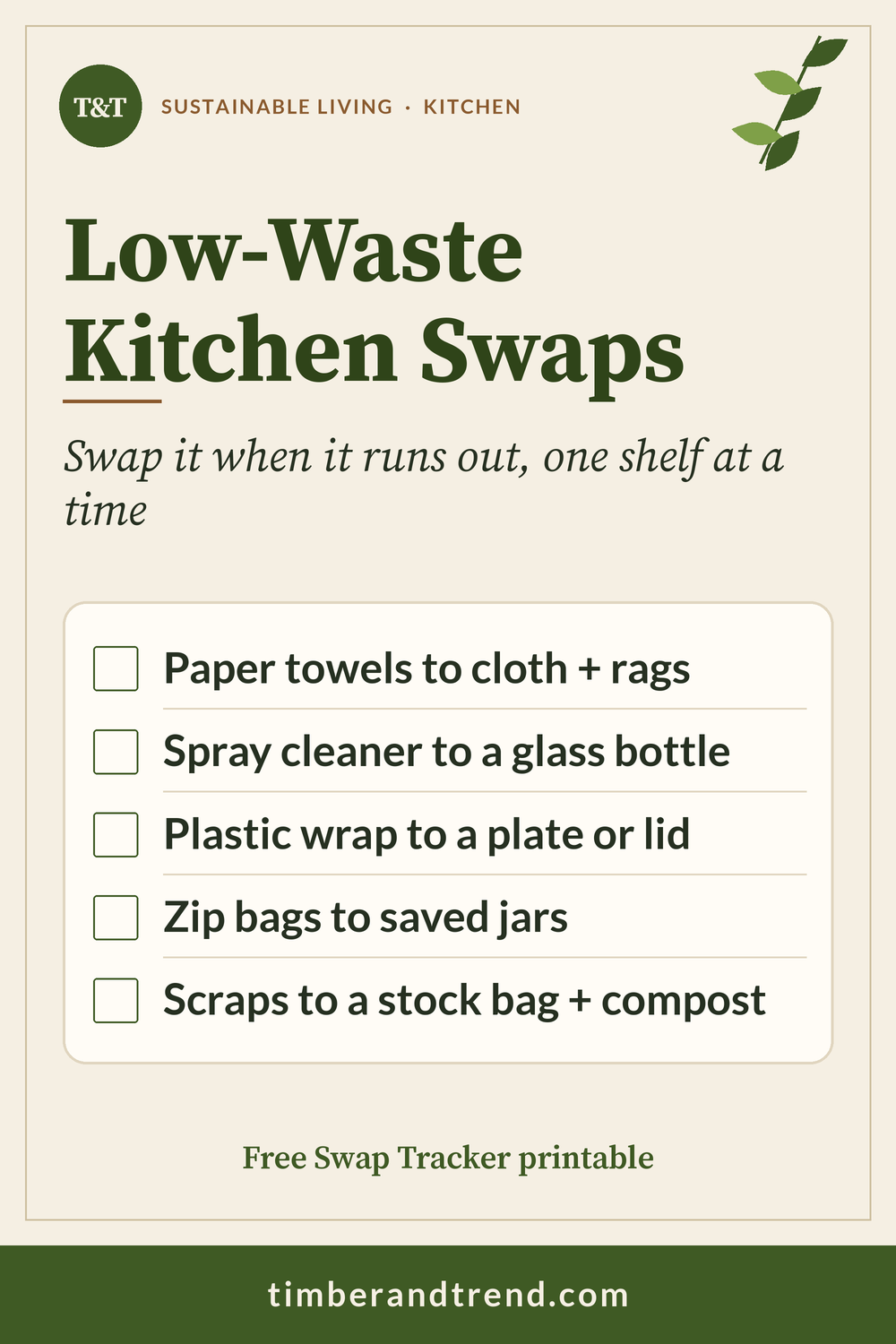
The 10 swaps at a glance
| When this runs out | Swap to |
|---|---|
| Paper towels | Dish towels + a rag basket |
| Spray cleaner | Refillable glass spray bottle |
| Cleaner refills | Castile soap concentrate |
| Plastic wrap | Plate, lid or container |
| Zip-top bags | Saved jars + containers |
| Masking tape labels | Reusable erasable labels |
| Room in the fridge | A use-it-up bin |
| Small pantry boxes | Bigger sizes, decanted into jars |
| Room in the cabinet | Shop your kitchen first |
| Trash bag space | Stock bag + compost |
More low-waste reading is in Sustainable Living, and the kitchen resets live under Home Resets.
Sources
- U.S. EPA, Waste Reduction Holiday Tips From the U.S. EPA (news release, Dec 2, 2004)
- U.S. EPA, Containers and Packaging: Product-Specific Data (2018 data)
- U.S. EPA, Guide to the Facts and Figures Report about Materials, Waste and Recycling (2018 data)
- U.S. EPA, Plastics: Material-Specific Data (2018 data)
- U.S. EPA, Preventing Wasted Food at Home
- U.S. EPA, How Do I Recycle Common Recyclables
- U.S. EPA, Composting at Home
- USDA FSIS, Leftovers and Food Safety
- Dr. Bronner’s, Dilutions Cheat Sheet for Castile Soap
- Lisa Bronner, A Word of Caution About Vinegar and Castile Soap
Save this for later
Pin it to your Sustainable Living board so the swap list is there the next time something runs out.
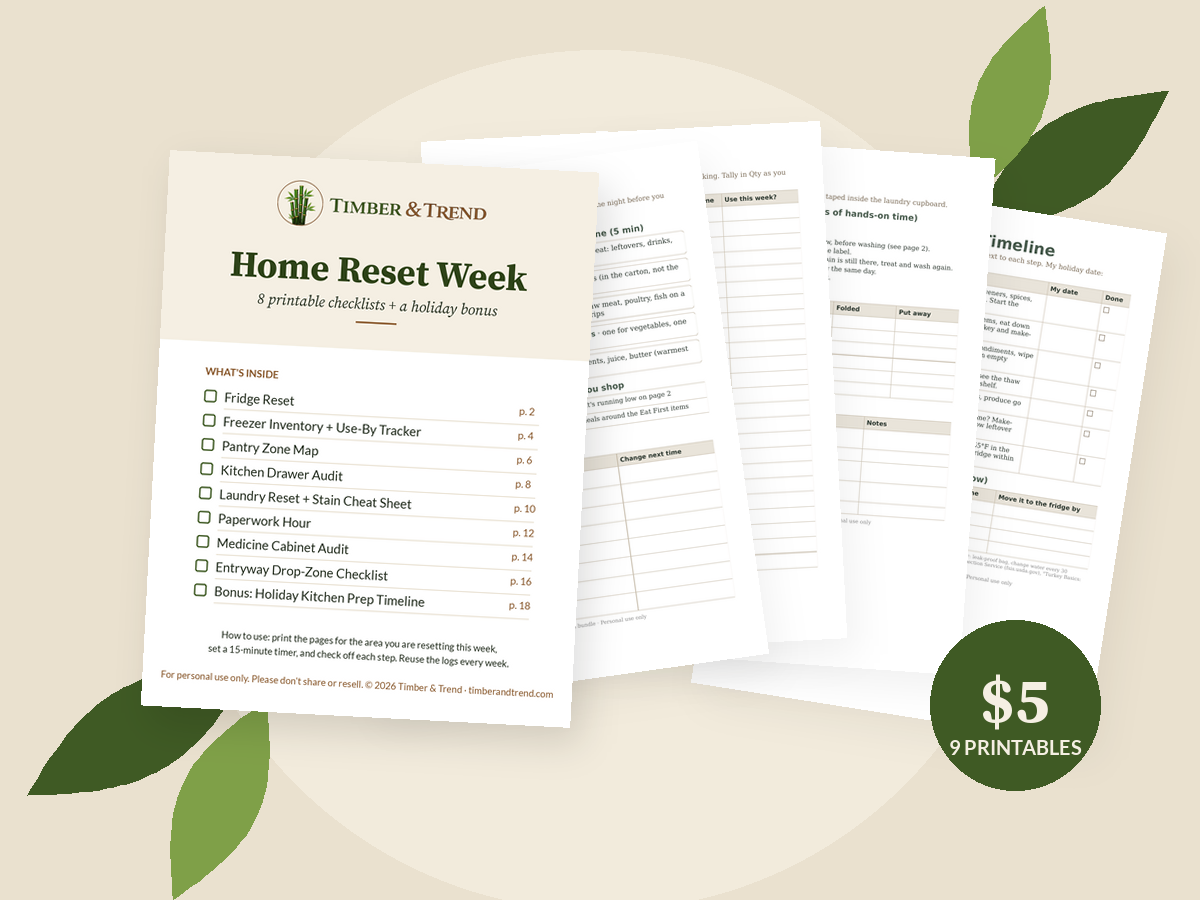
Printable bundle · $5 launch price
Get every checklist in one place
The Home Reset Week bundle has 8 printable resets (fridge, freezer, pantry, drawers, laundry, paperwork, medicine cabinet, entryway) plus a holiday kitchen prep timeline.