
Affiliate disclosure: This post contains affiliate links. If you buy through one, I may earn a commission at no extra cost to you. As an Amazon Associate I earn from qualifying purchases.
The analog bag is having a moment. Totally fair. A tote full of offline stuff beats another guilt spiral about screen time.
Here’s the catch: most of those bags turn into soft junk drawers. Three half-used notebooks. A charger “just in case.” A craft kit you never open. Pretty for a photo. Useless on a Tuesday when your hand goes looking for the phone again.
The goal isn’t a decorative tote. It’s an offline kit you actually reach for because what’s inside is useful, light, and already decided.
Free printable · 1 page · no email needed
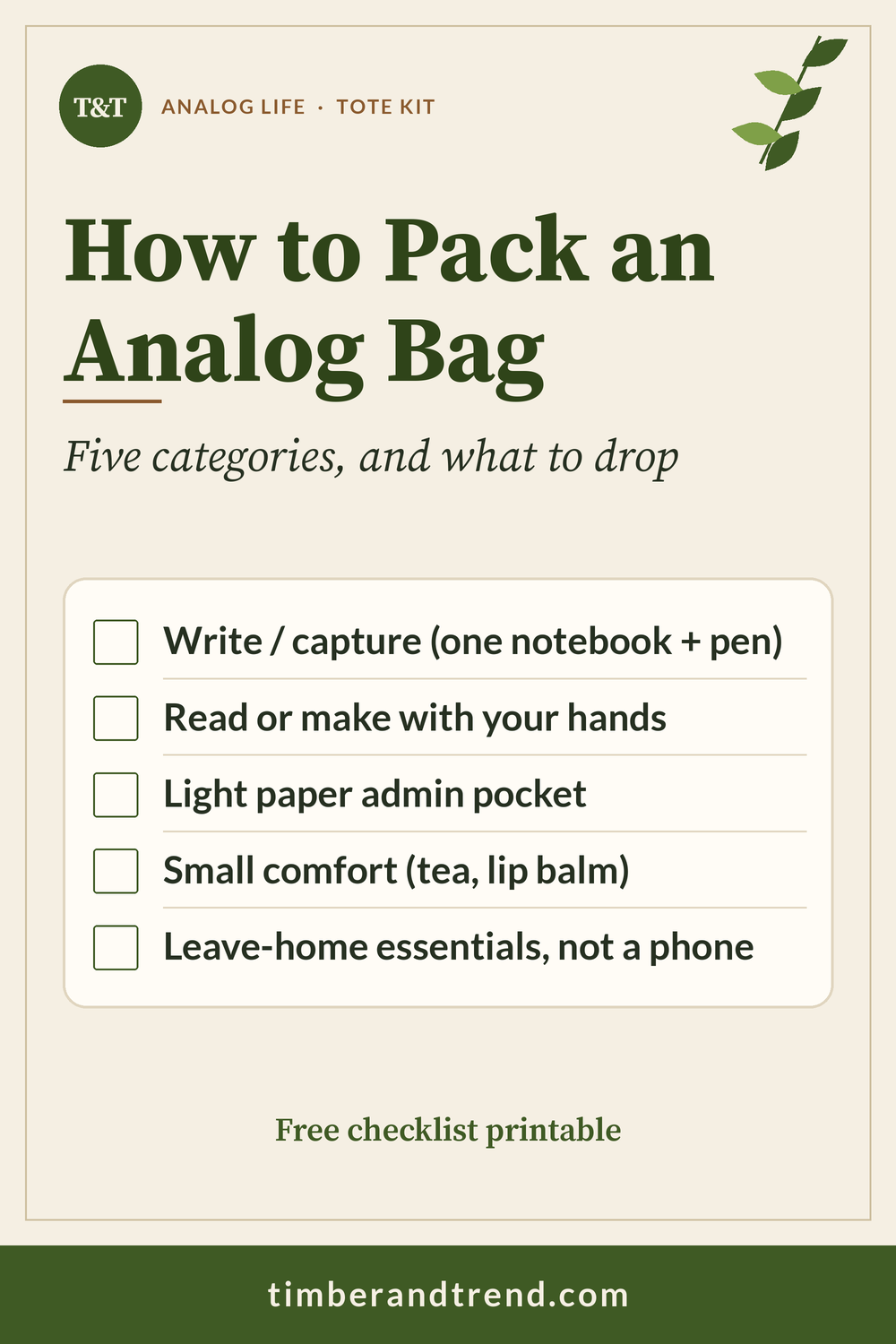
Analog Bag Checklist
Five pack categories, a leave-out list, a door-parking reminder, and a gift-fill checklist if you’re packing one for someone else.
What an analog bag is (and isn’t)
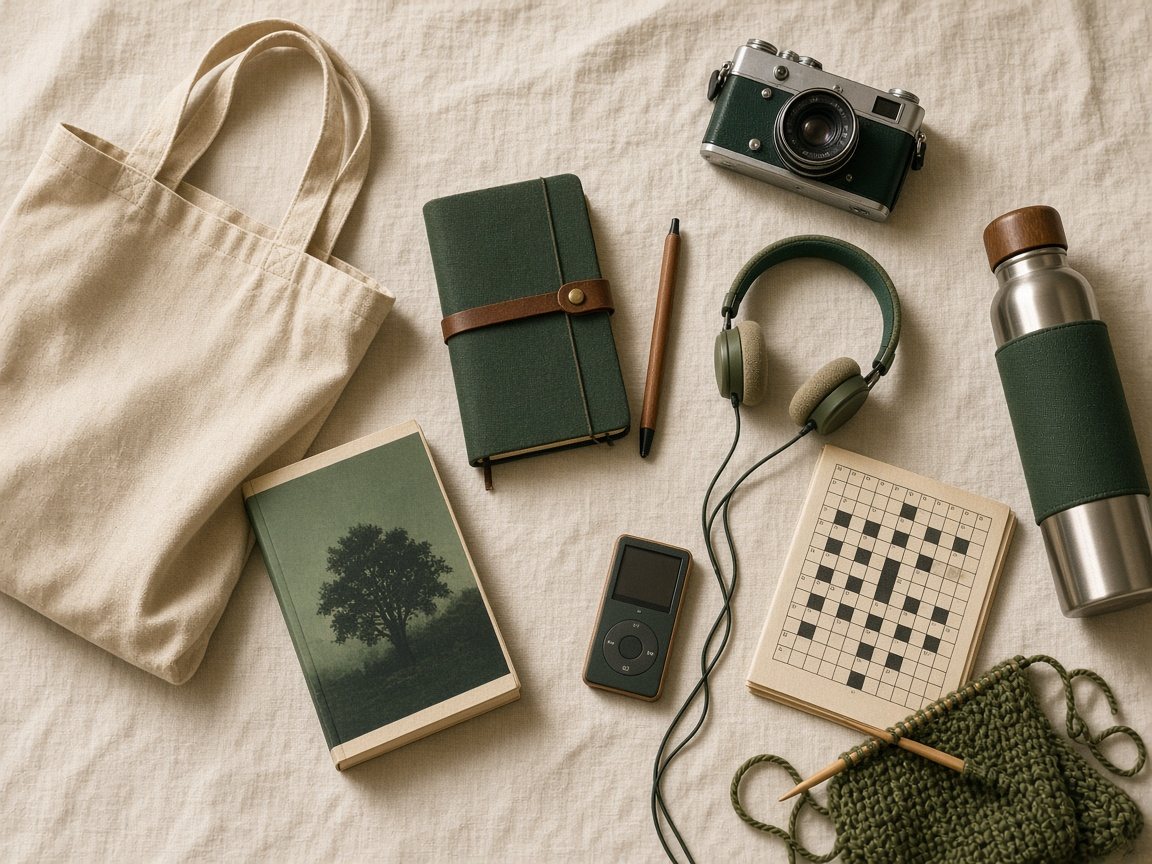
An analog bag is a small tote, basket, or soft pouch packed with screen-free replacements for the things you usually do on your phone: write, read, make with your hands, play a short game, handle light paper admin.
It is not another tech pouch. If the first thing you pull out is a cable, you’ve built a phone accessory with better branding.
California creator Sierra Campbell helped popularize the idea as a habit swap: keep the cue (boredom, waiting, evening quiet) and the reward (something to do with your hands), and change the routine from unlocking the phone to opening the bag. The Guardian’s fashion desk covered the trend in early 2026 as millennials and Gen Z packing crosswords, knitting, novels, and journals instead of treating the bag as a logo flex. (Guardian: The rise of the analogue bag)
A later Guardian Filter piece walked through Campbell’s practical tips: keep the bag on your person the way the phone sits in a pocket, pack physical stand-ins for the apps you open most, mix activities, and change the inventory with the seasons. (Guardian: What’s in your analog bag?)
You don’t need a special brand tote. A Trader Joe’s mini tote, a soft lunch bag, a reused gift tote, or a basket that lives by the couch all count. Portability matters more than aesthetics. If it’s too precious to scuff, you won’t grab it when the bus is late.
Pair it with a digital sunset if evenings are your weak spot. The bag is the daytime (and waiting-room) cousin of phone parking.
Five categories to pack
Keep it to one item per category at first. Five things beat fifteen. You can rotate later.
1. Write / capture
One notebook or small sketch pad. One pen or pencil that already works (test it before it goes in). That’s the whole category.
Swap ideas: a pocket notebook for lists and scraps of thought; a sketch pad if you doodle more than you write; index cards and a binder clip if you hate bound books.
Leave the fountain-pen collection at home. One tool you like beats a kit you admire.
If this notebook doubles as your planner’s capture spot, empty it once a week when you sit down to plan. The one-hour paper planner setup shows how that weekly planning date works.
2. Read or make with your hands
Pick one lane for this week:
- A paperback or magazine you’ll actually finish (or happily abandon)
- A small mend or craft: one sock, one square of crochet, a travel watercolor tin
- A puzzle booklet: crossword, sudoku, word search
Campbell’s advice, reported in the Filter piece, is blunt and useful: if you open the news app, put print news in the bag; if you open the phone for entertainment, put a book or a game in; if you want creative noise, put art tools in. Match the replacement to the habit, not to an aspirational hobby board.
3. Light paper admin
A slim folder or envelope with today’s paper only: one bill to pay, stamps, a return envelope, a short thank-you note already started. Not the whole household archive.
This is the portable slice of Paperwork Hour. Ten minutes in a waiting room clears more than another scroll through email.
4. Small comfort (honest, not spa-kit)
One or two tiny comforts you already use:
- A tea bag and a compact spoon (if you know there’ll be hot water)
- Lip balm
- A clean handkerchief or tissue pack
- A hard candy or mint if that keeps you from opening delivery apps out of boredom
Skip the twelve-item “self-care” pouches. If it needs a product photograph to justify itself, it doesn’t belong.
5. Leave-home essentials that aren’t a phone
Keys (or the house key if the bag is your grab-and-go). A little cash or one card in a sleeve. ID if you need it. Stamps if your admin pocket has a letter ready. A paper transit card or printed ticket when that fits your life.
The point is that the bag can leave the house without the phone being the only way to unlock the next step. You’re not going off-grid. You’re reducing the number of times the phone is the default tool for a tiny job.
What to drop (the anti-list)
Be ruthless. Clutter is why analog bags fail.
- Chargers, bricks, and “emergency” cables. That’s a tech pouch. If you need power, pack it separately from the offline kit.
- Three half-used notebooks. Pick one. Recycle or file the rest during a weekly home reset.
- “Just in case” craft explosions. One project in progress. Not four kits with missing pieces.
- Broken pens and dried markers. Test weekly. Toss the duds.
- Heavy hardcovers you won’t open on a bus. Paperback, magazine, or booklet.
- Anything you’re keeping “for the aesthetic.” If you only reach for it when filming contents, it isn’t packed. It’s staged.
If the bag feels heavy when you lift it with two fingers, you’ve overpacked. Empty it onto the table and put back only the five-category set.

How to actually reach for it
Packing is the easy half. Reach is the system.
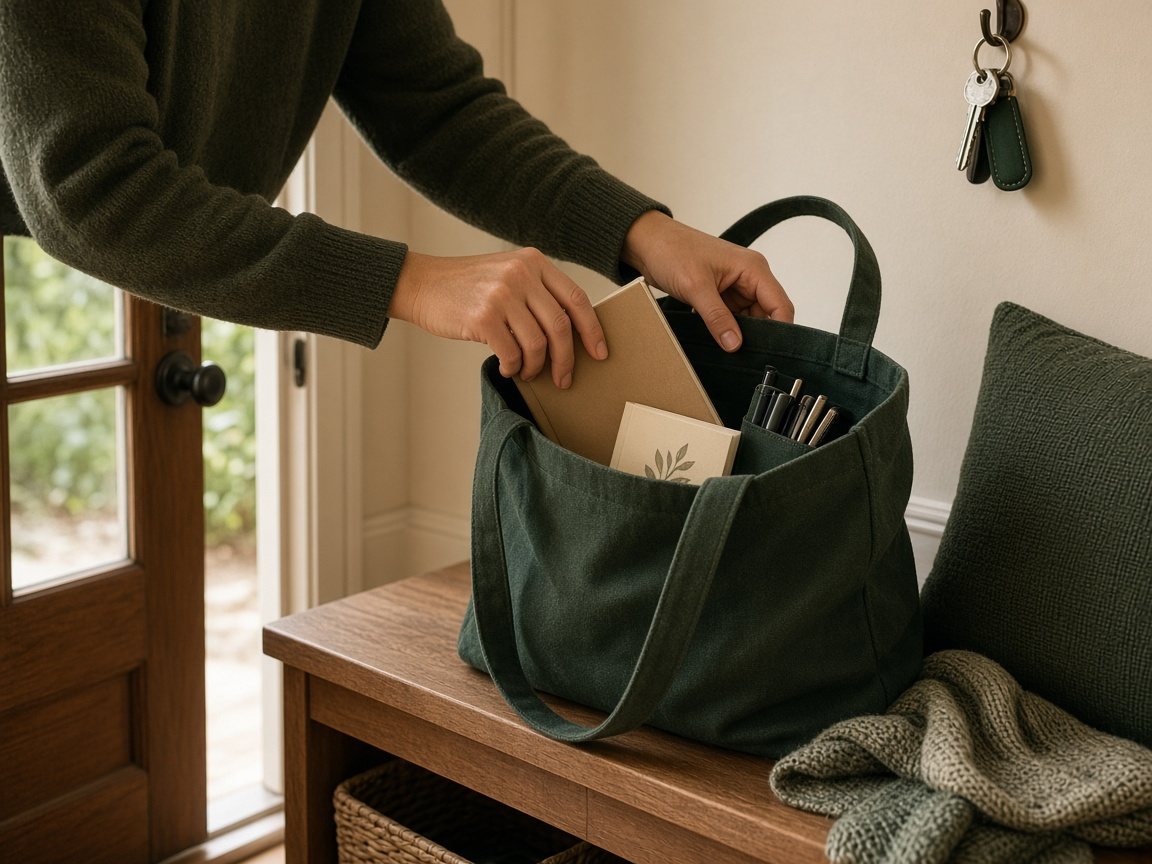
1. Park it where the phone usually wins. By the door with your keys. Next to the couch. In the same spot as your digital sunset dock at night. Campbell’s line about keeping the bag on your person like a phone in a pocket is the habit piece that matters. Out of sight means back to the lock screen.
2. Do a five-minute restock once a week. Same day every week. Refill the pen. Swap the finished paperback. Toss the dead tea bag wrapper. Put next week’s one craft piece in. Tie it to an existing reset so it doesn’t need willpower. Laundry day works. So does the end of your weekly home reset.
3. Decide tonight’s (or today’s) reach-for item in advance. When your brain is tired, “what’s in the bag?” becomes “eh, phone.” Leave the chosen item on top, or clip a sticky note to the handle: “crossword” or “mend the blue button.”
4. Use it for waits, not only for big intentions. Bus stop. School pickup. Early at a restaurant. Ten minutes counts. Analog bags fail when people save them for a mythical free Saturday.
5. Gift one, packed, with the checklist. Holiday season is a natural moment. A soft tote plus a filled checklist is a better gift than another candle that becomes drawer filler. Put in a paperback, a notebook and pen, a small craft or puzzle book, stamps, and one comfort item. Add a short note: “Park this by the door. Restock on Sundays.”
That pairs cleanly with low-waste holiday gifting and zero-waste gift wrapping. Wrap the tote in fabric or kraft, or let the tote be the wrap for the contents. More offline gift and evening ideas live in Analog Life, including the free printable hub if you want the checklist next to Winter Evenings Bingo.
If mending is your “make with hands” lane, keep a tiny mend pouch that can migrate between the bag and the laundry reset basket so you’re not hunting for a needle twice.
A 15-minute first pack
Timer on. Stop when it rings.
- Empty any “maybe” tote onto the table (3 min).
- Choose one item for each of the five categories (7 min).
- Drop the anti-list into recycle, donate, or the real junk drawer (3 min).
- Park the bag by the door or couch and write the weekly restock day on the checklist (2 min).
Print the Analog Bag checklist once. Stick it inside the bag or on the closet door. Reuse it when you gift a bag to someone else.
You’re not building a museum of offline hobbies. You’re building a bag you’ll open on purpose.
Related guides
- Screen-Free Winter Evenings: 30 Cozy Things to Do After Dark – digital sunset and phone parking at home
- Paperwork Hour: A Monthly System for Bills, Mail, and Forms – the fuller paper system behind the admin pocket
- The Weekly Home Reset Routine – a natural slot for the five-minute restock
- Low-Waste Holiday Gifting: 25 Ideas That Don’t End Up in a Drawer – gifts worth putting in someone else’s analog bag
- Zero-Waste Gift Wrapping: Furoshiki, Kraft Paper, and Wraps You Already Own – wrap the tote without a trash pile
- Laundry Reset: Get the Hamper to Zero Once a Week – if your make-with-hands lane is a mend pile
- Free checklists and cards on the free printable page
- More in Analog Life
Sources
- Chloe Mac Donnell. The rise of the analogue bag: fashion’s answer to doomscrolling. The Guardian, January 9, 2026. Trend overview; Sierra Campbell habit-swap framing; examples of contents (crosswords, knitting, novels, journals).
- Lauren Gould. What’s in your ‘analog bag’? Unpacking the viral trend – in a stuffed tote. The Guardian (Filter US), January 15/20, 2026. Campbell tips on portability, app replacements, activity mix, and seasonal inventory changes.
Save this for later
Pin it to your Analog Life board so the pack list is there when you empty the junk-drawer tote.
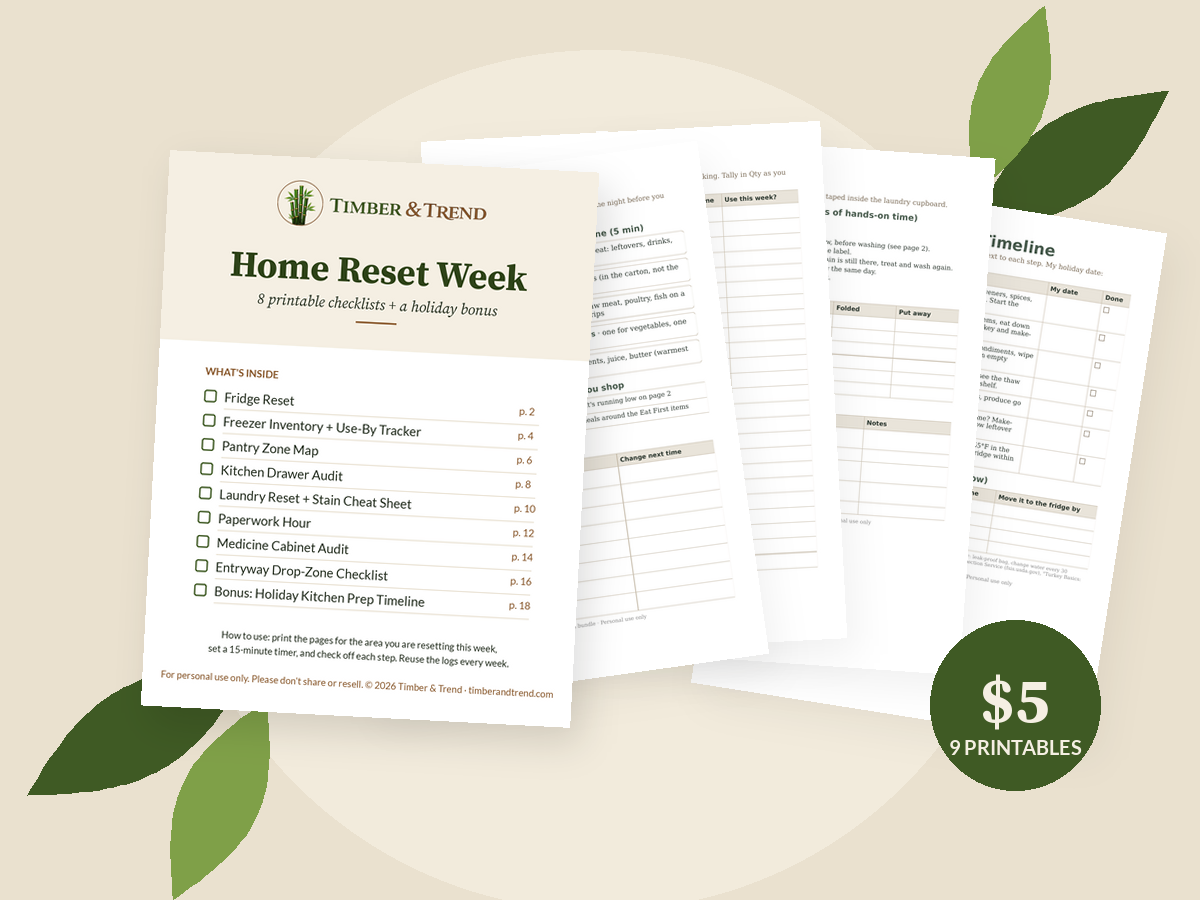
Printable bundle · $5 launch price
Get every checklist in one place
The Home Reset Week bundle has 8 printable resets (fridge, freezer, pantry, drawers, laundry, paperwork, medicine cabinet, entryway) plus a holiday kitchen prep timeline.