
Most homes already run on lists. They’re just scattered: a grocery note in one phone, a to-do app nobody opens, three sticky notes on the counter and a reminder on the back of an envelope in the car. None of those lists is wrong. The trouble is that nobody knows which one is the real one.
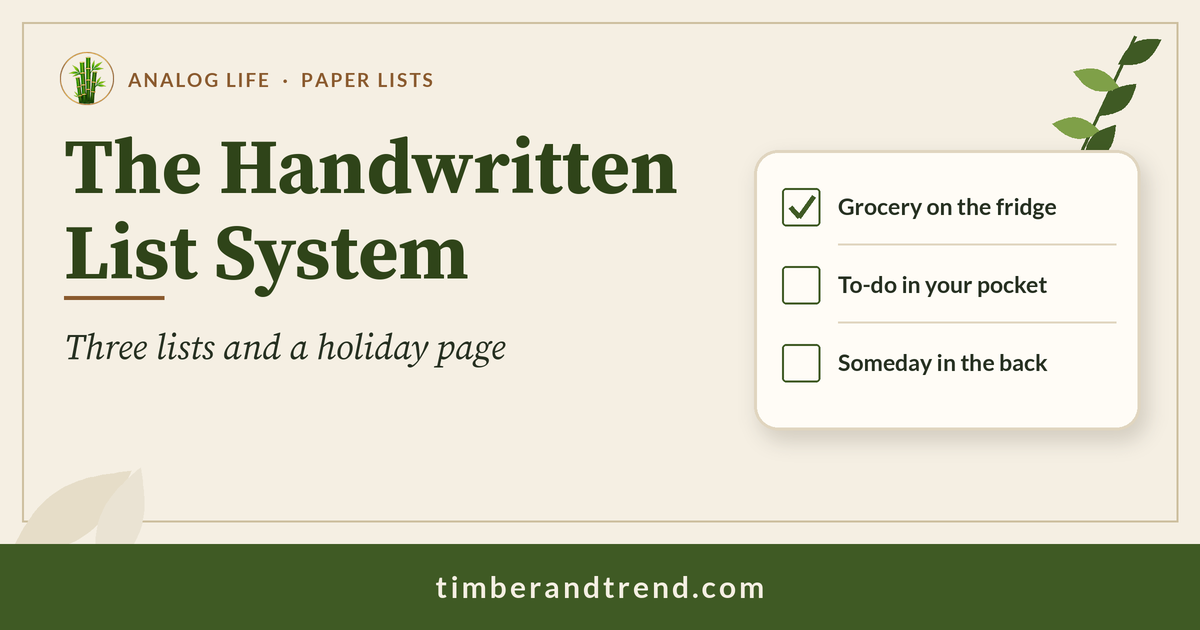
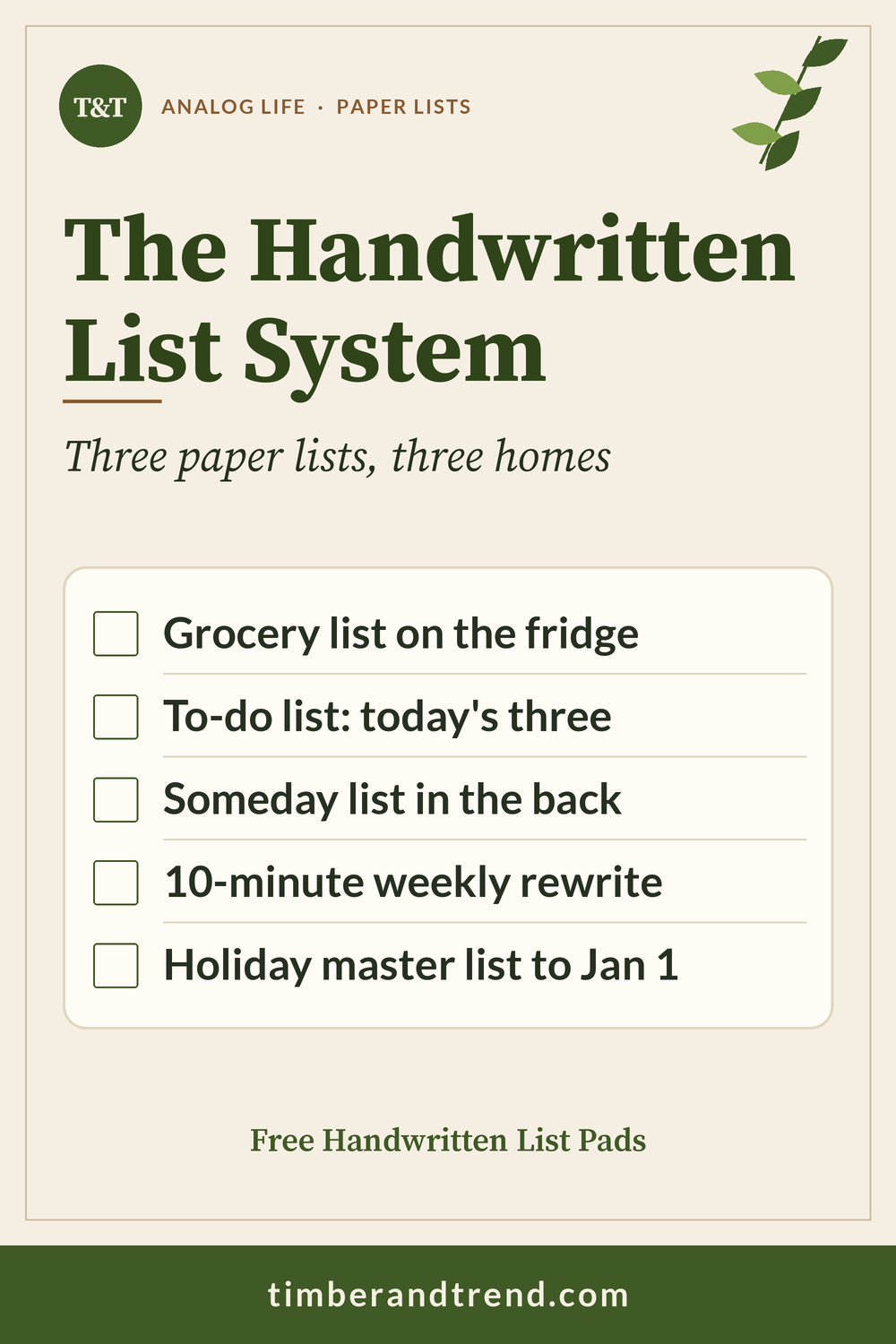
The handwritten list system fixes that with three paper lists, each with one job and one home. A grocery list on the fridge. A to-do list in your pocket or planner. A someday list in the back of a notebook, for everything that isn’t for now. And from now until New Year’s, a fourth page, the holiday master list, holds Thanksgiving, gifts, cards and shipping dates in one place so they don’t swamp everything else.
Free printable · 3 pages · no email needed
Handwritten List Pads
Page one is a fridge grocery list by store section, with a use-up-first strip and a column for quantity or meals. Page two is a to-do page with today’s three, a running list with a when or where column, and a someday strip. Page three is the holiday master list: Thanksgiving in two trips, the holiday to-do list by week with USPS send-by dates, and a gift table.
Affiliate disclosure: This post contains affiliate links. As an Amazon Associate, I earn from qualifying purchases, so if you buy through one of these links I may earn a commission at no extra cost to you. The scene and stock images in this post are for display and inspiration only and may not show the exact items linked.
The short version
- Keep three lists: grocery (on the fridge), to-do (pocket notebook or planner), someday (back of the notebook).
- Write the grocery list after you look in the fridge, freezer and pantry, and write it by store section.
- Keep today’s to-do list to three things, with a running list underneath.
- Give every to-do a when or a where, or move it to someday.
- Rewrite the to-do list once a week during your weekly reset. It takes about ten minutes.
- Add a holiday master list from early November through January 1.
Why paper, and why only three lists
Paper isn’t magic, but it has a few things going for it. It’s always on. It doesn’t ping you. A grocery list on the fridge is visible to everyone in the house, so it actually gets added to. And writing by hand is slow enough that you stop and think about whether something belongs on the list at all.
There’s a better reason, too. In a 2011 set of studies, psychologists E. J. Masicampo and Roy Baumeister found that unfinished goals caused intrusive thoughts and got in the way of unrelated tasks. When people made a specific plan for the goal, those effects went away, even though the goal itself wasn’t done yet (Masicampo and Baumeister, 2011). A list where each item has a “when” next to it is a small, everyday version of that plan. You’ve written it down and decided when you’ll deal with it, so you can stop carrying it around in your head.
Three lists is the limit on purpose. Every extra list is one more place to check. If something doesn’t fit on one of the three, it’s usually a date (that goes in your planner) or a piece of paper to deal with (that’s what Paperwork Hour is for).
List 1: the grocery list (it lives on the fridge)
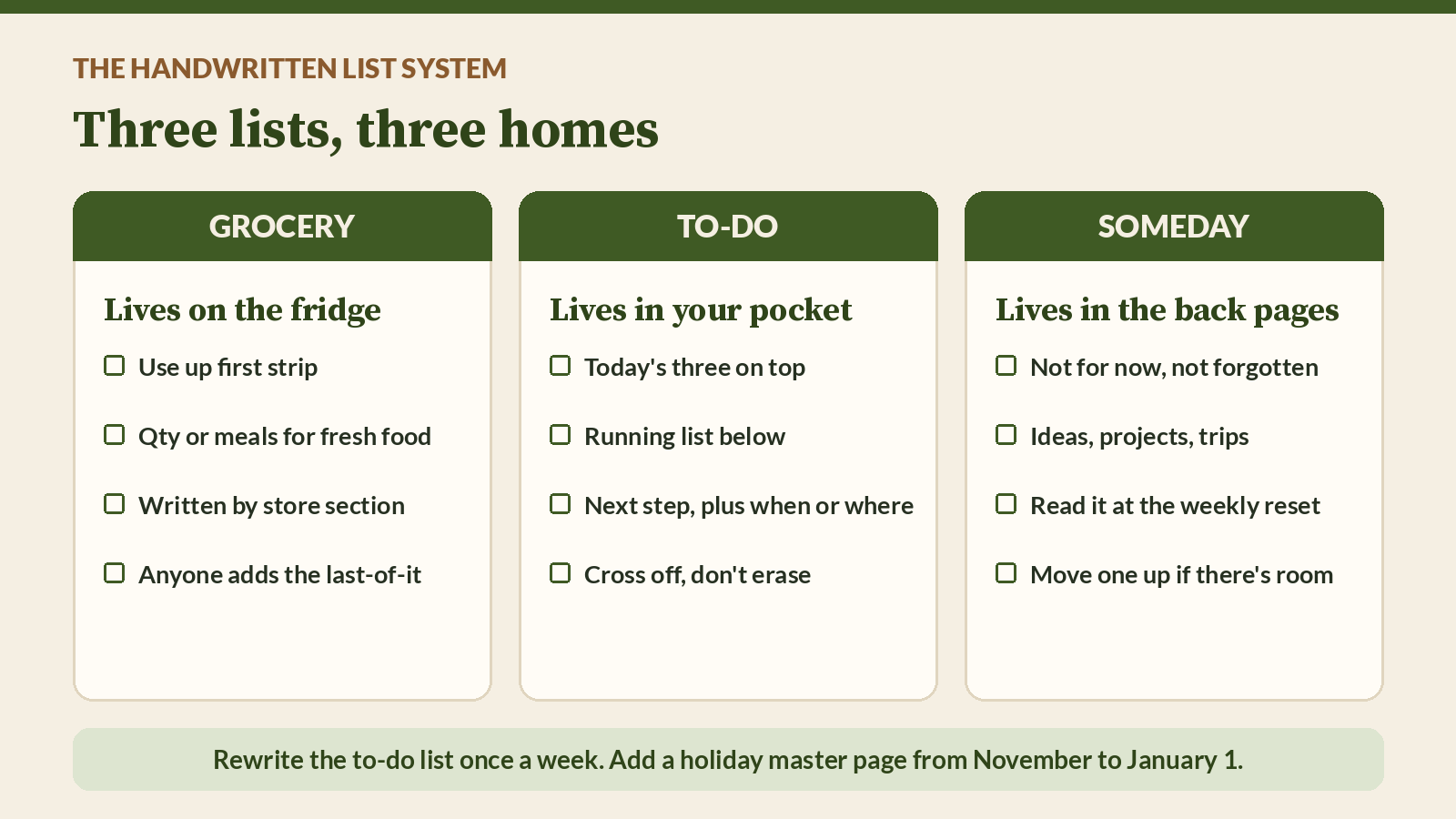
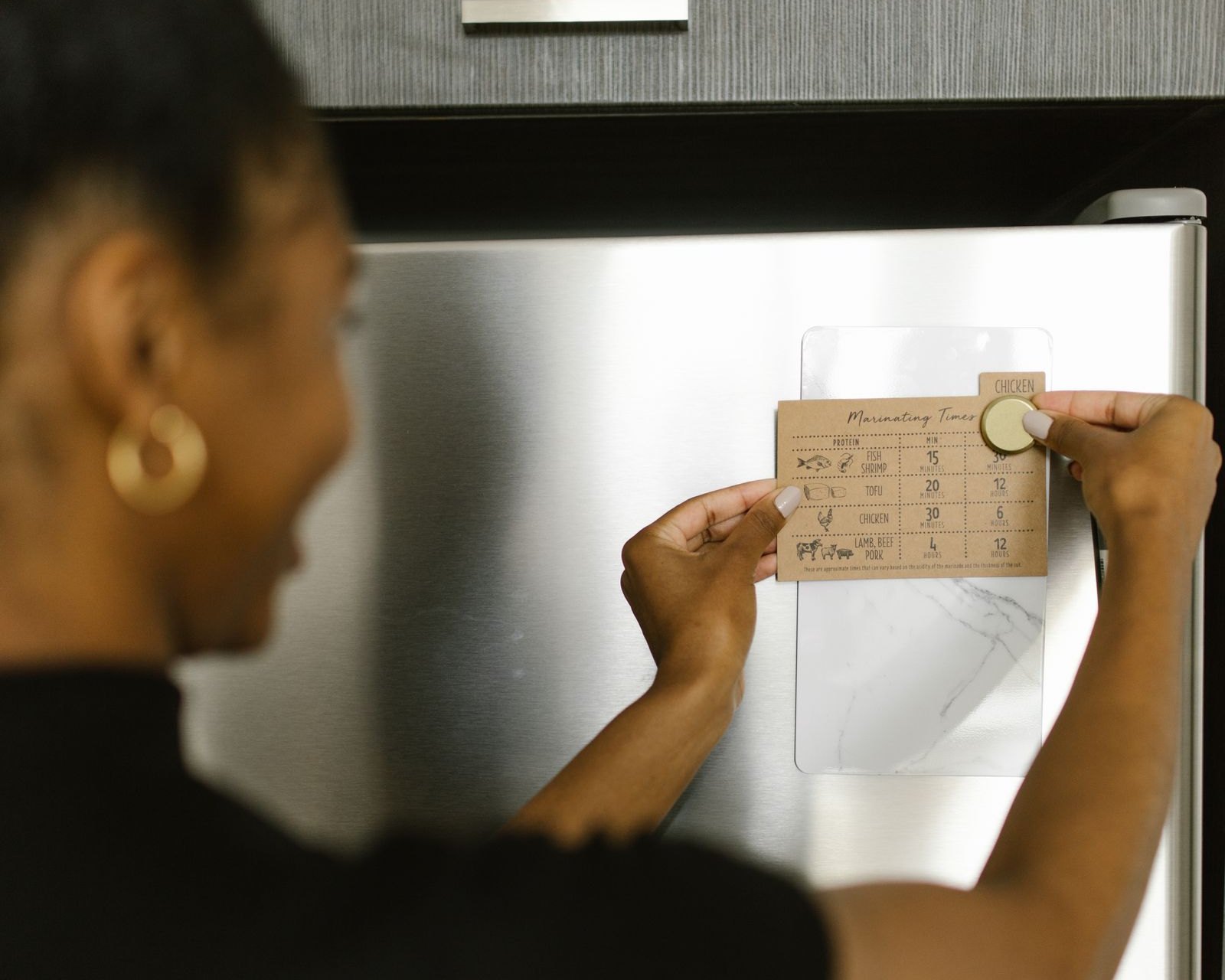
Put it on the fridge door with a magnet and keep a pencil right next to it. The house rule is simple: if you use the last of something, write it down. That one habit does most of the work.
When it’s time to shop, finish the list in this order:
- Shop your kitchen first. The EPA suggests looking in your fridge, freezer and pantry before you shop so you don’t buy food you already have, and making a list each week of what needs to be used up so you can plan meals around it (EPA). The printable has a “use up first” strip at the top for exactly this.
- Count meals, not just items. The EPA’s Smart Shopping sheet suggests noting the quantity or number of meals next to fresh items, like “salad greens: enough for one lunch” (EPA Smart Shopping). It’s the simplest way to stop buying a second bag of spinach before the first one’s gone.
- Write it by store section. Produce, dairy and eggs, meat and fish, bread, pantry, frozen, household. You walk the store once instead of doubling back for the butter.
- Stick to it in the store. The FDA’s food waste tips say the same thing your budget does: buy what’s on the list, and be careful with bulk deals on things that don’t keep long (FDA).
- Take the list with you, or snap a photo. Either is fine. The paper on the fridge stays the master copy.
If you plan meals around what’s already in the fridge, a weekly leftover night and a quick fridge reset feed straight into this list, and the freezer inventory and pantry reset make “shop your kitchen first” a two-minute job instead of a hunt.
List 2: the to-do list (it lives in your pocket or planner)
The to-do list has two parts, and keeping them separate is what keeps it from turning into a wall of guilt.
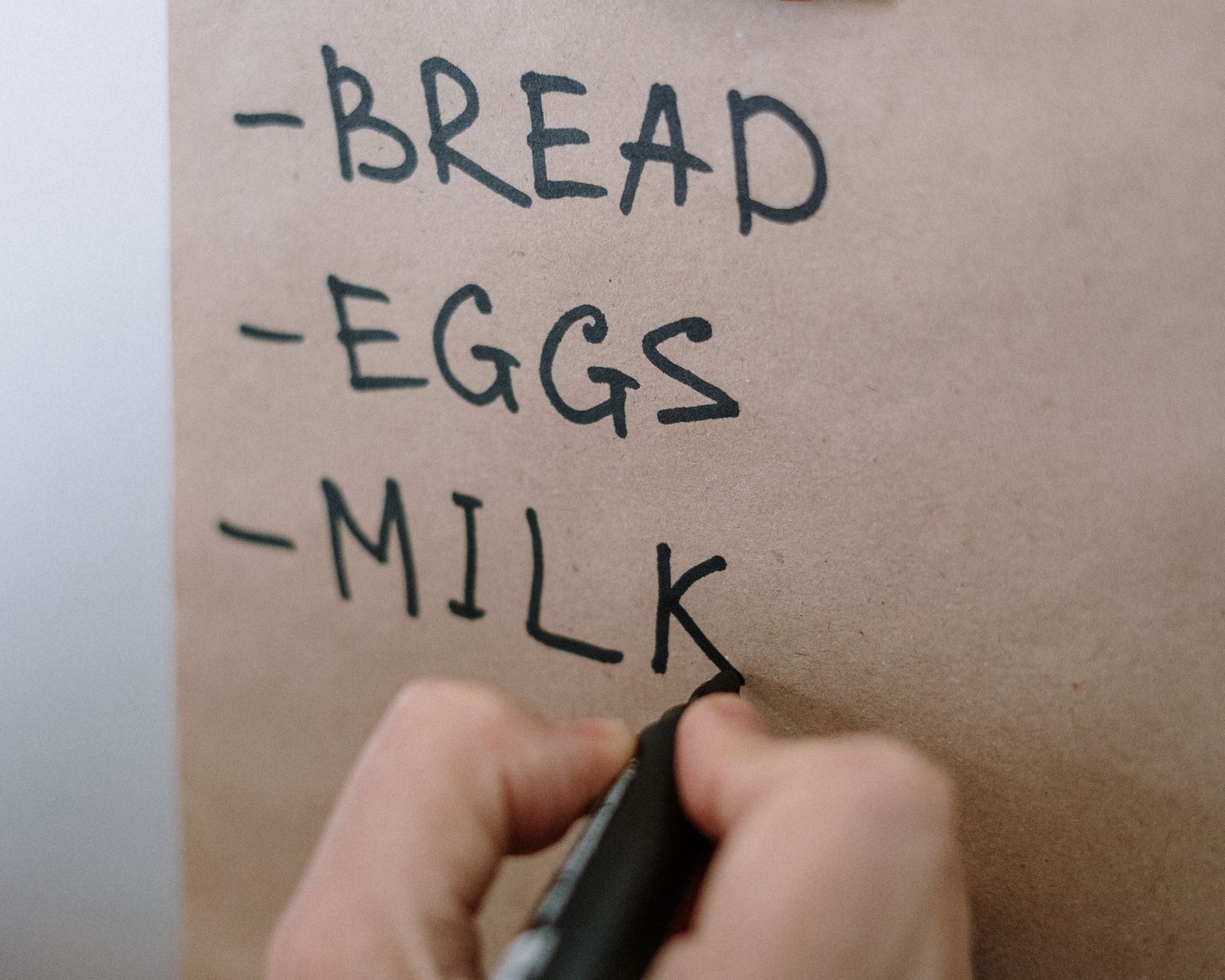
- The running list. Everything you need to do soon. Write it down the moment it shows up, before it slips away.
- Today’s three. Each morning, or the night before, copy three things from the running list to the top of a fresh page. When those three are done, anything else is a bonus.
A few rules make the list easier to act on:
- Write the next step, not the project. “Thanksgiving” isn’t a to-do. “Text everyone to ask who’s bringing pie” is.
- Add a when or a where. “Return library books, Saturday on the way to the store.” That’s the specific plan from the Masicampo study, in list form.
- Cross off, don’t erase. A page of crossed-off lines is a record of what you actually got done.
- Keep it with you. A list that stays home can’t catch the thing you remember in the car line.
The weekly page of a paper planner works well for today’s three (the paper planner setup guide covers that page). For the running list, a pocket notebook that lives in your bag is hard to beat, and a small notebook is a staple of the analog bag.
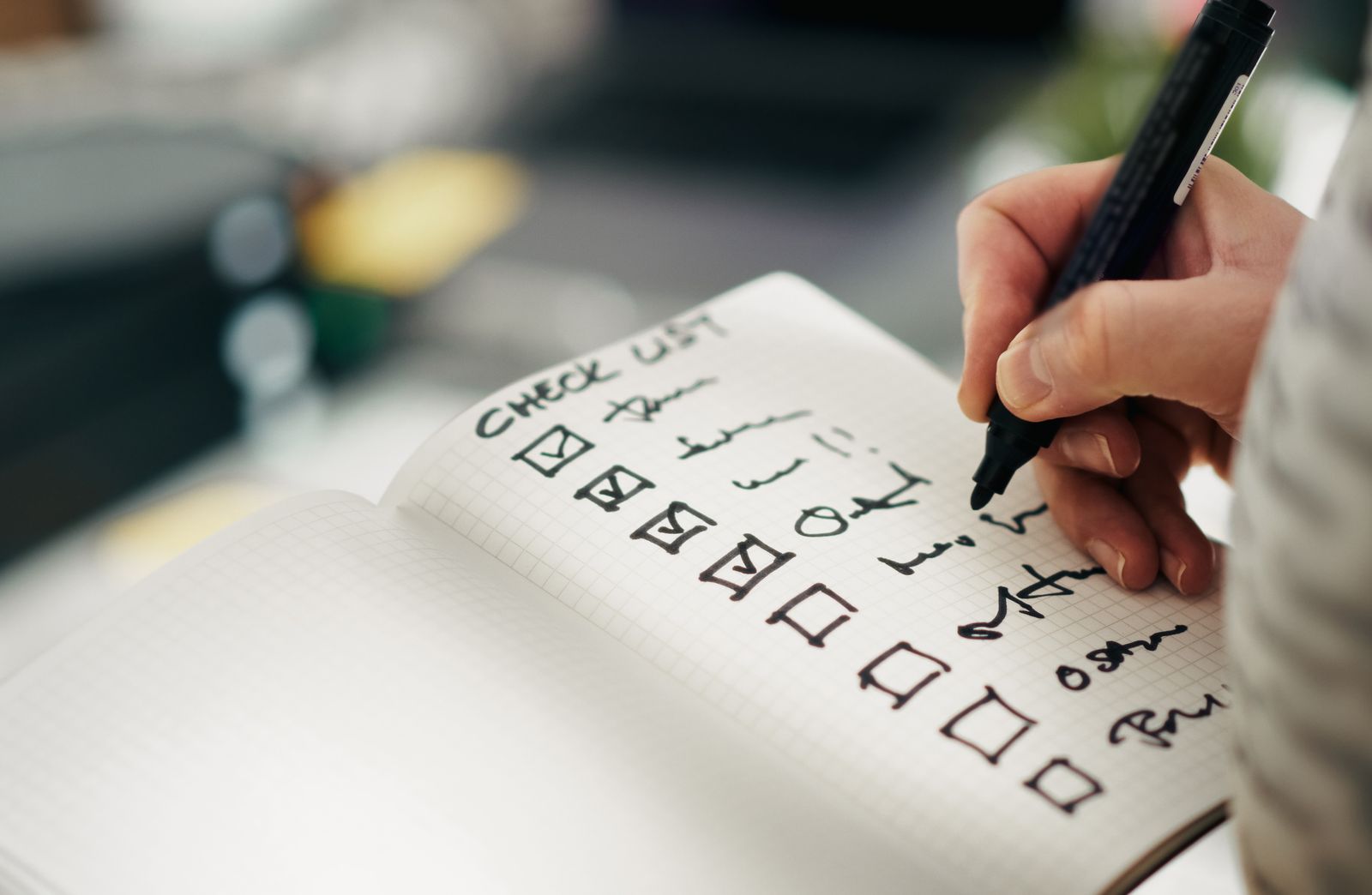
If you’d like a dedicated list notebook, a plain pocket memo book is the right size: it fits a back pocket, a coat pocket or a small bag, and a three-pack covers the running list, the someday list and a spare.
As an Amazon Associate, I earn from qualifying purchases.
List 3: the someday list (it lives in the back of the notebook)
This is the list most people don’t have, and it’s the reason their to-do list never gets shorter. David Allen’s Getting Things Done method calls it the Someday/Maybe list: any goal, project or action you’re not committed to doing right now. The GTD team is clear that it isn’t a parking lot for things you haven’t thought through, and that it only works if you look at it regularly, which in GTD happens during the weekly review (Getting Things Done; GTD Weekly Review).
Things that belong on a someday list:
- Paint the hallway
- Sort the photo boxes
- Learn to make bread, or try one of these slow hobbies
- A weekend trip you’d like to take next year
- That shelf you keep meaning to build
Write it in the back of the same notebook, working forward from the last page. The to-do list stays short and honest, and the ideas don’t get lost.
The weekly rewrite (about ten minutes)
Once a week, during your weekly home reset, give the lists a quick pass:
- Cross off everything that’s done.
- Copy what’s still live onto a fresh running list.
- If an item has been copied over three weeks in a row, decide: do it this week, give it a date, move it to someday, or drop it. (Three weeks is a rule of thumb, not a law.)
- Read the someday list. Move one item up if this week has room. Cross off anything you’ve stopped caring about.
- Start a fresh grocery list on the fridge right after you shop.
The holiday master list (now through January 1)
From early November to New Year’s, the to-do list fills up fast. Give the season its own page so Thanksgiving, gifts and cards don’t bury everything else. Page three of the printable is set up for this, with the dates below already filled in.
The Thanksgiving grocery list, in two trips
Thanksgiving is Thursday, November 26, 2026.
- Start with the headcount. USDA’s turkey guidance is to allow 1 pound of turkey per person for a fresh or frozen bird (USDA FSIS). Write the headcount and the pounds at the top of the list. For sides and desserts, the Save The Food campaign’s Guest-imator estimates how much food to make for your number of guests.
- Trip one, shelf-stable, the week of November 16. Broth, canned pumpkin, stuffing mix, baking staples, foil and storage containers. Check the pantry first: the holiday kitchen prep checklist has a pantry reset for November 7 and 8, so trip one only fills the gaps it finds.
- Trip two, fresh, November 23 to 25. Produce, dairy, bread and anything else that won’t keep. If you’re buying a fresh turkey, FSIS says to buy it only 1 to 2 days before you plan to cook it, so for Thursday that’s Tuesday or Wednesday. A frozen turkey needs fridge time to thaw, and the same kitchen prep checklist has the move-it-by dates by turkey size.
- Write both trips by store section, the same way as the weekly list.
The holiday to-do list, week by week
| Week | What goes on the list |
|---|---|
| Nov 2 to 8 | Headcount and who’s bringing what. Start the gift list. Pantry reset on the weekend. |
| Nov 9 to 15 | Anything that needs ordering. Freezer reset. Guest linens: the guest room checklist starts its countdown on Nov 11. |
| Nov 16 to 22 | Thanksgiving trip one. Fridge reset. Set up the guest sleeping spot. |
| Nov 23 to 29 | Thanksgiving trip two, the meal and a leftovers plan. |
| Nov 30 to Dec 6 | Check the gift list. Update the card list and addresses. Gather wrapping supplies. |
| Dec 7 to 13 | International cards and packages: USPS recommends sending by Wednesday, Dec 9 for First-Class Package International and Priority Mail International. |
| Dec 14 to 20 | Domestic mail: USPS Ground Advantage and First-Class Mail by Thursday, Dec 17, Priority Mail by Friday, Dec 18, Priority Mail Express by Saturday, Dec 19. |
| Dec 21 to Jan 1 | Hosting, rest, and a fresh planner for 2027. |
The shipping dates are USPS’s recommended send-by dates for delivery before December 25 within the lower 48 states (USPS; USPS newsroom). They’re recommendations, not guarantees, and USPS notes that Hanukkah (December 4 to 12) comes earlier this year, so move those mailings up. Shipping to Alaska, Hawaii or a U.S. territory can take longer, so check the USPS page.
When December 21 comes around, the 2027 paper planner setup takes about an hour and gives the new year a clean first page.
Gifts get their own column
The holiday page has a small gift table: name, idea, bought, wrapped, sent. It’s the easiest way to see at a glance who’s still open, and it keeps gift ideas out of your everyday to-do list. If you’re still filling in the idea column, the low-waste gift ideas list has gifts that get used up or used for years, and the zero-waste gift wrapping guide covers the wrapped column. If the table itself is on your list, fall decor that lasts carries through Thanksgiving.
Make it stick
- One pencil per list home. A pencil on the fridge, a pen clipped to the notebook. If you have to look for a pen, the item doesn’t get written down.
- Use the same paper every time. The printable pads, the same notebook, the same spot on the fridge. Familiar beats pretty.
- Don’t make it beautiful. Messy lists still work. Lists you’re afraid to mess up don’t get used.
- If a list goes quiet for two weeks, that’s information. Fold it into another list or drop it. Three lists is the ceiling, not the goal.
That’s the whole system: three lists, three homes, and ten minutes a week. Print the pads, put the grocery list on the fridge tonight and write today’s three on the first page of a notebook. For more paper-first routines, see Analog Life, and for the room-by-room resets that feed these lists, start with Home Resets. Our Curated Essentials page explains how we choose the tools we link.
Sources
- E. J. Masicampo and Roy F. Baumeister. Consider It Done! Plan Making Can Eliminate the Cognitive Effects of Unfulfilled Goals. Journal of Personality and Social Psychology 101(4), 667 to 683 (2011).
- U.S. EPA. Preventing Wasted Food at Home. Planning and shopping tips.
- U.S. EPA, Food: Too Good to Waste. Smart Shopping: Shop with Meals in Mind (2016).
- U.S. FDA. Tips to Reduce Food Waste.
- Getting Things Done. What goes on a Someday Maybe list? and David Allen, The Weekly Review.
- USDA Food Safety and Inspection Service. Let’s Talk Turkey: A Consumer Guide to Safely Roasting a Turkey.
- Save The Food. Guest-imator.
- USPS. 2026 Holiday Shipping Deadlines and Postal Service Recommends 2026 Holiday Mailing and Shipping Dates (Sept. 22, 2026).
Related guides
- Paperwork Hour: how to organize paperwork at home
- How to set up a paper planner for 2027
- Holiday kitchen prep checklist
- Guest room checklist
- Leftover night
- Low-waste kitchen swaps
Save this for later
Pin it to your Analog Life board so the three lists are there when the holiday to-do list starts to pile up.
Printable bundle · $5 launch price
Get every checklist in one place
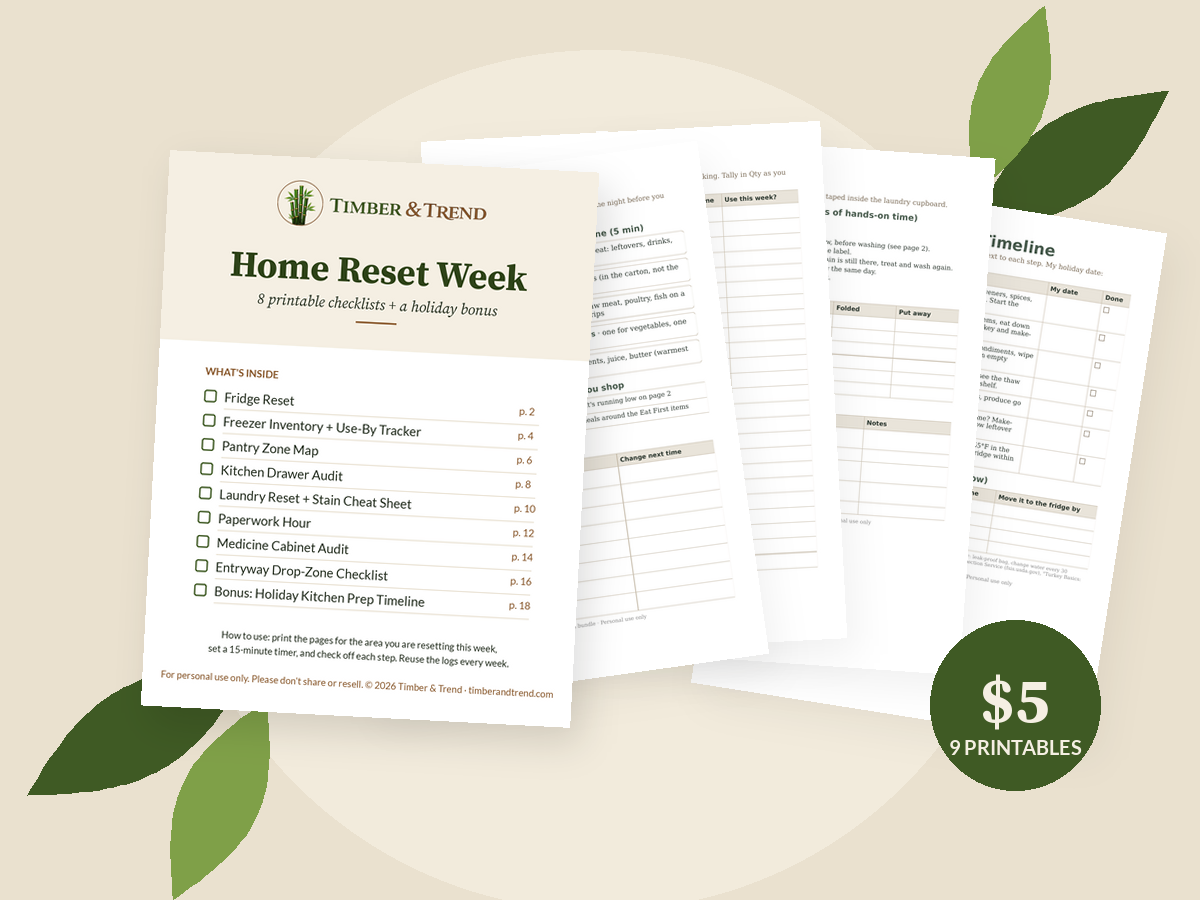
The Home Reset Week bundle has 8 printable resets (fridge, freezer, pantry, drawers, laundry, paperwork, medicine cabinet, entryway) plus a holiday kitchen prep timeline.